Menu
mtDNA Haplogroup • Maternal Lineage

C1C8

mtDNA Haplogroup C1C8

~12,000 years ago
Beringia / Northern Americas
0 subclades
Scroll to explore
Chapter I

The Story

The journey of mtDNA haplogroup C1C8

Origins and Evolution

mtDNA haplogroup C1C8 sits within the C1C branch of haplogroup C1, a lineage tied to the maternal founding populations that moved from Northeast Asia into Beringia and then into the Americas during the Late Pleistocene. As a downstream subclade of C1C, C1C8 likely accumulated its defining mutations shortly after initial Beringian isolation or during early dispersal into the Americas, making its coalescence time plausibly in the Late Pleistocene to early Holocene (~12 kya). Its phylogenetic position indicates derivation from the ancestral C1C node and subsequent diversification within Indigenous American populations.

Subclades (if applicable)

C1C8 is itself a sublineage within C1C; where finer-resolution sequencing exists, it may be subdivided into private branches defined by additional control-region or coding-region mutations. At present, available data suggest C1C8 is a distinct branch rather than a large, deeply structured haplogroup—continuous ancient DNA sampling and full mitogenomes are required to resolve internal subclades and geographic microstructure.

Geographical Distribution

Modern and ancient occurrences of C1C8 are concentrated among Indigenous peoples of the Americas. Highest frequencies and diversity are reported in parts of South America, particularly Andean and some Amazonian groups, consistent with early southward dispersal and local differentiation. Moderate frequencies appear in Indigenous North American and Central American populations, often at low-to-moderate levels, while occurrences in Arctic/sub-Arctic populations (e.g., Inuit- or Yupik-adjacent groups) are sporadic. Low-frequency occurrences in Siberia/Northeast Asia have been reported or inferred in some datasets and likely reflect either retention of ancestral diversity in Beringia or limited backflow/gene flow across the Bering Strait.

Ancient DNA contexts confirming C1C8 in archaeological samples (the user notes two such samples) corroborate its presence in early American populations and support its antiquity and continuity in some regions.

Historical and Cultural Significance

As a Beringia-derived maternal lineage, C1C8 contributes to the picture of the peopling of the Americas, marking one of several maternal routes and founder lineages. Its distribution—especially concentrated pockets in South America—can illuminate patterns of early expansion, regional isolation, and later demographic events (for example, population growth, founder effects, or local continuity). C1C8 co-occurs with other Native American mitochondrial haplogroups (such as A2, B2, D1) in many populations, so it is best interpreted within a multi-marker framework (mitogenomes plus autosomal and Y-chromosome data) when reconstructing migration and contact histories.

Conclusion

mtDNA haplogroup C1C8 is a scientifically informative, regionally important subclade of C1C that reflects an early American maternal lineage deriving from Beringia. Its pattern—higher diversity in parts of South America, lower frequency in North America and Northeast Asia, and presence in ancient remains—supports models of initial Beringian isolation followed by rapid dispersal into the Americas and subsequent regional differentiation. Continued high-resolution mitogenome sequencing and broader ancient DNA sampling will refine the internal structure and migration inferences for C1C8.

Key Points

  • Origins and Evolution
  • Subclades (if applicable)
  • Geographical Distribution
  • Historical and Cultural Significance
  • Conclusion
Chapter II

Tree & Relationships

Phylogenetic context and subclades

Evolution Path

This haplogroup's evolutionary journey from its earliest ancestor to the present.

Steps Haplogroup Age Estimate Archaeology Era Time Passed Immediate Descendants Tested Modern Descendants Ancient Connections
1 C1C8 Current ~12,000 years ago 🌾 Neolithic 12,000 years 0 0 0
2 C1C ~15,000 years ago 🏹 Mesolithic 15,000 years 4 78 60
3 C1 ~18,000 years ago 🏹 Mesolithic 18,000 years 5 562 5
4 C ~35,000 years ago 🦴 Paleolithic 35,000 years 5 617 75

Subclades (0)

Terminal branch - no known subclades

Siblings (3)

Other branches from the same parent haplogroup

Chapter III

Where in the World

Geographic distribution and modern presence

Place of Origin

Beringia / Northern Americas

Modern Distribution

The populations where mtDNA haplogroup C1C8 is found include:

  1. Indigenous peoples of North America (various First Nations and Native American groups)
  2. Indigenous peoples of Central America (various Mesoamerican groups)
  3. Indigenous peoples of South America (Andean, Amazonian and other regional groups)
  4. Arctic and sub-Arctic populations (occasional occurrences among some Inuit/Yupik-adjacent groups)
  5. Siberian and Northeast Asian populations (rare, low-frequency occurrences reflecting ancestral Beringian ties or later gene flow)
  6. Ancient archaeological populations across the Americas (multiple ancient DNA contexts confirming early presence)
CHAPTER IV

When in Time

Your haplogroup in the context of human history

~12k years ago

Haplogroup C1C8

Your mtDNA haplogroup emerged in Beringia / Northern Americas

Beringia / Northern Americas
~10k years ago

Neolithic Revolution

Agriculture begins, settled communities form

~5k years ago

Bronze Age

Metalworking, writing, and early civilizations

~3k years ago

Iron Age

Iron tools, expanded trade networks

~2k years ago

Classical Antiquity

Greek and Roman civilizations flourish

Present

Present Day

Modern era

Your Haplogroup
Historical Era
Chapter IV-B

Linked Cultures

Ancient cultures associated with mtDNA haplogroup C1C8

Cultural Heritage

These ancient cultures have been linked to haplogroup C1C8 based on matching ancient DNA samples from archaeological excavations. The presence of this haplogroup in these cultures provides insights into the migrations and population movements of populations carrying this haplogroup.

Anse Gourde Archaic Belize Arroyo Seco Chincha de Savaan El Brujo La Galgada Selknam Soro Mikaya Patjxa
Culture assignments are based on archaeological context of ancient DNA samples and may represent regional associations during specific time periods.
Chapter V

Sample Catalog

2 direct carriers of haplogroup C1C8

2 / 2 samples
Portrait Sample Country Era Date Culture mtDNA Match
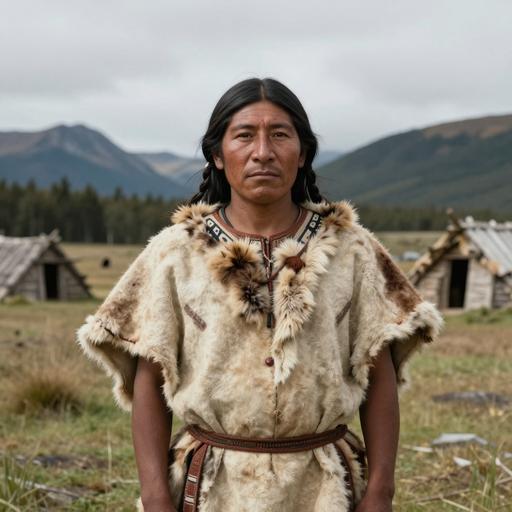
Portrait of ancient individual I12365 from Argentina, dated 1150 CE - 1270 CE
I12365
Argentina North Tierra del Fuego Selknam Culture 500 Years Ago 1150 CE - 1270 CE Selknam C1c8 Direct
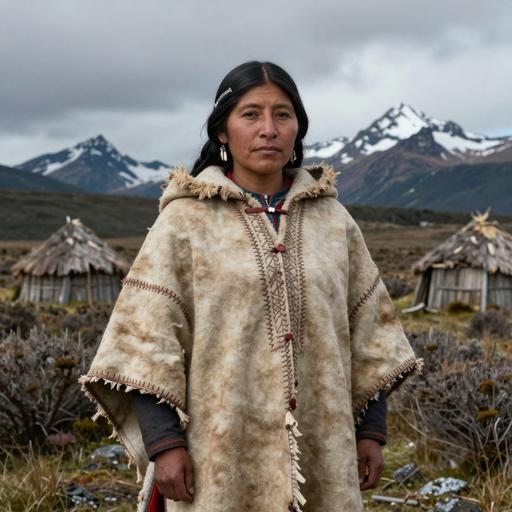
Portrait of ancient individual I12367 from Argentina, dated 1200 CE - 1300 CE
I12367
Argentina North Tierra del Fuego Selknam Culture 500 Years Ago 1200 CE - 1300 CE Selknam C1c8 Direct
Chapter VI

Carrier Distribution Map

Geographic distribution of 2 ancient DNA samples (direct and subclade carriers of C1C8)

Direct carrier
Time Period Filter
All Time Periods
Showing all samples
Chapter VII

Temporal Distribution

Distribution of carriers across archaeological periods

Chapter VIII

Geographic Distribution

Distribution by country of origin (direct and subclade carriers shown by default)

Chapter IX

Country × Era Distribution

Cross-tabulation of carrier countries and archaeological periods (direct and subclade carriers shown by default)

Data

Data & Provenance

Source information and data quality

Last Updated 2026-02-16
Confidence Score 50/100
Coverage Low
Data Source

We use the latest phylotree for MTDNA haplogroup classification and data.