The Story
The journey of mtDNA haplogroup C1D3
Origins and Evolution
C1D3 is a subclade within the broader C1D branch of mitochondrial DNA haplogroup C1, itself one of the principal maternal lineages associated with the initial peopling of the Americas. As a downstream lineage of the intermediate clade C1DA, C1D3 most likely arose after the initial coastal and inland expansions of early Native American groups. Based on its phylogenetic position and the ages estimated for related C1D subclades, a reasonable estimate places the origin of C1D3 in the early Holocene (roughly 7–11 kya), with a working midpoint used here of ~9 kya. This reflects coalescence within populations that settled the Southern Cone after the initial arrival of C1 lineages into South America.
Subclades
At present, C1D3 is treated as a defined terminal or near-terminal subclade in reference phylogenies with only limited internal diversity published. Additional high-resolution sequencing of modern and ancient samples may reveal further internal branches or private mutations. Because sampling for many southern South American groups remains incomplete, the discovery of finer substructure within C1D3 is plausible as more mitogenomes are generated.
Geographical Distribution
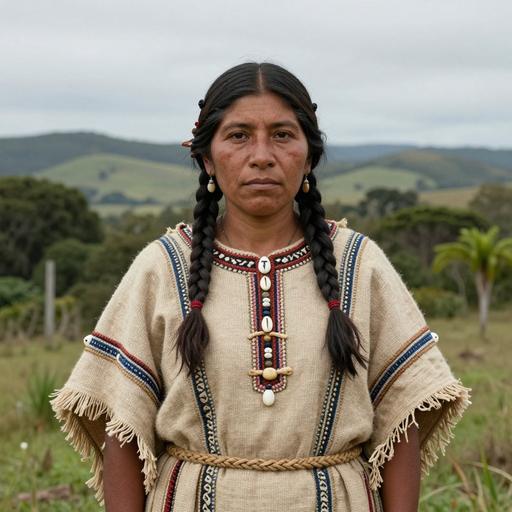
C1D3 is concentrated in the Southern Cone of South America, particularly in Patagonia and Tierra del Fuego regions. It has been identified in both modern Indigenous groups of southern Chile and Argentina and in ancient skeletal remains from southern South America, although sample sizes remain small. Outside the Southern Cone, occurrences (if any) appear rare and are likely the result of either ancient north–south population structure within the Americas or recent historical movement; broader surveys show C1D3 to be largely localized to southern South America.
Historical and Cultural Significance
The presence of C1D3 in southern South America ties it to the early-Holocene hunter-gatherer populations that adapted to maritime and cold-steppe environments along the southern Pacific and Atlantic coasts. These maternal lineages are consistent with long-term regional continuity among Patagonian and Fuegian groups (including groups historically described as Tehuelche, Yaghan/Yámana, and Kawésqar), and with ancient burial populations sampled in archaeological contexts. While not directly linked to pan-continental archaeological cultures like the Corded Ware or Bell Beaker (which are Old World phenomena), C1D3 contributes to reconstructing population structure, migration routes, and demographic continuity within the Americas.
Because the overall dataset for C1D3 is limited, interpretations about specific cultural associations and demographic events should remain cautious; targeted ancient DNA work in southern South America will clarify timing and the strength of association with particular archaeological horizons.
Conclusion
C1D3 represents a geographically localized maternal lineage within the broader founding Native American haplogroup C1. Its likely origin in the early Holocene and concentration in the Southern Cone make it an informative marker for studies of post-glacial population dynamics, regional continuity, and the peopling of southernmost South America. Expanded mitogenome sampling (modern and ancient) is needed to refine its age estimate, internal structure, and exact prehistoric associations.
Key Points
- Origins and Evolution
- Subclades
- Geographical Distribution
- Historical and Cultural Significance
- Conclusion