Menu
mtDNA Haplogroup • Maternal Lineage

H27

mtDNA Haplogroup H27

~12,000 years ago
Near East / West Asia
2 subclades
Scroll to explore
Chapter I

The Story

The journey of mtDNA haplogroup H27

Origins and Evolution

mtDNA haplogroup H27 is a downstream lineage derived from the broader haplogroup H2, itself part of the widespread European‑centered macrohaplogroup H. Based on the phylogenetic position of H27 relative to H2 and the temporal depth of its parent clade, H27 most likely diversified in the Near East/West Asia in the early Holocene (roughly around 12 kya) and expanded into adjacent regions during the Neolithic and later prehistoric periods. Its development fits the broader pattern in which many H sublineages originate in or around the Near East and spread into Europe with both early agriculturalist and subsequent demographic movements.

Subclades (if applicable)

H27 is a specific branch within H2; like many mtDNA subclades, it may contain further downstream variants defined by additional coding‑region mutations or control‑region motifs. Where dense sequencing has been done, researchers sometimes resolve local sublineages of H27 tied to particular regions (for example localized H27 lineages in parts of Iberia or the Caucasus). However, H27 is relatively rare and deeply sampled substructure is limited compared with major H subclades, so documented internal subclades are few and often regionally restricted.

Geographical Distribution

H27 today occurs at low to moderate frequencies across a broad swath of western Eurasia with scattered occurrences beyond. Populations and regions where H27 has been detected include Iberia (including Basque areas), other parts of Western and Southern Europe (France, Italy, Greece), the Balkans and Eastern Europe at low levels, the Near East (Anatolia and the Levant), the Caucasus, parts of North Africa (Maghreb), and isolated occurrences reported in some Central and South Asian samples. Frequency is typically low relative to major H lineages, and its distribution is patchy—reflecting founder effects, local continuity, and later migrations rather than a single high‑frequency homeland.

Historical and Cultural Significance

The geographic and temporal pattern of H27 is consistent with maternal lineages carried by Early Neolithic farmers and later prehistoric groups that moved out of the Near East into Europe. H27 may therefore be encountered in ancient DNA contexts associated with the spread of agriculture, and in later Bronze Age and historic period samples reflecting subsequent demographic processes (migration, admixture, and local population dynamics). Its association is generally with broad population movements (e.g., Neolithic farmer dispersals and post‑Neolithic regional expansions) rather than with one single archaeological culture at high prevalence.

Conclusion

H27 is a modestly diverse, low‑frequency mtDNA subclade of H2 whose origin in the Near East/West Asia and subsequent appearances across Europe and neighboring regions exemplify the complex maternal ancestry of western Eurasian populations. Because it is uncommon and unevenly sampled, continued targeted whole‑mitochondrial sequencing and ancient DNA sampling are the best ways to refine its internal branching, temporal depth, and precise migratory histories.

Key Points

  • Origins and Evolution
  • Subclades (if applicable)
  • Geographical Distribution
  • Historical and Cultural Significance
  • Conclusion
Chapter II

Tree & Relationships

Phylogenetic context and subclades

Evolution Path

This haplogroup's evolutionary journey from its earliest ancestor to the present.

Steps Haplogroup Age Estimate Archaeology Era Time Passed Immediate Descendants Tested Modern Descendants Ancient Connections
1 H27 Current ~12,000 years ago 🌾 Neolithic 12,000 years 2 31 0
2 H2 ~18,000 years ago 🏹 Mesolithic 18,000 years 10 485 17
3 H ~25,000 years ago 🦴 Paleolithic 25,000 years 9 6,551 991
4 HV ~30,000 years ago 🦴 Paleolithic 30,000 years 10 7,905 228
5 R ~60,000 years ago 🦴 Paleolithic 60,000 years 12 10,987 57
6 N ~60,000 years ago 🦴 Paleolithic 60,000 years 15 15,452 13
7 L3 ~70,000 years ago 🦴 Paleolithic 70,000 years 11 17,621 6
8 L ~160,000 years ago 🦴 Paleolithic 160,000 years 7 18,987 5

Siblings (9)

Other branches from the same parent haplogroup

Chapter III

Where in the World

Geographic distribution and modern presence

Place of Origin

Near East / West Asia

Modern Distribution

The populations where MTDNA haplogroup H27 is found include:

  1. Iberian populations (Spain, Portugal, including Basques)
  2. Western and Southern Europeans (France, Italy, Greece)
  3. Eastern European populations (Poland, Ukraine, Balkans)
  4. Near Eastern populations (Anatolia, Levant)
  5. Caucasus populations (Armenia, Georgia, Azerbaijan)
  6. North African populations (Maghreb)
  7. Some Central Asian and South Asian communities (low frequencies)
  8. Diasporic and Jewish communities at low frequencies
CHAPTER IV

When in Time

Your haplogroup in the context of human history

~12k years ago

Haplogroup H27

Your mtDNA haplogroup emerged in Near East / West Asia

Near East / West Asia
~10k years ago

Neolithic Revolution

Agriculture begins, settled communities form

~5k years ago

Bronze Age

Metalworking, writing, and early civilizations

~3k years ago

Iron Age

Iron tools, expanded trade networks

~2k years ago

Classical Antiquity

Greek and Roman civilizations flourish

Present

Present Day

Modern era

Your Haplogroup
Historical Era
Chapter IV-B

Linked Cultures

Ancient cultures associated with mtDNA haplogroup H27

Cultural Heritage

These ancient cultures have been linked to haplogroup H27 based on matching ancient DNA samples from archaeological excavations. The presence of this haplogroup in these cultures provides insights into the migrations and population movements of populations carrying this haplogroup.

Avar Culture Dutch Iron Age Globular Amphora Kairan Culture Końskie Culture Linear Pottery Culture Tollense Culture Viking
Culture assignments are based on archaeological context of ancient DNA samples and may represent regional associations during specific time periods.
Chapter V

Sample Catalog

13 direct carriers and 9 subclade carriers of haplogroup H27

22 / 22 samples
Portrait Sample Country Era Date Culture mtDNA Match
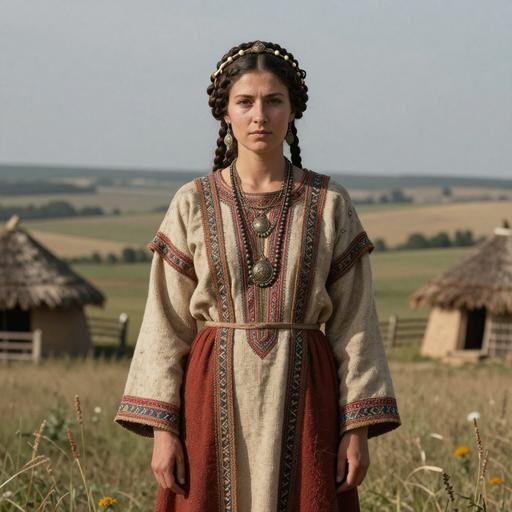
Portrait of ancient individual PCA0455 from Poland, dated 100 CE - 300 CE
PCA0455
Poland Wielbark Culture 100 CE - 300 CE Wielbark H27 Direct
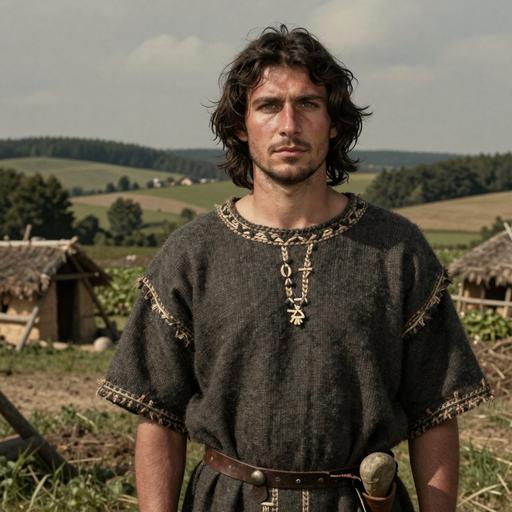
Portrait of ancient individual MBG017 from Germany, dated 616 BCE
MBG017
Germany Hallstatt Culture 616 BCE Hallstatt H27 Direct
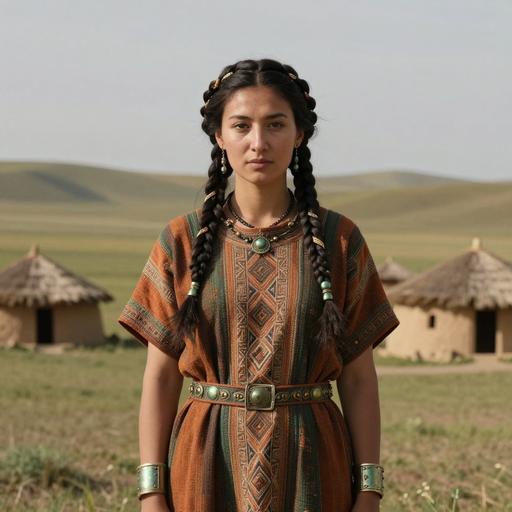
Portrait of ancient individual RKF013 from Hungary, dated 650 CE - 900 CE
RKF013
Hungary Late Avar Period Hungary 650 CE - 900 CE Avar Culture H27 Direct
Portrait of ancient individual RKF017 from Hungary, dated 650 CE - 900 CE
RKF017
Hungary Late Avar Period Hungary 650 CE - 900 CE Avar Culture H27 Direct
Portrait of ancient individual RKF127 from Hungary, dated 650 CE - 900 CE
RKF127
Hungary Late Avar Period Hungary 650 CE - 900 CE Avar Culture H27 Direct
Portrait of ancient individual RKF019 from Hungary, dated 653 CE - 673 CE
RKF019
Hungary Late Avar Period Hungary 653 CE - 673 CE Avar Culture H27 Direct
Portrait of ancient individual I12905 from Netherlands, dated 752 BCE - 401 BCE
I12905
Netherlands Early Iron Age Netherlands 752 BCE - 401 BCE Dutch Iron Age H27 Direct
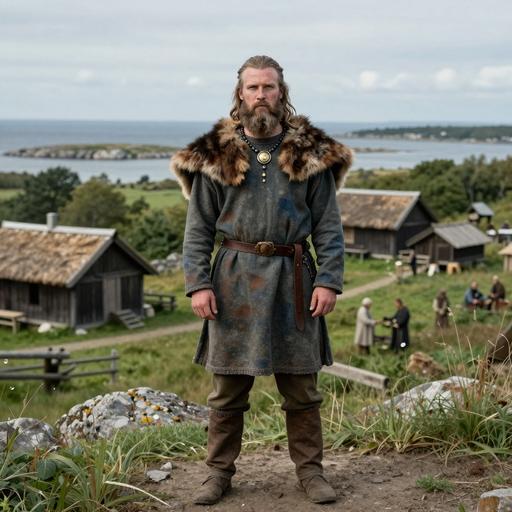
Portrait of ancient individual VK380 from Sweden, dated 800 CE - 1100 CE
VK380
Sweden Viking Age Sweden 800 CE - 1100 CE Viking H27 Direct
Portrait of ancient individual VK380 from Sweden, dated 800 CE - 1100 CE
VK380
Sweden The Viking Age 800 CE - 1100 CE H27 Direct
Portrait of ancient individual PCA0309 from Poland, dated 1000 CE - 1200 CE
PCA0309
Poland Iron Age Culture of Końskie 1000 CE - 1200 CE Końskie Culture H27 Direct
Chapter VI

Carrier Distribution Map

Geographic distribution of 22 ancient DNA samples (direct and subclade carriers of H27)

Direct carrier Subclade carrier
Time Period Filter
All Time Periods
Showing all samples
Chapter VII

Temporal Distribution

Distribution of carriers across archaeological periods

Chapter VIII

Geographic Distribution

Distribution by country of origin (direct and subclade carriers shown by default)

Chapter IX

Country × Era Distribution

Cross-tabulation of carrier countries and archaeological periods (direct and subclade carriers shown by default)

Data

Data & Provenance

Source information and data quality

Last Updated 2026-02-16
Confidence Score 50/100
Coverage Low
Data Source

We use the latest phylotree for MTDNA haplogroup classification and data.