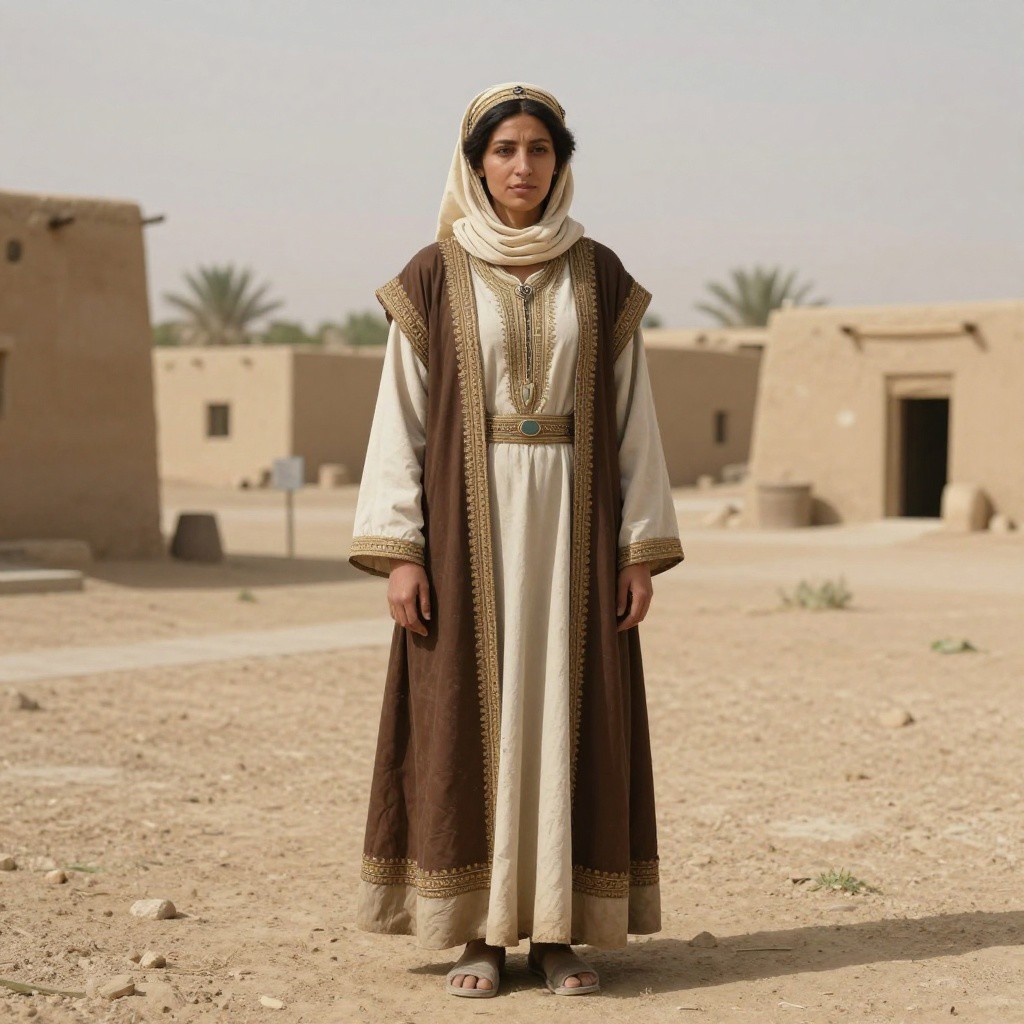
The Story
The journey of mtDNA haplogroup I5A2
Origins and Evolution
mtDNA haplogroup I5A2 is a downstream subclade of I5A, itself a branch of the broader haplogroup I5. Based on the phylogenetic position of I5A2 within I5A and the estimated age of the parent clade, I5A2 most plausibly arose in the Near East or Anatolia in the Neolithic or early post‑Neolithic (roughly ~5 thousand years ago). The formation of I5A2 is consistent with a pattern seen in several low‑frequency West Eurasian maternal lineages that expanded with early farming populations and later experienced localized drift and founder effects in the Caucasus and southeastern Europe.
Like other rare subclades of I5, I5A2 shows limited deep structure in currently available sequence databases, which suggests either a relatively recent origin or under‑sampling in key regions (Anatolia, the Caucasus, and parts of the eastern Mediterranean). The phylogenetic mutations that define I5A2 are diagnostic within full mitogenome data but are often missed in partial control‑region datasets, making whole mitogenome sampling important for accurate detection.
Subclades (if applicable)
At present, I5A2 appears to be a narrowly defined subclade with few well‑characterized downstream branches. Available modern and ancient mitogenomes indicate I5A2 is present as one or a small number of closely related lineages rather than a deeply diversified clade. Additional whole mitogenome sequencing from Anatolia, the Caucasus and southeastern Europe could reveal further internal structure or minor subbranches.
Geographical Distribution
I5A2 is concentrated at low to moderate frequencies across parts of the Near East, Anatolia and the Caucasus, with sporadic occurrences in southern and eastern Mediterranean Europe. Its distribution mirrors that of its parent clade I5A: strongest signal in Anatolia/Levant and the Caucasus, with patchy, low‑frequency presence in the Balkans, Greece, southern Italy and occasionally North Africa and South/Central Asia. Where present in Europe, I5A2 is typically found among populations with historical or prehistoric links to eastern Mediterranean and Near Eastern gene flow.
Because I5A2 is rare, regional frequency estimates are sensitive to sampling. Ancient DNA evidence for I5A2 is currently limited; the lineage has been observed only rarely in archaeological contexts, suggesting either limited presence in ancient populations or that it has been undersampled in aDNA datasets.
Historical and Cultural Significance
The pattern of occurrence for I5A2 is consistent with a role in the Neolithic dispersal of farming from Anatolia into southeastern Europe and the Caucasus. It likely traveled with early farmer groups and persisted through local demographic processes, including founder effects and continuity in some isolated or semi‑isolated communities. In later periods, mobility across the eastern Mediterranean, trade and historical population movements produced further low‑level spread into neighboring regions.
I5A2 is not associated with any single well‑documented archaeological horizon (for example, it is not a signature lineage of pan‑European Bronze Age migrations). Instead, its presence is best interpreted as part of the maternal genetic tapestry contributed by Neolithic and post‑Neolithic Near Eastern ancestries in the Caucasus and southeastern Europe.
Conclusion
mtDNA I5A2 is a small, regionally focused maternal lineage that originated in the Near East/Anatolia around the Neolithic period and spread in low frequencies into the Caucasus, the Balkans and the eastern Mediterranean. Its rarity in both modern and ancient datasets means that expanded whole‑mitogenome sampling in Anatolia, the Caucasus and adjacent regions is needed to refine estimates of age, routes of spread and any finer substructure within the clade. Until more data are available, I5A2 should be viewed as one of several low‑frequency maternal markers that record the Neolithic and later Near Eastern contributions to West Eurasian maternal diversity.
Key Points
- Origins and Evolution
- Subclades (if applicable)
- Geographical Distribution
- Historical and Cultural Significance
- Conclusion