Menu
mtDNA Haplogroup • Maternal Lineage

I5A

mtDNA Haplogroup I5A

~6,000 years ago
Near East / Anatolia
2 subclades
9 ancient samples
Scroll to explore
Chapter I

The Story

The journey of mtDNA haplogroup I5A

Origins and Evolution

mtDNA haplogroup I5A is a subclade of haplogroup I5, itself a branch of haplogroup I. Based on the phylogenetic position of I5 and the geographic distribution of related lineages, I5A most likely arose in the Near East / Anatolia region during the early postglacial to Neolithic interval (roughly ~6–7 kya). Its emergence is consistent with the broader pattern of Neolithic maternal lineages that expanded with early farming populations from Anatolia into the Aegean, the Balkans and the Caucasus.

Genetically, I5A represents a derived cluster within I5 with a limited set of downstream lineages and modest diversity, which suggests a localized origin followed by dispersal through demic and cultural processes associated with early agricultural expansion and subsequent regional movements.

Subclades (if applicable)

I5A appears to be a relatively shallow subclade within I5 with few deeply branched downstream clades documented in public databases and ancient DNA datasets. Where substructure exists it is often geographically localized (for example distinct branches observed in the Caucasus versus the Balkans), but overall the subclade diversity is low compared with more widespread West Eurasian haplogroups. Ancient DNA assignments (six identified ancient samples in available datasets) support the existence of I5A in Neolithic and later contexts but do not yet indicate extensive internal diversification.

Geographical Distribution

The modern and ancient distribution of I5A shows a concentration in the Near East / Anatolia, with notable representation in the Caucasus, Balkans, and the eastern Mediterranean. The haplogroup occurs at low frequencies in parts of southern Europe (Italy, Greece, Balkan Peninsula) and has sporadic, patchy occurrences in North Africa and parts of Central/South Asia. In modern genetic surveys it is typically reported at low to moderate frequencies in regional samples from Anatolia and the Caucasus and only at low frequencies across southern Europe.

I5A is also found intermittently in some Jewish community lineages, reflecting historical Near Eastern ancestry and the complex demographic history of the eastern Mediterranean.

Historical and Cultural Significance

The temporal and geographic profile of I5A is consistent with a role in the Neolithic diffusion of agriculture from Anatolia into neighboring regions. The association with Anatolian Neolithic and Early European Farmer contexts implies that I5A likely moved with early farming groups into the Aegean, Balkans and adjacent areas. Later population movements in the Bronze Age and historic period — trade, migration and localized demographic shifts — produced the scattered occurrences observed in the Mediterranean, Caucasus and North Africa.

Because I5A is low frequency, it is not tied to a single large-scale migration event in the way some haplogroups are; rather it serves as a marker for regional female-line continuity and local Neolithic-derived ancestry in parts of West Eurasia.

Conclusion

mtDNA I5A is a Neolithic-age, Near Eastern-derived maternal lineage that illustrates the patchy but persistent legacy of Anatolian/Levantine female ancestry across the Caucasus, the eastern Mediterranean and southern Europe. Its low diversity and low-to-moderate regional frequencies point to a localized origin and subsequent dispersal with early farmers and later regional movements, and ongoing detection in both modern and ancient samples makes it a useful marker for studies of Neolithic demography and post-Neolithic population structure in West Eurasia.

Key Points

  • Origins and Evolution
  • Subclades (if applicable)
  • Geographical Distribution
  • Historical and Cultural Significance
  • Conclusion
Chapter II

Tree & Relationships

Phylogenetic context and subclades

Evolution Path

This haplogroup's evolutionary journey from its earliest ancestor to the present.

Steps Haplogroup Age Estimate Archaeology Era Time Passed Immediate Descendants Tested Modern Descendants Ancient Connections
1 I5A Current ~6,000 years ago 🪨 Chalcolithic 6,500 years 2 10 9
2 I5 ~7,000 years ago 🌾 Neolithic 7,000 years 3 13 1
3 I ~25,000 years ago 🦴 Paleolithic 25,000 years 7 296 66

Siblings (2)

Other branches from the same parent haplogroup

Chapter III

Where in the World

Geographic distribution and modern presence

Place of Origin

Near East / Anatolia

Modern Distribution

The populations where mtDNA haplogroup I5A is found include:

  1. Near Eastern populations (Anatolia, Levant)
  2. Caucasus populations (Armenia, Georgia, Azerbaijan)
  3. Southern European populations (Balkans, Italy)
  4. Eastern Mediterranean populations (Greece, Cyprus)
  5. Jewish communities (sporadic, low frequency in some lineages)
  6. Ancient Neolithic farmer communities (Anatolian and early European Neolithic contexts)
  7. Scattered occurrences in Central/South Asia and North Africa (low, patchy frequencies)
CHAPTER IV

When in Time

Your haplogroup in the context of human history

~10k years ago

Neolithic Revolution

Agriculture begins, settled communities form

~6k years ago

Haplogroup I5A

Your mtDNA haplogroup emerged in Near East / Anatolia

Near East / Anatolia
~5k years ago

Bronze Age

Metalworking, writing, and early civilizations

~3k years ago

Iron Age

Iron tools, expanded trade networks

~2k years ago

Classical Antiquity

Greek and Roman civilizations flourish

Present

Present Day

Modern era

Your Haplogroup
Historical Era
Chapter IV-B

Linked Cultures

Ancient cultures associated with mtDNA haplogroup I5A

Cultural Heritage

These ancient cultures have been linked to haplogroup I5A based on matching ancient DNA samples from archaeological excavations. The presence of this haplogroup in these cultures provides insights into the migrations and population movements of populations carrying this haplogroup.

Canaanite Early Árpád Gumelnița Hagios Charalambos Culture Ikiztepe Culture Late Anatolian Chalcolithic Late Bronze Jordan Odigitria Culture Usatove Viking
Culture assignments are based on archaeological context of ancient DNA samples and may represent regional associations during specific time periods.
Chapter V

Sample Catalog

6 direct carriers and 3 subclade carriers of haplogroup I5A

9 / 9 samples
Portrait Sample Country Era Date Culture mtDNA Match
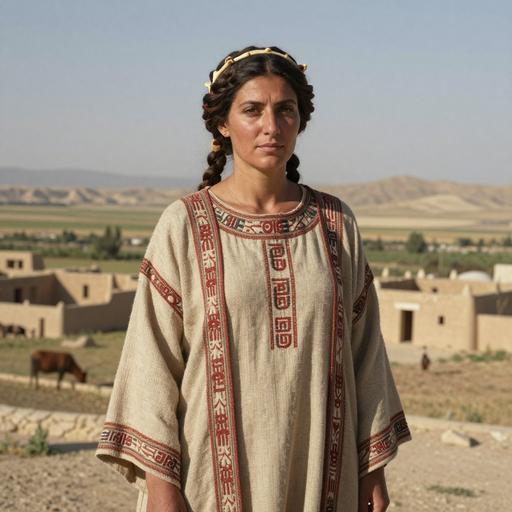
Portrait of ancient individual VK457 from Sweden, dated 900 CE - 1050 CE
VK457
Sweden Viking Age Sweden 900 CE - 1050 CE Viking I5a Direct
Portrait of ancient individual VK457 from Sweden, dated 900 CE - 1050 CE
VK457
Sweden The Viking Age 900 CE - 1050 CE I5a Direct
Portrait of ancient individual HGC024 from Greece, dated 2300 BCE - 1900 BCE
HGC024
Greece Early Minoan Hagios Charalambos Cave 2300 BCE - 1900 BCE Hagios Charalambos Culture I5a Direct
Portrait of ancient individual HGC063 from Greece, dated 2300 BCE - 1900 BCE
HGC063
Greece Early Minoan Hagios Charalambos Cave 2300 BCE - 1900 BCE Hagios Charalambos Culture I5a Direct
Portrait of ancient individual ART039 from Turkey, dated 3766 BCE - 3641 BCE
ART039
Turkey Late Chalcolithic Turkey 3766 BCE - 3641 BCE Late Anatolian Chalcolithic I5a Direct
Portrait of ancient individual PIE063 from Romania, dated 4549 BCE - 4371 BCE
PIE063
Romania Gumelnița Culture 4549 BCE - 4371 BCE Gumelnița I5a Direct
Portrait of ancient individual IBE-107 from Hungary, dated 1000 CE - 1100 CE
IBE-107
Hungary Early Árpád Dynasty Period Hungary 1000 CE - 1100 CE Early Árpád I5a2+16086 Downstream
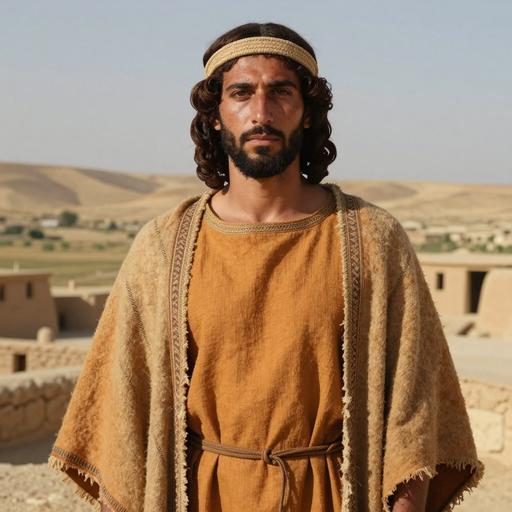
Portrait of ancient individual I1934 from Israel, dated 1400 BCE - 1100 BCE
I1934
Israel Middle to Late Bronze Age Israel 1400 BCE - 1100 BCE Canaanite I5a1 Downstream
Portrait of ancient individual I1934 from Israel, dated 1400 BCE - 1100 BCE
I1934
Israel Middle to Late Bronze Age Levant 1400 BCE - 1100 BCE I5a1 Downstream
Chapter VI

Carrier Distribution Map

Geographic distribution of 9 ancient DNA samples (direct and subclade carriers of I5A)

Direct carrier Subclade carrier
Time Period Filter
All Time Periods
Showing all samples
Chapter VII

Temporal Distribution

Distribution of carriers across archaeological periods

Chapter VIII

Geographic Distribution

Distribution by country of origin (direct and subclade carriers shown by default)

Chapter IX

Country × Era Distribution

Cross-tabulation of carrier countries and archaeological periods (direct and subclade carriers shown by default)

Data

Data & Provenance

Source information and data quality

Last Updated 2026-02-16
Confidence Score 50/100
Coverage Low
Data Source

We use the latest phylotree for MTDNA haplogroup classification and data.