Menu
mtDNA Haplogroup • Maternal Lineage

J1C1

mtDNA Haplogroup J1C1

~9,000 years ago
Near East / Caucasus
10 subclades
Scroll to explore
Chapter I

The Story

The journey of mtDNA haplogroup J1C1

Origins and Evolution

mtDNA haplogroup J1C1 is a subclade of J1C within the broader haplogroup J, a maternal lineage associated with post‑glacial and Neolithic expansions from southwestern Asia into Europe and the Mediterranean. Based on the phylogenetic position of J1C1 beneath J1C and divergence estimates for related J sublineages, J1C1 most plausibly diversified in the Near East or southern Caucasus during the Early Holocene (~9 kya), after the initial emergence of J1 and J1C (which are often dated near ~12 kya). The topology of the J1C clade and the geographic distribution of basal and derived lineages support a Near Eastern/Caucasian origin followed by movement into Anatolia, the Levant and south‑east Europe.

Molecular clock estimates for mtDNA control‑region and whole‑mitogenome studies place many J sublineages in the window between the late Pleistocene and Early Holocene; J1C1 fits this pattern as a postglacial expansion lineage that became established in Neolithic farming communities and persisted into later archaeological periods.

Subclades

J1C1 is itself a defined subclade within J1C. Where available, deeper sequencing of whole mitogenomes has resolved internal branches of J1C1 in some regional samples, indicating locally restricted subbranches in parts of southern Europe and the Caucasus. Closely related lineages within J1C (for example other J1C1 subbranches and J1C2) share a common Near Eastern ancestry; finer subclade structure continues to be refined as more ancient and modern whole mitogenomes are sequenced.

Geographical Distribution

The modern distribution of J1C1 is concentrated in the Mediterranean and adjacent regions, with notable frequencies in southern and western Europe and the Near East. It is also present, at lower frequencies, in North Africa, the Caucasus and parts of Central Asia. J1C1 is reported in both Ashkenazi and Sephardi Jewish populations, consistent with the deep Near Eastern roots and later diaspora movements that involved maternal lineages. J1C1 appears in archaeological contexts as well: in our referenced database this subclade has been identified in 67 ancient DNA samples, reinforcing its continuity from Neolithic and post‑Neolithic contexts into historical times.

Historical and Cultural Significance

Because J1C1 likely diversified in or near early farming homelands and is present in Neolithic and later archaeological samples, it is interpreted as part of the matrilineal signature of Early European Farmers (EEF) and adjacent Neolithic populations that dispersed into Europe and the Mediterranean. The presence of J1C1 in historical and modern Jewish communities reflects both its Near Eastern origin and later population movements and admixture events across the Mediterranean and Europe. In later periods, J1C1 persists at low to moderate frequencies and is found among populations associated with Bronze Age and Iron Age cultural horizons in the Mediterranean and Near East.

While J1C1 is not typically diagnostic for any single archaeological culture by itself, its frequency pattern and ancient occurrences align it with Neolithic dispersals from Anatolia/Levant and with continuing maternal line continuity in many Mediterranean populations.

Conclusion

J1C1 is a regional, Neolithic‑era maternal lineage derived from J1C with a Near Eastern/Caucasus origin around the Early Holocene (~9 kya). It contributes to the maternal genetic landscape of southern Europe, the Near East, North Africa and some Central Asian populations and is present in Jewish diaspora groups; ancient DNA records (including 67 identified samples in one database) confirm its presence across Neolithic and subsequent periods, making it a useful marker for studies of post‑glacial and Neolithic female‑mediated migrations into the Mediterranean and Europe.

Key Points

  • Origins and Evolution
  • Subclades
  • Geographical Distribution
  • Historical and Cultural Significance
  • Conclusion
Chapter II

Tree & Relationships

Phylogenetic context and subclades

Evolution Path
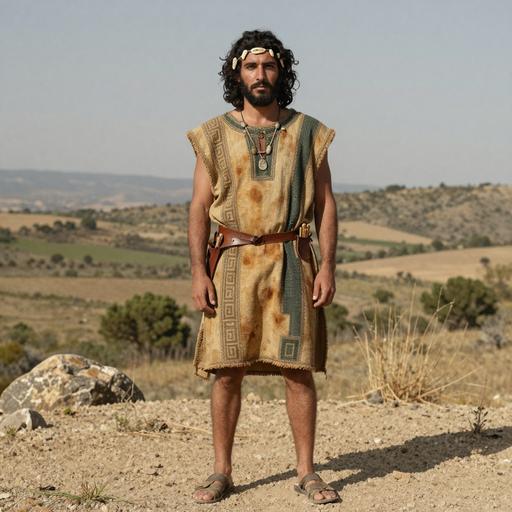
This haplogroup's evolutionary journey from its earliest ancestor to the present.

Steps Haplogroup Age Estimate Archaeology Era Time Passed Immediate Descendants Tested Modern Descendants Ancient Connections
1 J1C1 Current ~9,000 years ago 🌾 Neolithic 9,000 years 10 164 0
2 J1C ~12,000 years ago 🌾 Neolithic 12,000 years 9 605 319
3 J1 ~30,000 years ago 🦴 Paleolithic 30,000 years 2 1,069 55
4 J ~45,000 years ago 🦴 Paleolithic 45,000 years 4 1,622 16
5 JT ~45,000 years ago 🦴 Paleolithic 45,000 years 2 3,237 1
6 N ~60,000 years ago 🦴 Paleolithic 60,000 years 15 15,452 13
7 L3 ~70,000 years ago 🦴 Paleolithic 70,000 years 11 17,621 6
8 L ~160,000 years ago 🦴 Paleolithic 160,000 years 7 18,987 5

Siblings (8)

Other branches from the same parent haplogroup

Chapter III

Where in the World

Geographic distribution and modern presence
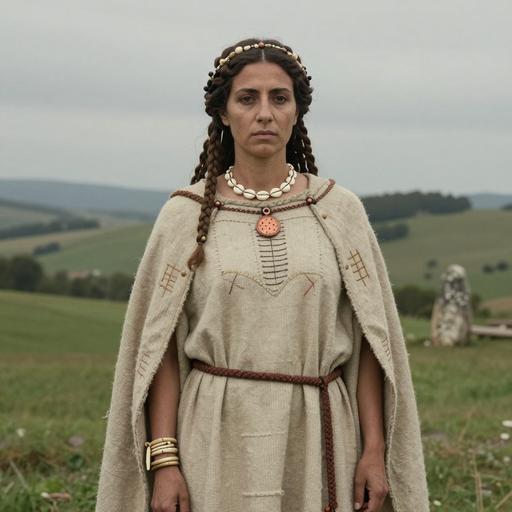
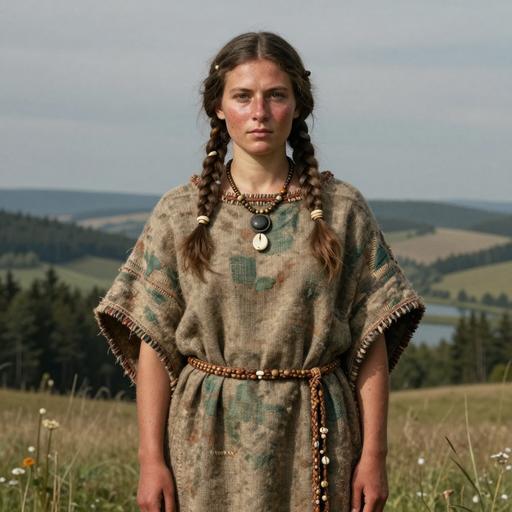
Place of Origin

Near East / Caucasus

Modern Distribution

The populations where MTDNA haplogroup J1C1 is found include:

  1. Southern and Western European populations
  2. Middle Eastern populations
  3. North African populations
  4. Caucasus region populations
  5. Some populations in Central Asia
  6. Jewish populations (Ashkenazi and Sephardi)
CHAPTER IV

When in Time

Your haplogroup in the context of human history

~10k years ago

Neolithic Revolution

Agriculture begins, settled communities form

~9k years ago

Haplogroup J1C1

Your mtDNA haplogroup emerged in Near East / Caucasus

Near East / Caucasus
~5k years ago

Bronze Age

Metalworking, writing, and early civilizations

~3k years ago

Iron Age

Iron tools, expanded trade networks

~2k years ago

Classical Antiquity

Greek and Roman civilizations flourish

Present

Present Day

Modern era

Your Haplogroup
Historical Era
Chapter IV-B

Linked Cultures

Ancient cultures associated with mtDNA haplogroup J1C1

Cultural Heritage

These ancient cultures have been linked to haplogroup J1C1 based on matching ancient DNA samples from archaeological excavations. The presence of this haplogroup in these cultures provides insights into the migrations and population movements of populations carrying this haplogroup.

Alföld Linear Pottery AVK Bodrogkeresztur French Neolithic Greek Neolithic Late Neolithic Greek Linear Pottery Culture Macedonian Neolithic Sardinian Neolithic Szakálhát Group
Culture assignments are based on archaeological context of ancient DNA samples and may represent regional associations during specific time periods.
Chapter V

Sample Catalog

43 direct carriers and 57 subclade carriers of haplogroup J1C1

50 / 50 samples
Portrait Sample Country Era Date Culture mtDNA Match
Portrait of ancient individual I15501 from Serbia, dated 1 CE - 400 CE
I15501
Serbia Roman Serbia 1 CE - 400 CE Roman Provincial J1c1 Direct
Portrait of ancient individual I14360 from United Kingdom, dated 151 BCE - 62 BCE
I14360
United Kingdom Late Iron Age England 151 BCE - 62 BCE British Late Iron Age J1c1 Direct
Portrait of ancient individual I14359 from United Kingdom, dated 200 BCE - 100 CE
I14359
United Kingdom Late Iron Age England 200 BCE - 100 CE British Late Iron Age J1c1 Direct
Portrait of ancient individual ISL6950 from France, dated 340 BCE - 50 BCE
ISL6950
France Iron Age Culture of Bas-Rhin 340 BCE - 50 BCE Bas-Rhin J1c1 Direct
Portrait of ancient individual I14858 from United Kingdom, dated 396 BCE - 207 BCE
I14858
United Kingdom Middle Iron Age England 396 BCE - 207 BCE Middle Iron Age British J1c1 Direct
Portrait of ancient individual I3757 from Spain, dated 400 BCE - 300 BCE
I3757
Spain Iron Age Celtic Spain 400 BCE - 300 BCE Celtic Iberian J1c1 Direct
Portrait of ancient individual I19043 from United Kingdom, dated 400 BCE - 100 BCE
I19043
United Kingdom Middle to Late Iron Age England 400 BCE - 100 BCE Late Iron Age British J1c1 Direct
Portrait of ancient individual I20510 from Czech Republic, dated 400 BCE - 200 BCE
I20510
Czech Republic Iron Age La Tène Culture, Czech Republic 400 BCE - 200 BCE La Tène Culture J1c1 Direct
Portrait of ancient individual PT7 from France, dated 425 BCE - 400 BCE
PT7
France Iron Age Gard Culture 425 BCE - 400 BCE Gard Culture J1c1 Direct
Portrait of ancient individual I12877 from Spain, dated 550 BCE - 350 BCE
I12877
Spain Iron Age Spain 550 BCE - 350 BCE Iberian Iron Age J1c1 Direct
Chapter VI

Carrier Distribution Map

Geographic distribution of 100 ancient DNA samples (direct and subclade carriers of J1C1)

Direct carrier Subclade carrier
Time Period Filter
All Time Periods
Showing all samples
Chapter VII

Temporal Distribution

Distribution of carriers across archaeological periods

Chapter VIII

Geographic Distribution

Distribution by country of origin (direct and subclade carriers shown by default)

Chapter IX

Country × Era Distribution

Cross-tabulation of carrier countries and archaeological periods (direct and subclade carriers shown by default)

Data

Data & Provenance

Source information and data quality

Last Updated 2026-02-16
Confidence Score 50/100
Coverage Low
Data Source

We use the latest phylotree for MTDNA haplogroup classification and data.