mtDNA · Maternal lineage

M1B

mtDNA Haplogroup M1B

A reference profile for one lineage branch. Shared haplogroups do not establish a family relationship or cultural identity.

Reference profile

Branch background

Historical context for mtDNA lineage branch M1B

Origins and Evolution

mtDNA haplogroup M1B is a downstream branch of macro-haplogroup M1, a lineage thought to reflect an early Asia-derived maternal lineage that returned to Africa in the Paleolithic. M1 as a whole is dated earlier (~26 kya for the basal M1 node), and M1B represents a regional diversification that likely arose in Northeast Africa or the adjacent Maghreb after that initial back-migration. The estimated time depth for M1B (on the order of ~10–20 kya) places its origin in the Late Pleistocene to Early Holocene, a period when climatic shifts and human demographic changes promoted population structure and localized expansions within North Africa and the Nile corridor.

Subclades (if applicable)

M1B itself comprises internal substructure documented in population studies and high-resolution sequencing, with some branches showing tight geographic clustering. Where sequencing depth permits, researchers recognize local subbranches of M1B that are concentrated in Northwest African (Maghrebi) populations versus those found at lower frequency in Northeast Africa and the Levant. Because nomenclature and resolution continue to improve with mitogenome data, the number and naming of M1B subclades can change as more complete mtDNA genomes are published.

Geographical Distribution

M1B is concentrated primarily in North Africa (Maghreb and adjacent Nile Valley populations), with lower frequency occurrences in the Horn of Africa, the Levant/Arabian Peninsula, and scattered occurrences in southern Europe associated with historic or prehistoric Mediterranean contacts. Modern populations showing M1B include Berber-speaking groups of Morocco, Algeria and Tunisia, some Nile Valley groups in Egypt and Sudan, and isolated individuals in the Levant and Iberian Peninsula. Archaeogenetic evidence ties related M1 lineages to North African Epipaleolithic contexts (e.g., Iberomaurusian/Capsian–related remains), suggesting long-term regional continuity.

Historical and Cultural Significance

The distribution and diversity of M1B point to a Paleolithic/epipaleolithic origin with continuity into later periods. In North Africa it is often discussed alongside other autochthonous maternal lineages (for example mtDNA U6) that together mark a distinct regional maternal heritage. M1B’s presence at low frequencies in the Levant, Arabia, and southern Europe reflects both prehistoric contacts across the Mediterranean and later historical movements (trade, migration, and colonial-era mobility). Because of its antiquity and regional clustering, M1B can be informative in studies of Maghrebi population history, the demographic impact of post-glacial recolonization, and maternal ancestry in diasporic North African communities.

Conclusion

M1B is a regionally important subclade of M1 that captures part of the maternal legacy of North Africa and adjacent regions. Its temporal placement after the basal M1 node indicates local differentiation following an early backflow into Africa, and the lineage today serves as a useful marker for reconstructing prehistoric population structure, Holocene demographic events, and Mediterranean contacts involving North African maternal ancestry.

Key Points

  • Origins and Evolution
  • Subclades (if applicable)
  • Geographical Distribution
  • Historical and Cultural Significance
  • Conclusion
Reference profile

Tree & Relationships

Phylogenetic context and subclades

Evolution Path

Follow the recorded parent branches toward M1B. Dates are estimates and can change as reference data is revised.

Steps Haplogroup Age Estimate Archaeology Era Time Passed Immediate Descendants Tested Modern Descendants Ancient Connections
1 M1B Current ~15,000 years ago Mesolithic 15,000 years 1 2 4
2 M1 ~26,000 years ago Paleolithic 26,000 years 2 100 3
3 M1'20'51 - - - 3 105 0
4 M ~60,000 years ago Paleolithic 60,000 years 42 2,671 41
5 L3 ~70,000 years ago Paleolithic 70,000 years 7 30,162 6
6 L3'4 - - - 2 30,212 0
7 L3'4'6 - - - 2 30,216 0
8 L2'3'4'6 - - - 2 31,333 0
9 L2'3'4'5'6'7 - - - 2 31,349 0
10 L1'2'3'4'5'6'7 - - - 2 31,852 0
11 L ~160,000 years ago Paleolithic 160,000 years 2 32,236 5

Siblings (1)

Other branches from the same parent haplogroup

Reference profile

Where in the World

Geographic distribution and modern presence

Recorded origin

Northeast Africa / North Africa

Modern Distribution

The populations where mtDNA haplogroup M1B is found include:

  1. Berber-speaking groups of the Maghreb (Morocco, Algeria, Tunisia)
  2. Egyptian and Nile Valley populations
  3. Saharan and Sahelian groups with North African connections (e.g., Tuareg)
  4. Horn of Africa populations at low frequency (Ethiopia, Eritrea, Somalia)
  5. Levantine and Arabian Peninsula groups (low to sporadic frequencies)
  6. Southern European populations at low frequency (Iberian Peninsula, Sicily)
  7. Jewish communities with North African ancestry (Sephardi/Mizrahi backgrounds)
  8. Canary Islanders and Atlantic island populations in trace occurrences
  9. North African archaeological remains associated with Iberomaurusian/Capsian contexts
  10. Scattered individuals in broader Near Eastern and Mediterranean historical-period samples
Historical context

A branch through time

Estimated formation in a broad historical timeline. Period markers provide context and do not imply a connection with particular cultures.

  1. ~20k years ago

    Last Glacial Maximum

    Peak of the last ice age, populations isolated

  2. ~15k years ago

    Haplogroup M1B

    Estimated formation of this mtDNA branch; dates and locations are reference estimates.

    This branch
  3. ~10k years ago

    Neolithic Revolution

    Agriculture begins, settled communities form

  4. ~5k years ago

    Bronze Age

    Metalworking, writing, and early civilizations

  5. ~3k years ago

    Iron Age

    Iron tools, expanded trade networks

  6. ~2.5k years ago

    Classical Antiquity

    Greek and Roman civilizations flourish

  7. Present

    Present Day

    Modern era

Reference profile

Archaeological context

Recorded archaeological associations for mtDNA branch M1B

Recorded associations

These labels describe archaeological contexts recorded for reference samples linked to M1B. An association does not establish that all carriers belonged to a culture or followed a particular migration route.

British Neolithic Goyet Cave Gravettian Iberomaurusian Indonesian Hunter-Gatherer Culture Moroccan Transitional Ostuni Culture Spanish Gravettian
Culture assignments are based on archaeological context of ancient DNA samples and may represent regional associations during specific time periods.
Reference profile

Sample Catalog

2 direct carriers and 2 subclade carriers of haplogroup M1B

4 shown · 4 matching samples

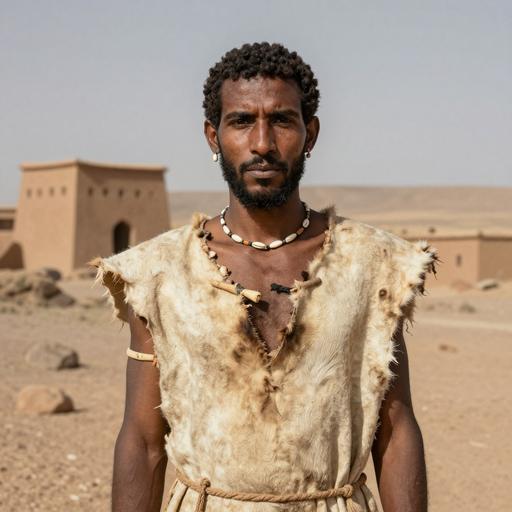
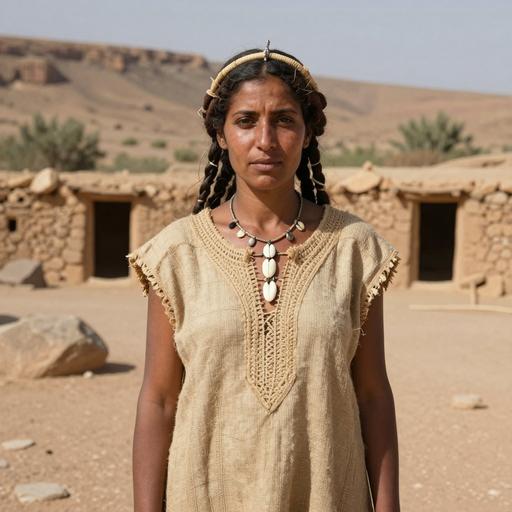
Portraits are AI-generated illustrations. Sample labels and accession IDs identify the reference records.

Portrait Sample Country Era Date Culture mtDNA Match
AI-generated illustrative portrait of Paleolithic individual, Taforalt, Morocco (13,200-11,900 BCE)
Sample ID: TAF014
Morocco Morocco Iberomaurusian 13200 BCE - 11900 BCE Iberomaurusian M1b Direct
AI-generated illustrative portrait of Iberomaurusian individual, Taforalt, Morocco (13,200-11,900 BCE)
Sample ID: TAF014
Morocco The Iberomaurusian Culture 13200 BCE - 11900 BCE Iberomaurusian M1b Direct
AI-generated illustrative portrait of Berber individual, Ifri n'Amr or Moussa, Morocco (5,367-5,126 BCE)
Sample ID: IAM.3
Morocco Morocco EN 5367 BCE - 5126 BCE Moroccan Transitional M1b1 Subclade
AI-generated illustrative portrait of North Africa N individual, Ifri n'Amr or Moussa, Morocco (5,367-5,126 BCE)
Sample ID: IAM.3
Morocco Neolithic North Africa 5367 BCE - 5126 BCE M1b1 Subclade
MATERNAL LINEAGE · ANCIENT DNA

Ancient lineage evidence map

Follow parent clades toward this branch and explore where ancient carriers were found.

Loading ancient observations…

Markers are archaeological find locations. A dashed connector is an uncertain, proposed geographic transition between consecutive branches supported by multiple dated observations; it is not an exact travel route, birthplace or proof of direct descent. Parent-clade samples may belong to other descendant branches. Gaps remain where evidence is insufficient. Sample dates differ from haplogroup formation dates.

Reference profile

Carrier Distribution Map

Geographic distribution of 4 ancient DNA samples (direct and subclade carriers of M1B)

Direct carrier Subclade carrier
Time Period Filter
All Time Periods
Showing all samples
Reference profile

Temporal Distribution

Distribution of carriers across archaeological periods

Reference profile

Geographic Distribution

Counts by recorded sample country. These reflect the available reference selection, not population frequencies.

Reference profile

Country × Era Distribution

Compare recorded sample counts across countries and archaeological periods. Select a populated cell to inspect a sample.

Data

Data & Provenance

Source information and data quality

Last Updated 2026-02-16
Confidence Score 50/100
Coverage Low

Data Source

Classification, estimated dates and geographic context reflect the recorded reference data and may change as evidence is revised. Sample coverage is uneven; recorded locations and archaeological associations do not establish personal origin or cultural identity.

A haplogroup follows one maternal or paternal line. The branch prediction depends on which markers the DNA file contains. How our analysis works