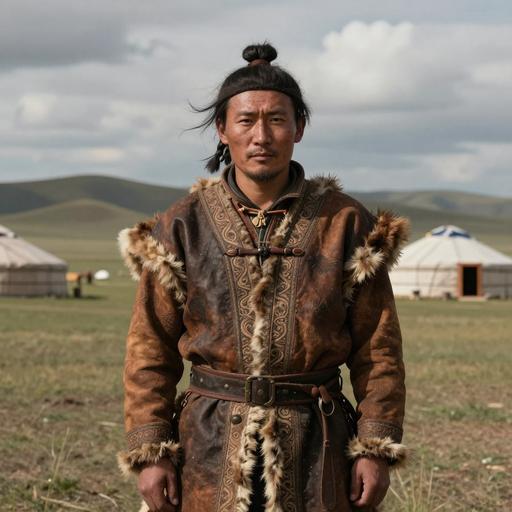
The Story
The journey of Y-DNA haplogroup C2A1A1B1
Origins and Evolution
Y-DNA haplogroup C2A1A1B1 sits as a downstream branch of C2A1A1B (itself a descendant of the M217-derived C2 lineage). Based on the phylogenetic position relative to other C2 subclades and the archaeological/historical timing of demographic change in northern Eurasia, C2A1A1B1 most likely originated in the Central–East Asian / southern Siberian frontier during the late Bronze Age to early Iron Age (roughly 2,500 years ago). Its formation is plausibly tied to regional population structure among forest-steppe and steppe pastoralist groups where earlier C2-M217 lineages were already established.
Molecular clock estimates for closely related C2 subclades, combined with ancient DNA sampling from northern Eurasia, support a relatively shallow time depth for many C2A1A1-derived lineages, consistent with expansions linked to mobile pastoralist societies and later historic nomadic polities.
Subclades
C2A1A1B1 is an intermediate terminal branch beneath C2A1A1B. Where sampling density allows, it may contain further downstream sub-branches (designated by additional SNPs discovered in targeted sequencing). Those downstream lineages, when present, typically show strong localization to particular ethnic or clan groups (for example, specific Mongol or Tungusic clan clusters), reflecting recent founder effects and genealogical expansions.
Because many detailed downstream SNPs in this portion of the tree have been described only recently or remain undersampled in some regions, the subclade topology and internal diversity of C2A1A1B1 will continue to refine as more high-coverage Y-chromosome data and ancient DNAs become available.
Geographical Distribution
C2A1A1B1 is concentrated in northern and northeastern Eurasia, with the highest frequencies and diversity in populations that have strong Mongolic and Tungusic ancestry components. Typical geographic patterns include elevated presence in:
- Southern and central Siberia (including republics and regions inhabited by Buryats, Tuvans, Yakuts, Evenks, Evens)
- Mongolian populations and adjacent Mongolic-speaking groups
- Some southern Siberian Turkic groups (e.g., particular Tuvan and Altai clans, and select Kazakh lineages)
Low-frequency occurrences are observed in neighboring Northeast Asian populations (occasional hits in Koreans and Japanese), and sporadic, very rare detections may appear in historical or modern samples from populations in northern North America — generally interpreted as either very low-level ancient gene flow or modern/sampling artifacts rather than a major prehistoric contribution.
Historical and Cultural Significance
The distribution and time depth of C2A1A1B1 tie it to the demographic processes that shaped northern Eurasia during the late Bronze Age, Iron Age and later historic periods. The haplogroup likely spread and differentiated alongside mobile pastoralism, steppe social networks, and the political dynamics of nomadic confederations. Associations include:
- Expansion with steppe and forest-steppe pastoralist communities during the Iron Age and Early Medieval periods
- Representation in populations historically connected to the Xiongnu/Xianbei-era sphere and later Turkic and Mongolic polities
- Strong presence in groups that experienced clan-level founder events (reflected in high local frequency and low Y-chromosome diversity in some communities)
While not a marker of any single archaeological culture, C2A1A1B1 complements archaeological and historical records of population movement across the Mongolian plateau and southern Siberia during the last two to three millennia.
Conclusion
C2A1A1B1 is a relatively young, regionally important branch of the C2-M217 family that documents northern Eurasian paternal ancestry tied to Mongolic, Tungusic and some Turkic-speaking groups. Its phylogeographic pattern reflects late Holocene demographic processes — localized founder effects, steppe and forest-steppe expansions, and subsequent historical population dynamics. Continued sampling and ancient DNA integration will further clarify its internal structure, precise origin locale, and the timing of its dispersals.
Key Points
- Origins and Evolution
- Subclades
- Geographical Distribution
- Historical and Cultural Significance
- Conclusion