The Story
The journey of Y-DNA haplogroup D1A2
Origins and Evolution
Haplogroup D1A2 is a subclade of D1A, itself an Upper Paleolithic branch of haplogroup D that arose in East / South-Central Asia. D1A2 likely split from other D1A lineages in the Late Upper Paleolithic, with most phylogenetic and aDNA evidence placing its divergence roughly around the Last Glacial Maximum to the early post-glacial period (commonly estimated here at ~22 kya). In many contemporary studies D1A2 corresponds to the Japanese/Jomon-associated D-M55 lineage (often labeled D1a2a or D-M55 in earlier literature), although nomenclature has been refined as new markers were discovered.
Haplotype diversity and ancient DNA from Jomon-period skeletons indicate that D1A2 represents a long-standing insular lineage with deep roots in the archipelago and limited large-scale outward expansions. Its persistence reflects strong founder effects, genetic drift in island populations, and partial isolation from later mainland demographic events.
Subclades (if applicable)
D1A2 contains downstream subclades detected in modern and ancient samples; some subbranches show high frequency in the Ainu and parts of northern Honshu, while other sublineages are restricted to the Ryukyu islands or occur at low frequency in mainland Japanese. As sequencing of regional samples continues, additional private and geographically localized subclades have been and will be defined; older marker names (e.g., D-M55) continue to appear in the literature and are often equivalent to or nested within D1A2 in updated phylogenies.
Geographical Distribution
The strongest concentrations of D1A2 are in the Japanese archipelago: especially among the Ainu of Hokkaido, some Ryukyuan islanders, and in variable frequencies across Honshu and Kyushu. Ancient DNA from Jomon individuals contains D1A2, supporting continuity between prehistoric hunter-gatherers of the archipelago and parts of the modern Japanese gene pool. Outside Japan D1A2 is rare but can appear at low frequencies in nearby mainland populations (Korean peninsula, eastern China) due to historical gene flow; it is generally absent or extremely rare in Southeast Asia, South Asia, and farther afield.
Historical and Cultural Significance
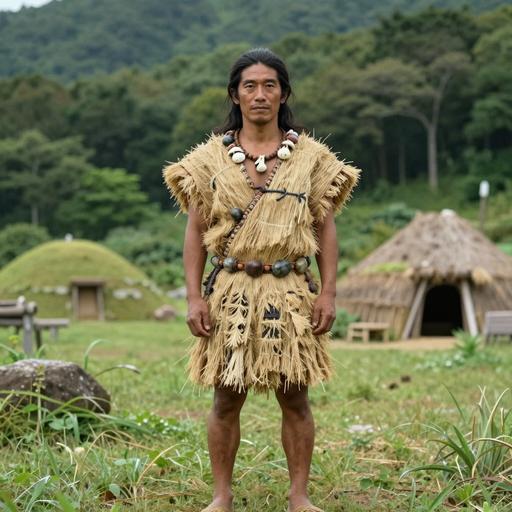
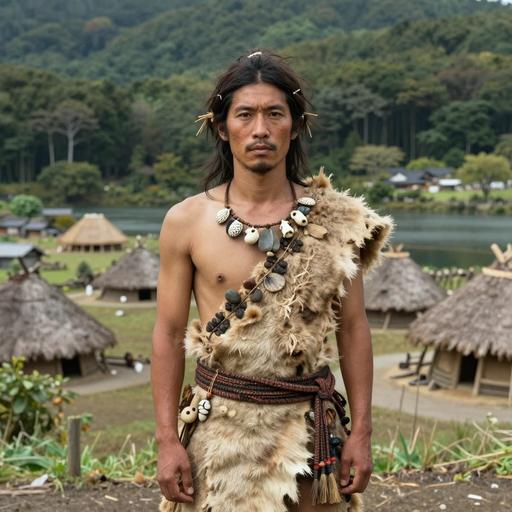
D1A2 is archaeogenetically associated with the Jomon cultural horizon (hunter-gatherer societies of the Japanese archipelago, spanning the Late Pleistocene into the Holocene). Its high prevalence in the Ainu and presence in ancient Jomon remains support the interpretation that D1A2 was a major paternal lineage of the Jomon population and survived into the present through pockets of continuity despite later waves of migration (for example, the Yayoi agricultural expansion from the Korean peninsula) that introduced other haplogroups (notably lineages of haplogroup O). As a result, D1A2 is frequently discussed in studies of prehistoric population structure, island isolation, and the genetic legacy of hunter-gatherer groups in East Asia.
Conclusion
D1A2 is a geographically localized, historically deep Y-chromosome lineage that illustrates how Paleolithic lineages can persist in insular and/or isolated populations. Its pattern — high frequency in remnant hunter-gatherer-descended groups, presence in ancient remains, and low frequency elsewhere — makes D1A2 a valuable marker for reconstructing population continuity and isolation in the Japanese archipelago and nearby regions of East Asia.
Key Points
- Origins and Evolution
- Subclades (if applicable)
- Geographical Distribution
- Historical and Cultural Significance
- Conclusion