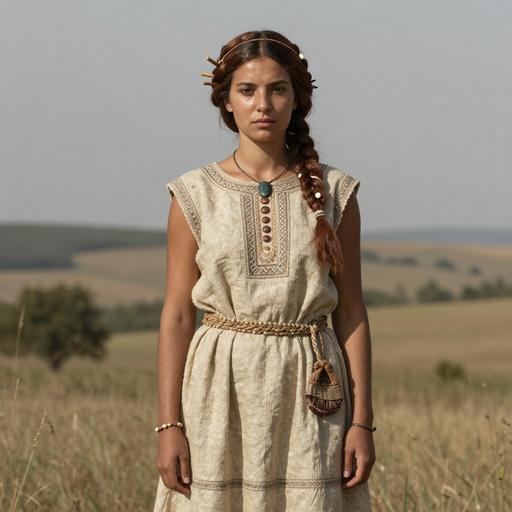
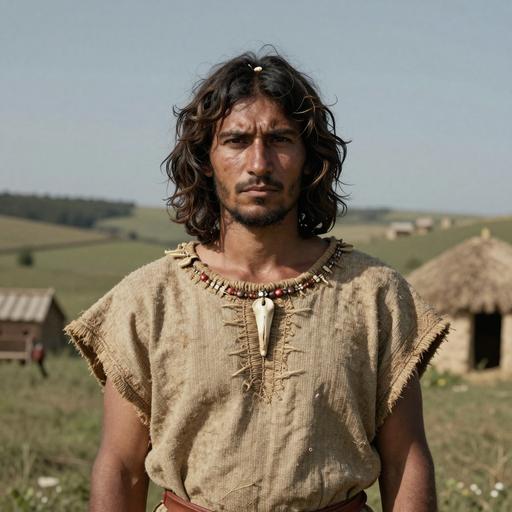
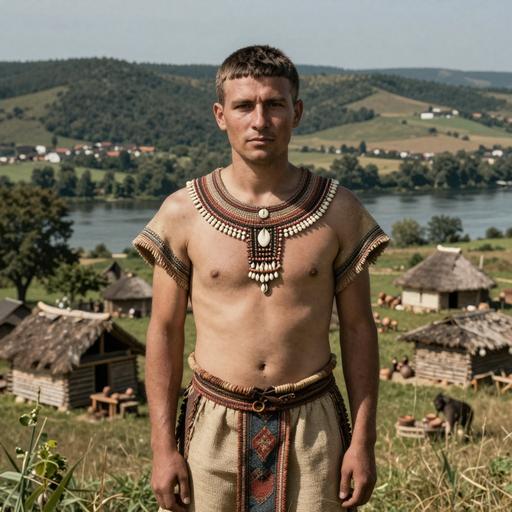
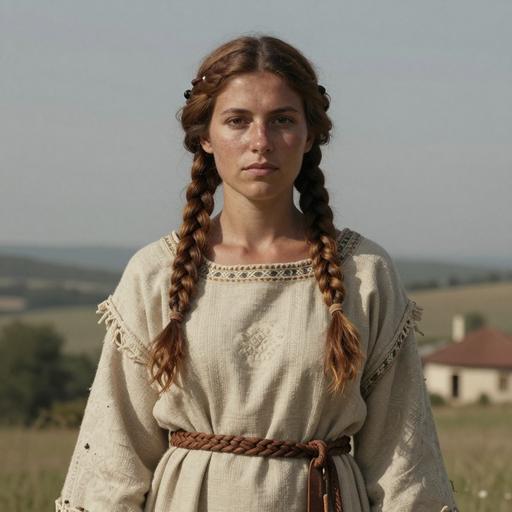
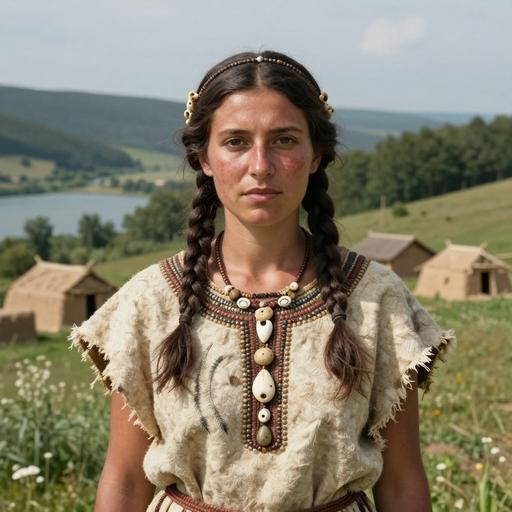
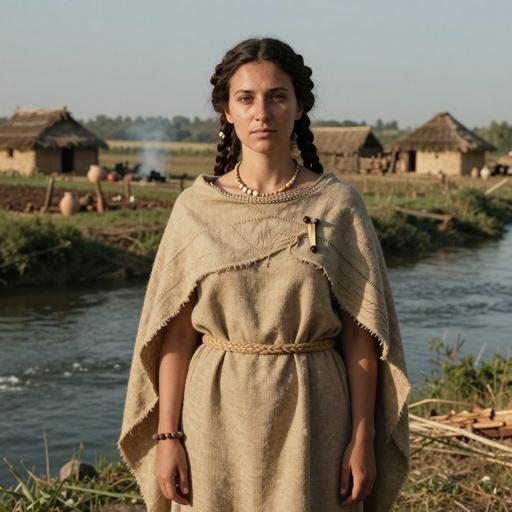
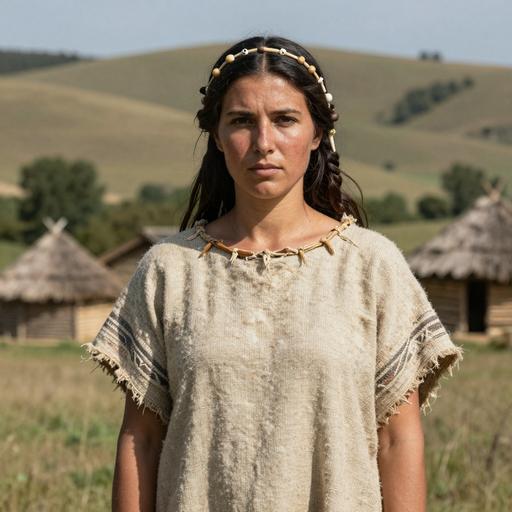
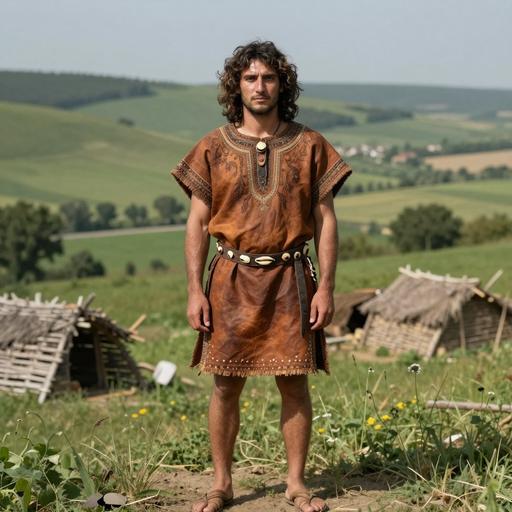
Archaeological and genetic data from 55 samples (5624–3026 BCE) illuminate Gumelnița–Iclod-era communities in Romania. Material culture, settlement patterns, and a diverse Y/mtDNA profile suggest farmer ancestry with signals of long-range contact; interpretations remain cautious where evidence is sparse.
الخريطة التفاعلية غير متاحة. يمكنك الاطلاع على المواقع المسجّلة في كتالوج العينات.
الخط الزمني
2500 BCE
Middle Chalcolithic florescence
Around 2500 BCE many Gumelnița-affiliated sites show dense occupation, craft specialisation, and active exchange across the Danube corridor.
Origins & Emergence
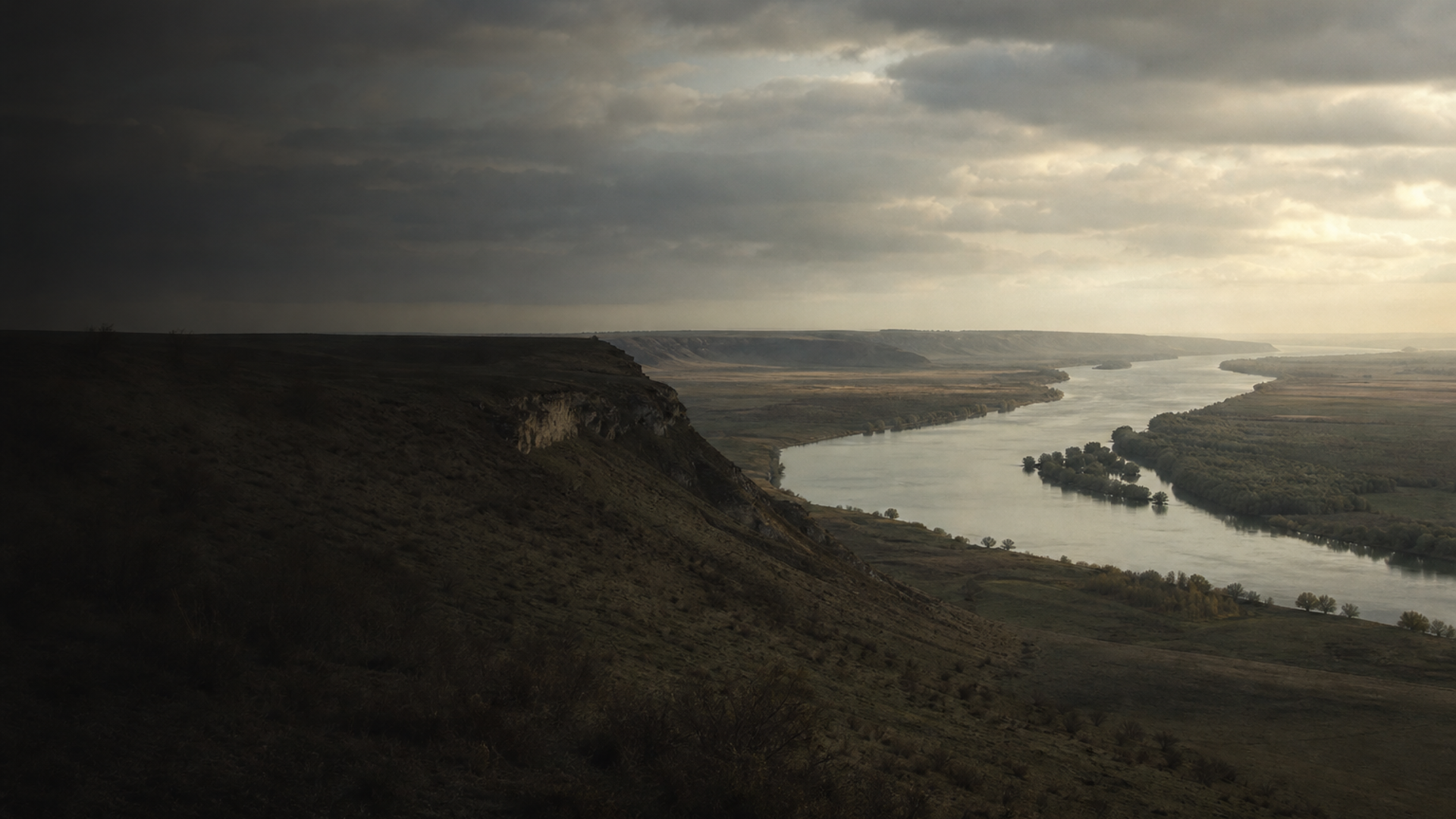
The Danubian assemblage represented here clusters around tell and lowland settlements of the lower Danube and Transylvanian foothills between c. 5624 and 3026 BCE. Archaeological sites that anchor this group include Gumelnița (Călărași, Oltenița), Pietrele Măgura Gorgana (Giurgiu County), Gârlești (Dolj County, Craiova) and Iclod (Cluj County). These loci belong to a constellation of Eneolithic horizons often labelled Gumelnița, Sălcuța and Iclod cultures — communities known for dense settlements, finely made pottery, and early copper use.
Material culture points to intensive local development: house platforms, molded ceramics with complex motifs, and metalwork indicate craft specialization and growing social complexity. Archaeological data indicates continuity from Neolithic farming traditions with increasing regional interaction across the Danube corridor. Environmental reconstructions and settlement patterns imply reliance on mixed farming, riverine resources, and exchange networks that connected the lower Danube to the Balkans and beyond.
Limited evidence suggests that some stylistic and technological traits arrived via long-distance contacts rather than solely local innovation. Where chronological sequences are well resolved, the middle Chalcolithic — roughly 4500–3500 BCE — marks a floruit of tell-building and inter-community exchange. However, gaps in stratigraphy and uneven sampling mean many origin hypotheses remain provisional.
Anchored at Gumelnița, Pietrele Măgura Gorgana, Gârlești, Iclod
Emerges from Neolithic farmer traditions with increasing craft complexity
Evidence for regional exchange along the Danube corridor
Daily Life & Society
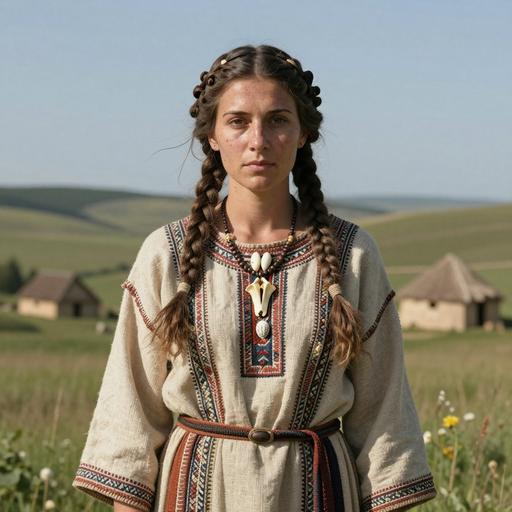
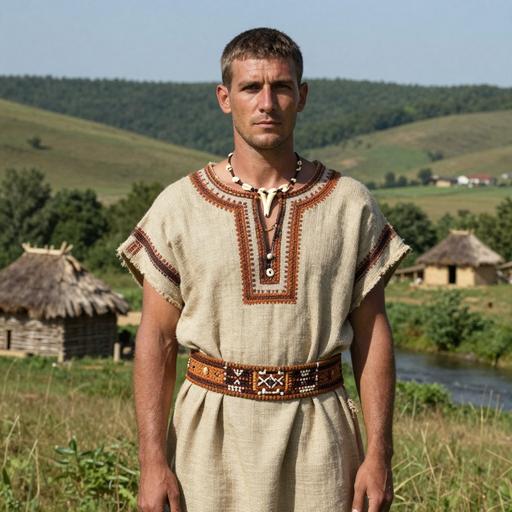
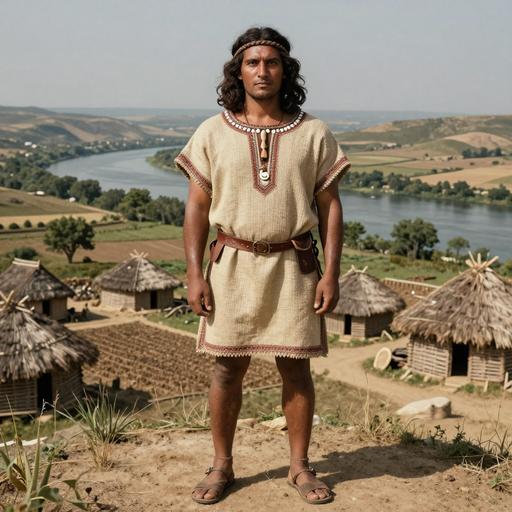
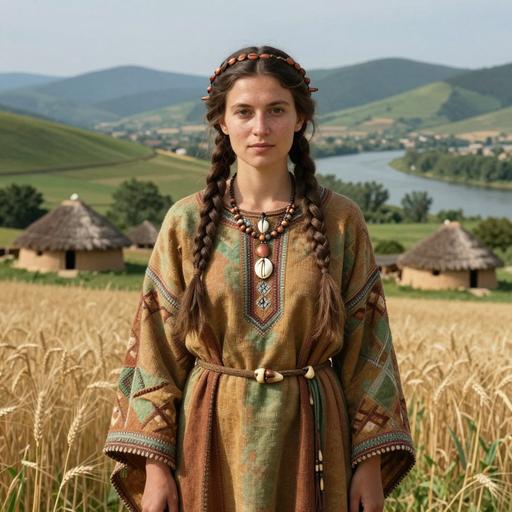
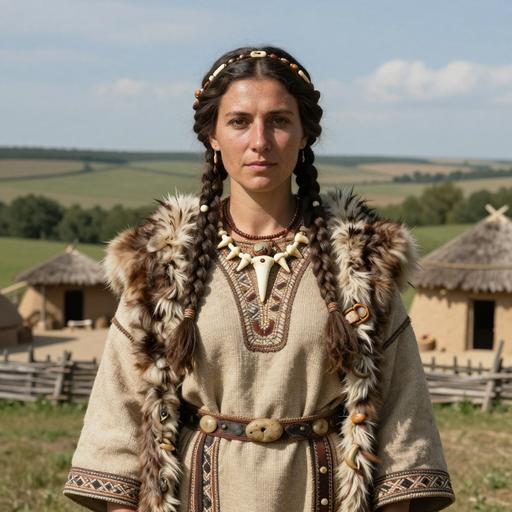
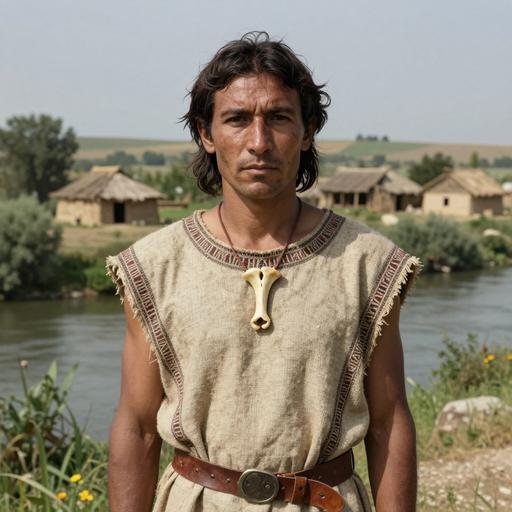
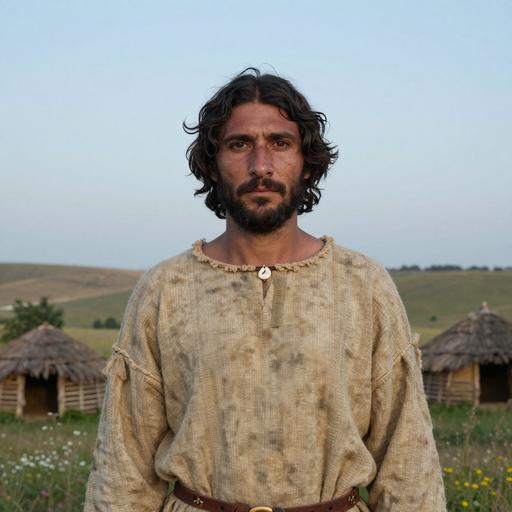
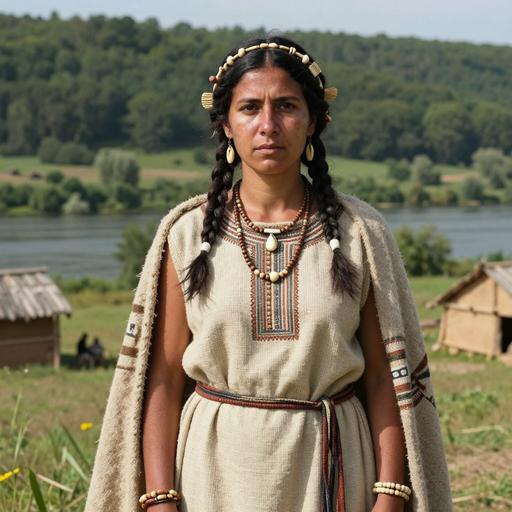
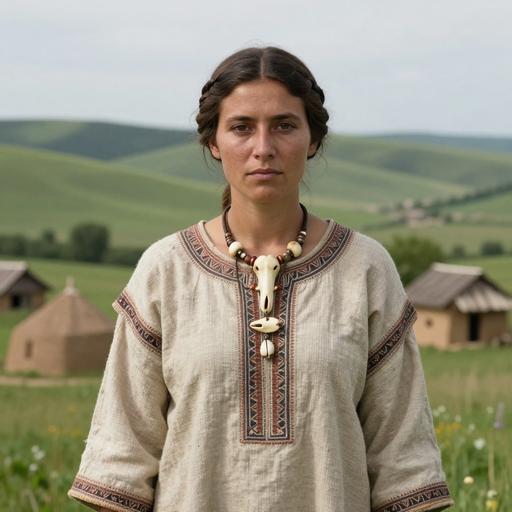
Stepping into a Danubian settlement evokes packed houses around raised platforms, pottery racked with incised motifs, and small copper tools catching the sun. Archaeological excavations at tell sites such as Gumelnița reveal tightly clustered dwellings and debris layers that testify to repeated building episodes, suggesting long-term occupation and investment in place.
Subsistence was mixed: archaeobotanical remains and zooarchaeological assemblages from nearby Gumelnița-related sites show cereal cultivation, legumes, cattle and pig husbandry, and exploitation of riverine fish. Craft production — spinning, weaving, pottery manufacture, and early copperworking — appears to have been organized at household and communal scales, with some objects implying specialist production.
Social life likely combined household-centric economies with inter-household networks of exchange and ritual. Funerary evidence across the region is variable; where graves are preserved, changes in burial practice hint at evolving social differentiation. Archaeological data indicates increasing social complexity through the Chalcolithic, but exact social hierarchies remain difficult to reconstruct from the current record.
Preservation bias and uneven excavation mean reconstructions of daily life emphasize the material culture we can sample, and future fieldwork could substantially refine these portraits.
Tells and clustered houses indicate long-term settlement
Mixed farming, craft specialization, and early metallurgy
Genetic Profile
Fifty-five ancient individuals dated between 5624 and 3026 BCE provide a window into the biological ancestry of Danubian communities. Maternal lineages are dominated by haplogroups common in Neolithic farmer populations of Europe — notably mtDNA K (9 individuals) and H (8) — consistent with substantial Near Eastern-derived farmer ancestry seen across southeastern Europe during the Neolithic and Chalcolithic.
Paternal lineages show notable diversity. Among Y-chromosome calls, we observe V88 (6), Z (5), L (5), PF (4), and P (4). This mix includes lineages that are relatively uncommon in later central European Bronze Age assemblages and may reflect a mosaic of local continuity plus episodic contacts. For example, V88 has wider geographic distributions that include north Africa and the central Sahara in later periods; the presence of L and Z lineages — while present at low counts — suggests complex local demographic histories or gene flow along long-distance networks. These interpretations remain tentative: phylogeographic assignments of single Y haplogroups can be ambiguous and downstream resolution is often incomplete.
Admixture models that combine regional Neolithic farmer ancestry with variable hunter-gatherer inputs fit the broader pattern, but the specific sources and routes of gene flow require more samples and finer-resolution genomes. Because sex-balanced sampling and temporal resolution vary across sites, conclusions about patrilineal vs matrilineal continuity should be treated cautiously.
Diverse Y lineages (V88, Z, L, PF, P) suggest complex contacts; interpretations are preliminary
Legacy & Modern Connections
The Danubian communities of the lower Danube contributed materially and biologically to later Balkan trajectories. Archaeological legacies — tell-building, ceramic vocabularies, and early metallurgy — influenced successor cultures across southeastern Europe. Genetically, the high frequency of Neolithic farmer-associated mtDNA (K, H) aligns with a lasting maternal legacy of Anatolian-derived farming populations in modern European gene pools.
At the same time, the Y-chromosome diversity captured in these 55 samples highlights that the Chalcolithic Danubian world was not genetically monolithic. Signals interpreted as long-range contact underscore the Danube as a corridor of movement and exchange. Because genetic continuity and transformation are complex and regionally variable, linking these ancient people directly to any single modern population would be oversimplified. Future sampling, especially higher-coverage genomes and better temporal resolution, will refine connections between these Eneolithic communities and later Bronze Age and historic populations.
Limited evidence cautions against grand narratives: the Danubian record invites a view of interconnected communities negotiating local traditions, exchange, and mobility along one of Europe's great rivers.
Material culture influenced later Balkan traditions
mtDNA continuity suggests lasting farmer ancestry; Y diversity points to complex contacts
Gumelnița Culture - Romania - Pietrele Măgura Gorgana (Giurgiu County)
Romania Romania_PietreleMaguraGorgana_Gumelnita_C 4672 BCE
Y: L701mt: H+152
Gumelnița Culture - Romania - Pietrele Măgura Gorgana (Giurgiu County)
Romania Romania_PietreleMaguraGorgana_Gumelnita_C 4346-4250 calBCE (5441±26 BP, MAMS-47836)
Y: P15/PF3112mt: H
Gumelnița Culture - Romania - Pietrele Măgura Gorgana (Giurgiu County)
Romania Romania_PietreleMaguraGorgana_Gumelnita_C 4549-4371 calBCE (5657±26 BP, MAMS-47837)
Y: Z38888mt: I5a
Gumelnița Culture - Romania - Pietrele Măgura Gorgana (Giurgiu County)
Romania Romania_PietreleMaguraGorgana_Gumelnita_C 4589-4409 calBCE (5672±26 BP, MAMS-47838)
Y: M269/PF6517mt: K1a1b
Gumelnița Culture - Romania - Pietrele Măgura Gorgana (Giurgiu County)
Romania Romania_PietreleMaguraGorgana_Gumelnita_C 4676-4460 calBCE (5721±27 BP, MAMS-47839)
mt: K1a4
Gumelnița Culture - Romania - Pietrele Măgura Gorgana (Giurgiu County)
Romania Romania_PietreleMaguraGorgana_Gumelnita_C 4588-4451 calBCE (5683±23 BP, MAMS-47840)
mt: H
Gumelnița Culture - Romania - Pietrele Măgura Gorgana (Giurgiu County)
Romania Romania_PietreleMaguraGorgana_Gumelnita_C 4360-4256 calBCE (5475±25 BP, MAMS-47842)
mt: T2c1d+152
Gumelnița Culture - Romania - Pietrele Măgura Gorgana (Giurgiu County)
Romania Romania_PietreleMaguraGorgana_Gumelnita_C 4444-4270 calBCE (5508±26 BP, MAMS-47843)
mt: H
Gumelnița Culture - Romania - Pietrele Măgura Gorgana (Giurgiu County)
Romania Romania_PietreleMaguraGorgana_Gumelnita_C 4345-4249 calBCE (5437±26 BP, MAMS-47844)
Y: Z38888mt: H2
Gumelnița Culture - Romania - Pietrele Măgura Gorgana (Giurgiu County)
Romania Romania_PietreleMaguraGorgana_Gumelnita_C 4339-4176 calBCE (5411±26 BP, MAMS-47845)
mt: T2b+152
مساعد الذكاء الاصطناعي
مساعد الذكاء الاصطناعي
من DNA Genics
فتح هذه الميزة
اطرح أسئلة عن ثقافة Danubian Echoes. يمكن للمساعد شرح النتائج الجينية والسياق التاريخي والأدلة الأثرية والصلات بالعصر الحديث.
AI-generated interpretation of genetic similarity, not proof of ancestry. Informational only, not professional advice.
Read full notice
Before you continue: the analysis you are about to generate is produced by an AI model. AI output can be incomplete, inaccurate, or simply wrong. It describes statistical genetic similarity to reference populations and is not proof of ancestry, ethnicity, identity, or descent. It is provided for informational and educational purposes only, and is not medical, diagnostic, genealogical, legal, or other professional advice. Do not rely on it to make health, financial, legal, or family decisions. To the fullest extent permitted by applicable law, DNA Genics, S.L. accepts no liability for any loss or decision arising from your use of this AI output.
مثال على تحليل بالذكاء الاصطناعي
لمحة عن ثقافة Danubian Echoes
تساعد عينات الحمض النووي القديم الباحثين على دراسة أنماط الهجرة والعلاقات الجينية بين المجموعات السكانية القديمة.
هذه معاينة للتحليل. يتيح المساعد الكامل استكشاف الموضوعات التالية: