انتقل إلى المحتوى الرئيسي
ملفات الحمض النووي

Echoes of Ice: Middle Dorset Voices

Small-band Arctic lifeways from Victoria Island to Newfoundland, traced in artifacts and DNA

1 CE - 800 CE
Canada (Victoria Island; Newfoundland)

القصة

Archaeological traces of the Middle Dorset (1–800 CE) reveal small, mobile Arctic communities across Victoria Island and Newfoundland. Limited ancient DNA (3 samples) hints at Native American-associated markers (Y Q, mtDNA D) but conclusions remain preliminary.

Time Period

1–800 CE

Region

Canada (Victoria Island; Newfoundland)

Common Y-DNA

Q (2), F (1)

Common mtDNA

D (1)

الخط الزمني

1 CE

Early Middle Dorset occupations

Archaeological evidence indicates established Middle Dorset occupations across Arctic Canada, marked by distinctive toolkits and carvings.

400 CE

Regional site activity

Active occupations at coastal sites such as Port aux Choix and Englee document hunting and seasonal mobility.

800 CE

Cultural transition

By ~800 CE archaeological visibility of Middle Dorset traits declines amid regional shifts and eventual Thule movements.

Origins & Emergence

The Middle Dorset emerges in the archaeological record across the Canadian Arctic and sub-Arctic between roughly 1 and 800 CE. Archaeological data indicates seasonal camps, distinctive chipped-stone toolkits, and carved bone and ivory art that mark a coherent cultural horizon often grouped under the broader Dorset tradition. Key occupation sites relevant to the samples presented include Victoria Island in the western Arctic and coastal Newfoundland sites such as Englee and Port aux Choix.

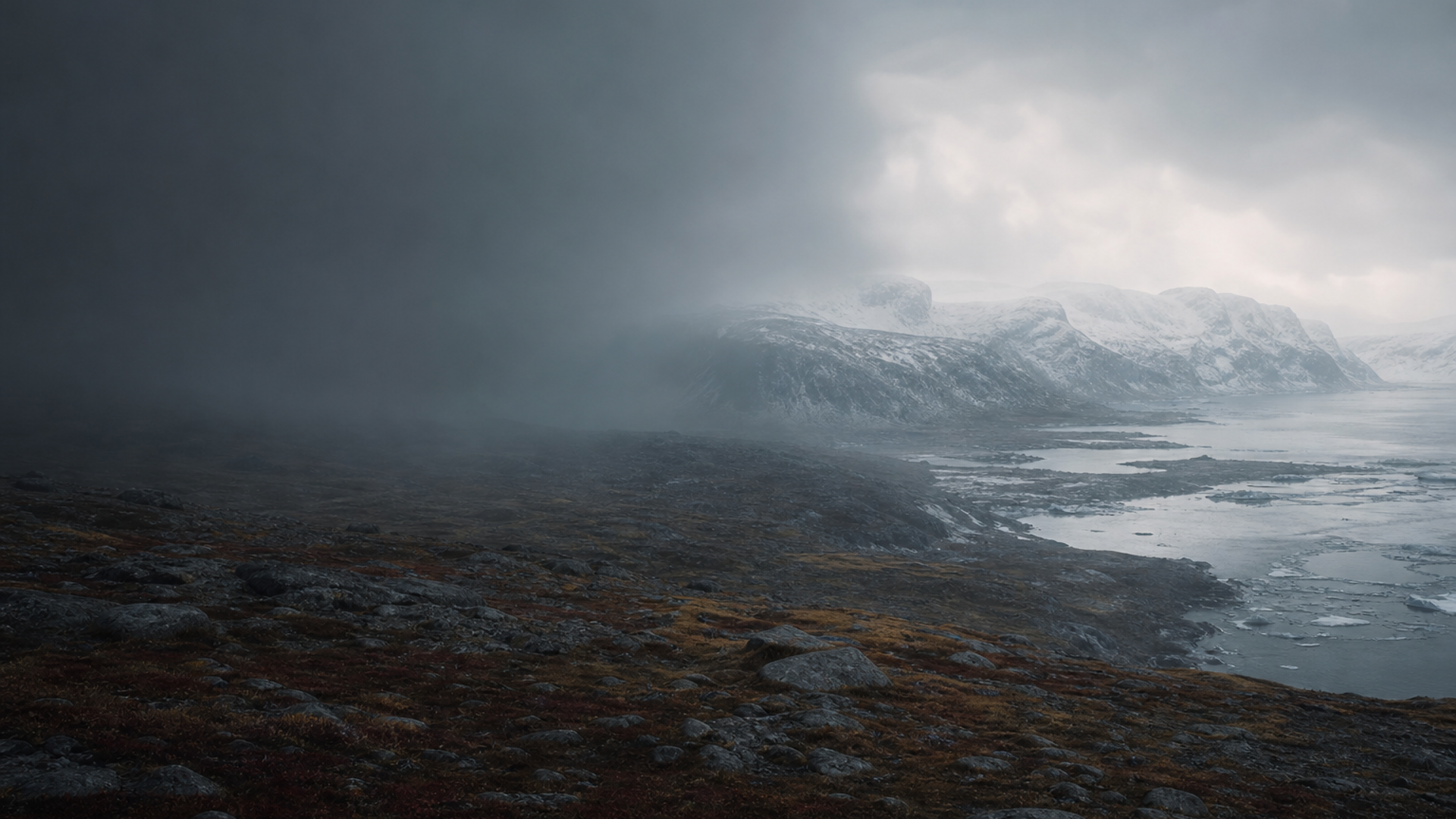
Cinematic landscapes of sea ice and tundra framed Dorset life: people navigated rich littoral zones, hunting seals and other marine mammals, and crafting tools from stone, bone, and antler. Stone lamps, patterned carvings, and small insulated dwellings are recurring finds that suggest strategies tuned to long winters and highly mobile subsistence.

Archaeological continuity and connections across the region are visible in tool forms and art styles, but the story is complex. Limited evidence and regional variability mean that emergence pathways—whether local development from earlier Paleo-Eskimo groups or movements of people—remain debated. Genetic data are beginning to inform these debates, but must be read cautiously given small sample sizes.

  • Middle Dorset dated ca. 1–800 CE across Arctic/sub-Arctic Canada
  • Notable sites: Victoria Island; Englee and Port aux Choix (Newfoundland)
  • Distinctive toolkits and carvings indicate cultural cohesion but regional diversity

Daily Life & Society

Daily existence for Middle Dorset communities was shaped by shifting sea-ice and the rhythms of marine life. Archaeology indicates seasonal movement between coastal hunting localities and inland resource patches. Small dwellings—often sunken winter houses reconstructed from stone and turf—and the ubiquitous soapstone or stone lamps (qulliq-like heating devices) provide intimate glimpses of domestic routine: cooking, tool repair, and small-scale carving.

Material culture emphasizes efficient hunting technology: bone and antler harpoons, microblades, and composite tools adapted to catching seals and occasional larger whales. Ornamentation and miniaturized carvings, frequently found at sites, suggest symbolic or social dimensions to objects and perhaps kinship-based group identities. Social organization likely centered on small kin groups with seasonal aggregations; however, direct evidence for social hierarchy is scant.

Environmental reconstructions show that Dorset lifeways were finely tuned to local ecologies, with flexible mobility allowing exploitation of predictable marine resources. Archaeological evidence indicates cultural resilience, yet shifts in climate, sea-ice patterns, and later interactions would alter these lifeways over centuries.

  • Seasonal mobility focused on marine mammal hunting and coastal camps
  • Stone lamps, bone harpoons, and small carvings mark domestic and ritual life

Genetic Profile

Genetic data for the Middle Dorset represented here come from just three ancient samples recovered from Victoria Island and Newfoundland (Englee; Port aux Choix). Because the sample count is very low (<10), any genetic inference must be treated as preliminary. The recovered Y-chromosome markers include haplogroup Q in two individuals and haplogroup F in one; mitochondrial data include haplogroup D in at least one sample.

Haplogroup Q is widely associated with early First American and Arctic lineages and is consistent with archaeological expectations of Paleo-Eskimo connections to Siberian source populations. Mitochondrial haplogroup D is likewise common in Native American and some Arctic populations, supporting links in matrilineal ancestry. The presence of haplogroup F in a single Y-lineage is unexpected in Arctic contexts and could reflect several possibilities: preservational or analytical artifact, unrecognized regional variation, or limited admixture. Archaeological patterns of tool styles and art, when paired with DNA, suggest cultural identities that may overlay multiple ancestral contributions.

Crucially, the small dataset prevents robust demographic modelling: whether Middle Dorset groups were genetically continuous with earlier Paleo-Eskimo peoples, partially admixed with incoming groups, or genetically distinct from later Thule/Inuit remains an open question. Future, larger ancient DNA samples from stratified contexts will be essential to test these scenarios.

  • Very small sample set (n=3) — conclusions are preliminary
  • Y: Q (2) aligns with Paleo-Eskimo/First American links; F (1) is unexpected and uncertain
  • mtDNA D observed — consistent with Native American-associated maternal lineages

Legacy & Modern Connections

The Middle Dorset left a fragile but evocative archaeological signature: finely crafted tools, small-scale carvings, and site distributions that map human resilience in cold landscapes. In cultural memory and scientific inquiry, Dorset groups are often portrayed as a distinct Paleo-Eskimo horizon that preceded the later Thule expansion into the Arctic.

Genetic findings to date are tantalizing but sparse. They hint at ancestral ties shared with broader First American and Arctic lineages while leaving open questions of continuity and replacement. For contemporary Indigenous communities and scholars, integrating archaeological evidence with expanding ancient DNA datasets offers a path to richer reconstructions of past lifeways—provided research is collaborative and respectful. Ongoing discoveries at places like Port aux Choix and Victoria Island continue to animate the dialogue between material traces and genetic ancestry, illuminating lives adapted to drifting ice and the long northern night.

  • Dorset archaeology documents resilient Arctic adaptations preserved at coastal sites
  • Genetic signals are promising but currently too limited to define direct continuity with modern groups

مساعد الذكاء الاصطناعي

مساعد الذكاء الاصطناعي من DNA Genics

فتح هذه الميزة
اطرح أسئلة عن ثقافة Echoes of Ice: Middle Dorset Voices. يمكن للمساعد شرح النتائج الجينية والسياق التاريخي والأدلة الأثرية والصلات بالعصر الحديث.

مثال على تحليل بالذكاء الاصطناعي

لمحة عن ثقافة Echoes of Ice: Middle Dorset Voices

تساعد عينات الحمض النووي القديم الباحثين على دراسة أنماط الهجرة والعلاقات الجينية بين المجموعات السكانية القديمة.

هذه معاينة للتحليل. يتيح المساعد الكامل استكشاف الموضوعات التالية:

  • التركيب الجيني والأصول
  • أنماط الهجرة والأصول
  • الحياة اليومية والممارسات الثقافية
  • الإرث الجيني المعاصر