انتقل إلى المحتوى الرئيسي
ملفات الحمض النووي

Hjelmars rör: Late Neolithic Echoes

A coastal Swedish burial horizon illuminated by archaeology and ancient mtDNA

3351 CE - 2900 BCE
Hjelmars rör, Sweden (coastal/central Sweden)

القصة

Hjelmars rör (3351–2900 BCE) is a Late Neolithic funerary horizon in Sweden. Seventeen genome samples reveal a mitochondrial mix dominated by H and HV haplogroups. Archaeology and DNA together hint at local traditions meeting wider northern European networks.

Time Period

3351–2900 BCE

Region

Hjelmars rör, Sweden (coastal/central Sweden)

Common Y-DNA

No dominant Y haplogroup reported / limited resolution

Common mtDNA

H (3), HV (3), T (2), T2b (2), W5a (1)

الخط الزمني

3000 BCE

Active funerary use at Hjelmars rör

Archaeological and radiocarbon data place cairn-building and burial activity around 3000 BCE, within the site's 3351–2900 BCE range.

Origins & Emergence

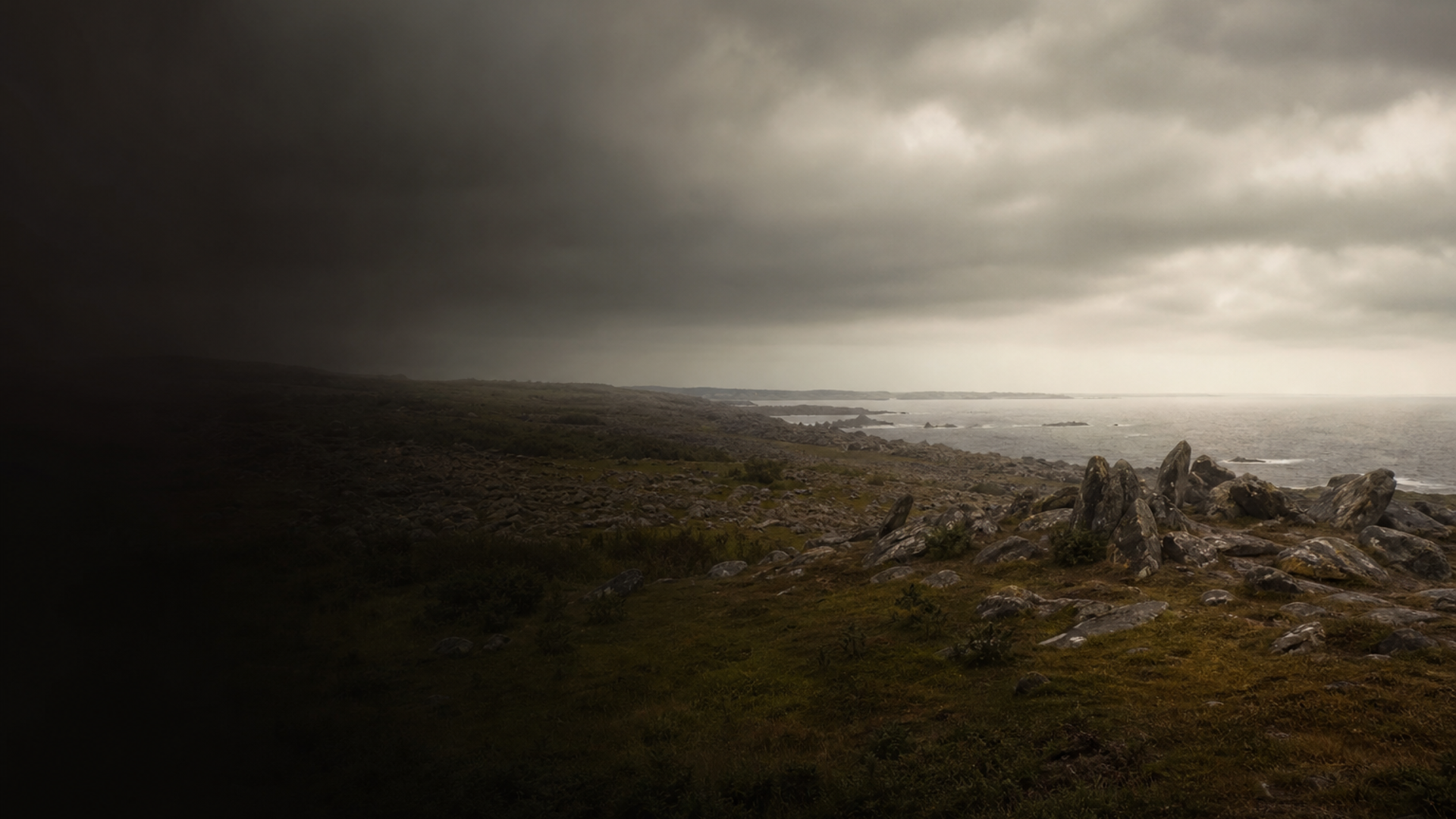
Against a raw northern horizon of rock and sea, Hjelmars rör appears in the archaeological record as a cluster of Late Neolithic funerary monuments and associated finds dated to about 3351–2900 BCE. The place-name “rör” suggests stone cairns or barrows; archaeological data indicates use of such burial settings in coastal and inland Sweden during this interval. Material culture and burial practice hint at continuities with earlier Neolithic traditions while also showing affinities with broader north-European networks that intensified in the late 4th and early 3rd millennia BCE.

Genetically, the Hjelmars rör dataset comprises 17 samples—large enough to sense population patterns but still limited for fine-grained demographic modeling. mtDNA diversity (H, HV, T, T2b, W5a) resembles the mitochondrial palette seen across Neolithic and post-Neolithic northern Europe, suggesting female line continuity mixed with incoming influences. Archaeological evidence combined with regional ancient DNA studies suggests that this community occupied a cultural crossroads: local traditions persisted even as connections—possibly through exchange, marriage, or mobility—brought new genetic lineages and material styles.

Caveat: while the site cluster is well dated, the archaeological record remains fragmentary; ongoing fieldwork and additional genomes are needed to clarify migration versus local adaptation scenarios.

  • Located at Hjelmars rör, Sweden; dated 3351–2900 BCE
  • Associated with stone cairns/barrows and Late Neolithic burial practices
  • Dataset: 17 genomes—sufficient for preliminary patterns, not definitive demography

Daily Life & Society

Archaeological traces from Hjelmars rör evoke a world of seasonal movement between sea and field, where communities balanced coastal resources, small-scale farming, and animal husbandry. Stone-built cairns served as visible anchors of memory on the landscape, marking places of burial and social significance. Grave goods and find assemblages in comparable Swedish contexts include ceramics, flint tools, and occasionally organic items—evidence for craft skills and long-distance exchange.

Social organization likely combined kin-based households with wider alliances. Funerary architecture implies investment in collective rites: cairns and settings required coordinated labor and transmitted ancestral claims across generations. The Late Neolithic also saw changing mobility patterns—wider networks of contact linked southern Scandinavia to central and eastern Europe, visible in styles of pottery and in the spread of new technological ideas.

Archaeobotanical and zooarchaeological data from the region suggest mixed economies: cereal cultivation, stock rearing, and marine foraging. Such a mixed subsistence strategy supports resilient communities able to weather climatic fluctuations and take advantage of seasonal marine resources.

Uncertainty remains: many Hjelmars rör contexts are not fully published, and preservation biases (organic loss, later disturbance) shape our view of daily life. DNA adds a personal dimension—biological relationships and mobility—complementing the material picture.

  • Cairns and burial monuments indicate ritual investment and labor organization
  • Economy likely combined farming, herding and coastal resources

Genetic Profile

The Hjelmars rör genetic series (17 individuals) yields a clear mitochondrial signal: 3 H, 3 HV, 2 T, 2 T2b, and 1 W5a among reported mtDNA calls. These haplogroups are commonly found in Neolithic and later European populations, with H and HV particularly widespread across Europe after the Mesolithic–Neolithic transition. The presence of T and T2b indicates maternal lineages that appear in farming-associated contexts and in mixed Neolithic/steppe-influenced populations. W5a, rarer but attested in European prehistory, adds to the picture of maternal heterogeneity.

Notably, no single Y-DNA haplogroup dominates the available information for this dataset; the summary record lists no common Y haplogroup. This may reflect limited Y-chromosome recovery, genuine paternal diversity, or sampling bias. In the broader Late Neolithic of Scandinavia, ancient autosomal data typically show admixture between local hunter-gatherers, earlier Neolithic farmers, and incoming steppe-related groups (dates and proportions vary by region). While Hjelmars rör likely participates in these wider trends, the current sample set should be read as indicative rather than conclusive.

Genetic results and burial contexts together can identify kinship, mobility, and ancestry gradients: mitochondrial diversity suggests multiple maternal lines in local communities, while unresolved Y patterns underscore the need for more male-line data. With 17 genomes, patterns are emerging but additional sampling will refine interpretations.

  • mtDNA distribution among 17 samples: H(3), HV(3), T(2), T2b(2), W5a(1)
  • No dominant Y-DNA reported; paternal structure remains uncertain

Legacy & Modern Connections

The stones of Hjelmars rör speak to enduring human habits: marking the dead, remembering ancestors, and weaving local identity into a contested landscape. Genetically, the maternal lineages documented here connect modern Scandinavians to a deep, multi-layered past of hunter-gatherers, early farmers, and later mobile groups. Although the 17-sample series is a meaningful window, it remains a partial one—additional genomes will better resolve how Hjelmars rör communities contributed to the gene pool of later northern Europe.

For contemporary audiences, the site is a reminder that cultural traditions and genetic lineages are braided—neither wholly static nor entirely replaced. Archaeology provides the stage and artifacts; DNA adds actors’ biographies and travels. Together they create a cinematic, evidence-based narrative of people shaping and shaped by the Scandinavian shorelines millennia ago.

  • Connects maternal lineages to broader Scandinavian ancestry
  • Demonstrates the combined power of archaeology and ancient DNA

مساعد الذكاء الاصطناعي

مساعد الذكاء الاصطناعي من DNA Genics

فتح هذه الميزة
اطرح أسئلة عن ثقافة Hjelmars rör: Late Neolithic Echoes. يمكن للمساعد شرح النتائج الجينية والسياق التاريخي والأدلة الأثرية والصلات بالعصر الحديث.
مثال على تحليل بالذكاء الاصطناعي

لمحة عن ثقافة Hjelmars rör: Late Neolithic Echoes

تساعد عينات الحمض النووي القديم الباحثين على دراسة أنماط الهجرة والعلاقات الجينية بين المجموعات السكانية القديمة.

هذه معاينة للتحليل. يتيح المساعد الكامل استكشاف الموضوعات التالية:

  • التركيب الجيني والأصول
  • أنماط الهجرة والأصول
  • الحياة اليومية والممارسات الثقافية
  • الإرث الجيني المعاصر