انتقل إلى المحتوى الرئيسي
ملفات الحمض النووي

Modern Philippines: Living Tapestry

Contemporary Filipino communities seen through archaeology and DNA across Luzon and Mindanao.

2000 CE
Philippines (Luzon, Mindanao, Visayas)

القصة

A concise portrait of 22 modern Filipino samples (2000 CE), connecting site-specific archaeology (Mountain Province, Manila, Surigao, Batangas) with genetic patterns. Archaeological data and DNA reveal layered Austronesian roots, inland highland traditions, coastal trade influences, and recent admixture—interpreted cautiously.

Time Period

2000 CE (modern)

Region

Philippines (Luzon, Mindanao, Visayas)

Common Y-DNA

Predominantly O haplogroups (e.g., O1a/O2a), C noted

Common mtDNA

Diverse maternal lineages (B4a1a1, E, F, M7 and others)

الخط الزمني

3500 BCE

Austronesian expansion begins

Seafaring populations spread from Taiwan into the Philippines and Island Southeast Asia, laying foundations for shared linguistic and genetic ancestry.

1521 CE

First sustained Spanish contact

Spanish arrival initiates colonial networks, urban reorganization (e.g., Manila) and new pathways of gene flow and material exchange.

2000 CE

Modern sampling and documentation

The 22 modern samples were collected and contextualized with archaeological site information across Luzon and Mindanao.

Origins & Emergence

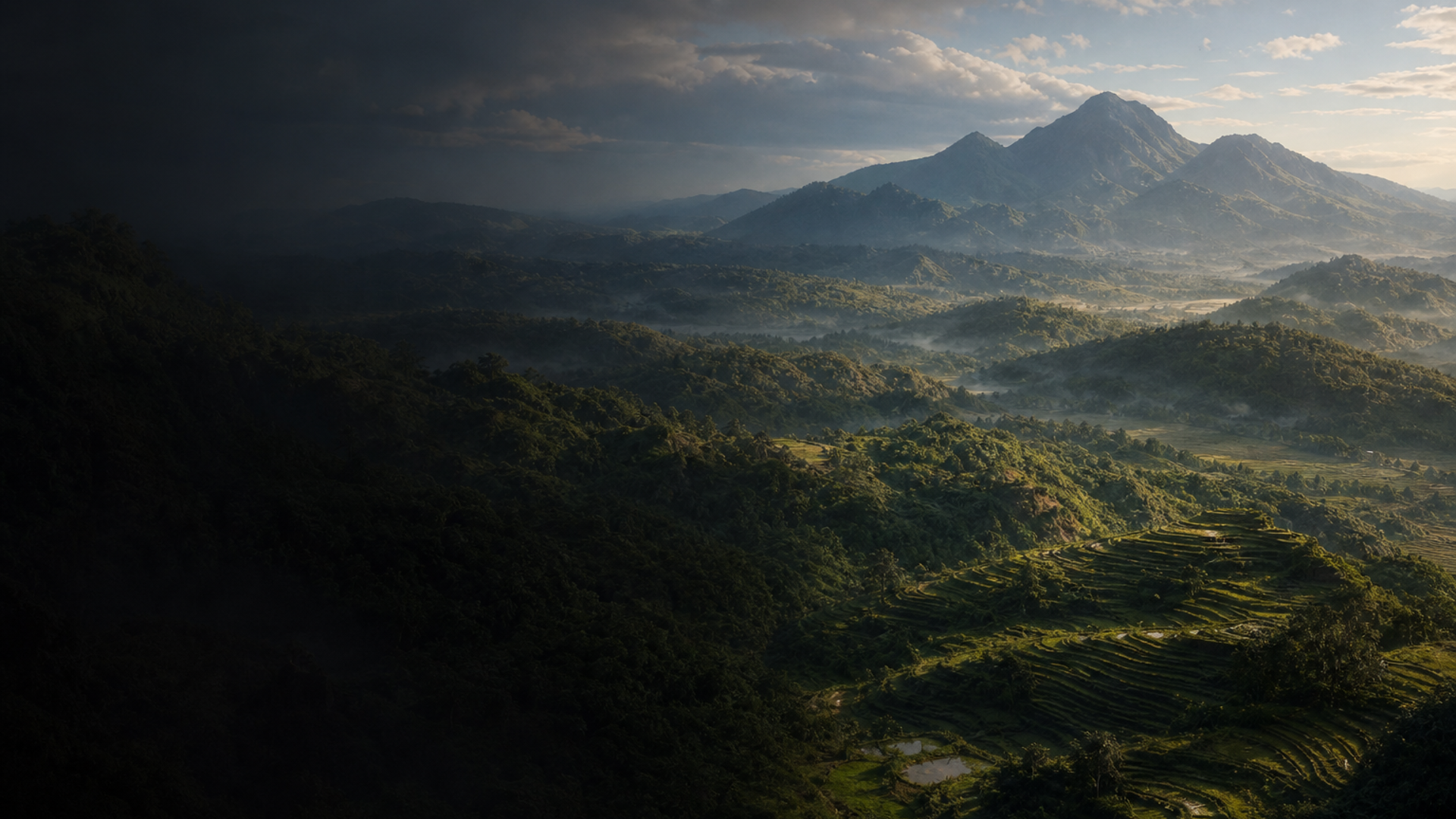
The modern Filipino population is a palimpsest: layers of prehistoric islanders, Austronesian voyagers, inland highland communities, and centuries of maritime trade and colonial contact. Archaeological research across Luzon and Mindanao—from the terrace-built communities of Mountain Province (Kankanaey) to coastal ports like Surigao City and Batangas—documents long-term occupation, shifting settlement patterns, and continuing cultural practices.

Material culture — pottery fragments, agricultural terraces, and ritual paraphernalia — indicates continuity with earlier Austronesian lifeways while also preserving regional particularities in the Cordillera highlands and lowland plains. Limited archaeological evidence suggests different modes of mobility and exchange: inland groups show emphasis on wet-rice terraces and upland ritual, while coastal sites preserve evidence of trade networks connecting the Philippines to Island Southeast Asia and beyond.

Genetically, modern Filipino communities reflect deep connections to the Austronesian expansion (~3500–1500 BCE), layered upon earlier Pleistocene and Neolithic ancestries. Archaeological data indicates long continuity in many regions, but the exact timing and scale of population shifts remain subjects of active research. Given the 22 modern samples informing this profile, conclusions are informative but necessarily provisional: broader sampling is required to resolve local heterogeneity and migration timing with greater confidence.

  • Modern populations reflect layered prehistoric and historic influences
  • Sites sampled include Mountain Province (Kankanaey), Manila, Surigao, Batangas
  • Archaeology shows both inland continuity and coastal trade connections

Daily Life & Society

Contemporary life in the sampled communities blends ancestral practices and modern urban rhythms. In the highlands of Mountain Province, Kankanaey communities maintain terrace agriculture, ritual cycles, and strong kin networks—archaeological terraces and communal rice systems attest to centuries of landscape management. Urban centers like Manila host dense, multilingual populations (Tagalog, Ilocano and others) shaped by modern migration, commerce, and colonial-era urbanization, reflected archaeologically in stratified deposits, built environments, and imported ceramics.

Coastal towns such as Surigao and Batangas preserve maritime lifeways: fishing gear, boat-building traditions, and material traces of inter-island exchange. Inland provincial towns (Cabanatuan, Sta. Rosa, La Union) show the persistence of local agricultural economies alongside increasing connectivity to national markets. Ethnographic and archaeological lenses together reveal a continuum of household diets, craft traditions, and social practices that feed into genetic patterns: localized kinship structures in upland zones versus highly mixed urban gene pools in major ports.

Archaeological data indicates long-term adaptability to ecological gradients and trade opportunities, but the exact social histories are often fragmentary: oral histories and modern ethnography are essential complements to material remains.

  • Highland terrace agriculture persists among Kankanaey communities
  • Urban Manila samples reflect multilingual, highly connected populations

Genetic Profile

The DNA picture from these 22 modern samples (collected in and representing communities in 2000 CE) describes a multi-layered genetic landscape. Broadly speaking, Filipino genomes carry strong Austronesian-associated ancestry components—shared affinities with Island Southeast Asia and Taiwan—overprinted on older Pleistocene and mainland Southeast Asian genetic layers. Common paternal markers in regional surveys of the Philippines include O haplogroups (O1a/M119 and O2a-lineages), with occasional C-lineages; maternal diversity often includes haplogroups such as B4a1a1 (the ‘Polynesian motif’ in some regions), E, F, and M7.

In this dataset, samples from highland Mountain Province (Kankanaey) often show greater continuity with local upland ancestries and reduced signals of recent coastal admixture, whereas urban Manila samples present more heterogeneous profiles consistent with recent internal migration, maritime trade, and colonial-era gene flow (including East Asian and, to a lesser extent, European and South Asian contributions). Surigao and other coastal samples reflect maritime connectivity across the Visayan-Mindanao corridor.

Caveats: with 22 samples spanning several ethnolinguistic groups and locations, patterns are suggestive but not definitive. Population substructure, recent mobility, and uneven sampling density mean that finer-scale inferences (e.g., exact admixture dates or micro-regional haplogroup distributions) require larger, systematically sampled cohorts and ancient DNA comparisons. Archaeological context helps interpret genetic signals—linking continuity at terrace sites to local ancestry, and trade-related artifacts to signals of external gene flow.

  • Genomes combine Austronesian ancestry with older Southeast Asian layers
  • Urban samples show more admixture; highland samples suggest local continuity

Legacy & Modern Connections

The living legacy of these communities is a dynamic mosaic: languages, rituals, agricultural systems, and genetic lineages that together narrate mobility, exchange, and resilience. For users of DNA ancestry platforms, results often reflect this complexity—regional signals of Austronesian heritage alongside detectable admixture from trade, migration, and colonial history. Archaeology grounds those genetic patterns in landscapes and artifacts: terraces and ritual sites speak to long-term local persistence, while imported ceramics and urban layers reveal centuries of interaction.

Understanding ancestry from both archaeological and genetic perspectives tempers simple narratives of origin. It highlights continuity and change—how mountain valleys and coastal ports have contributed differently to the Filipino genetic tapestry. Continued collaboration between archaeologists, geneticists, and local communities, and expanded sampling (especially of ancient DNA), will refine our picture of how past movements shaped modern identities.

  • DNA results reflect layered ancestry—Austronesian roots plus later admixture
  • Archaeological context translates genetic signals into stories of place and practice

مساعد الذكاء الاصطناعي

مساعد الذكاء الاصطناعي من DNA Genics

فتح هذه الميزة
اطرح أسئلة عن ثقافة Modern Philippines: Living Tapestry. يمكن للمساعد شرح النتائج الجينية والسياق التاريخي والأدلة الأثرية والصلات بالعصر الحديث.
مثال على تحليل بالذكاء الاصطناعي

لمحة عن ثقافة Modern Philippines: Living Tapestry

تساعد عينات الحمض النووي القديم الباحثين على دراسة أنماط الهجرة والعلاقات الجينية بين المجموعات السكانية القديمة.

هذه معاينة للتحليل. يتيح المساعد الكامل استكشاف الموضوعات التالية:

  • التركيب الجيني والأصول
  • أنماط الهجرة والأصول
  • الحياة اليومية والممارسات الثقافية
  • الإرث الجيني المعاصر