انتقل إلى المحتوى الرئيسي
ملفات الحمض النووي

Voices of the Ukrainian Mesolithic

Riverine hunter-gatherers of Ukraine, 10509–5921 BCE, revealed by archaeology and ancient DNA

10509 CE - 5921 BCE
Ukraine (Dnipropetrovsk, Zaporizhia, Kirovohrad oblasts)

القصة

Archaeological remains from Vasil'evka, Dereivka and Vasylivka sites (c. 10509–5921 BCE) portray Ukraine's Mesolithic communities. Genome-wide data from 20 individuals show dominant mtDNA U lineages and Y haplogroups I, R, Q—linking material life along rivers to wider Eastern Hunter‑Gatherer ancestry.

Time Period

c. 10509–5921 BCE

Region

Ukraine (Dnipropetrovsk, Zaporizhia, Kirovohrad oblasts)

Common Y-DNA

I, R, Q, F (incl. R1b)

Common mtDNA

U (dominant), H, U2/U4 subclades

الخط الزمني

10509 BCE

Earliest sampled individual

Oldest dated genome in the set, providing a window into early Mesolithic riverine populations in Ukraine.

8000 BCE

Peak Mesolithic activity

Intensive occupation of river terraces and development of microlithic toolkits at sites like Vasil'evka and Dereivka I.

5921 BCE

Late Mesolithic horizon

Latest dated individuals in this sample set mark transitions prior to widespread Neolithic influences.

Origins & Emergence

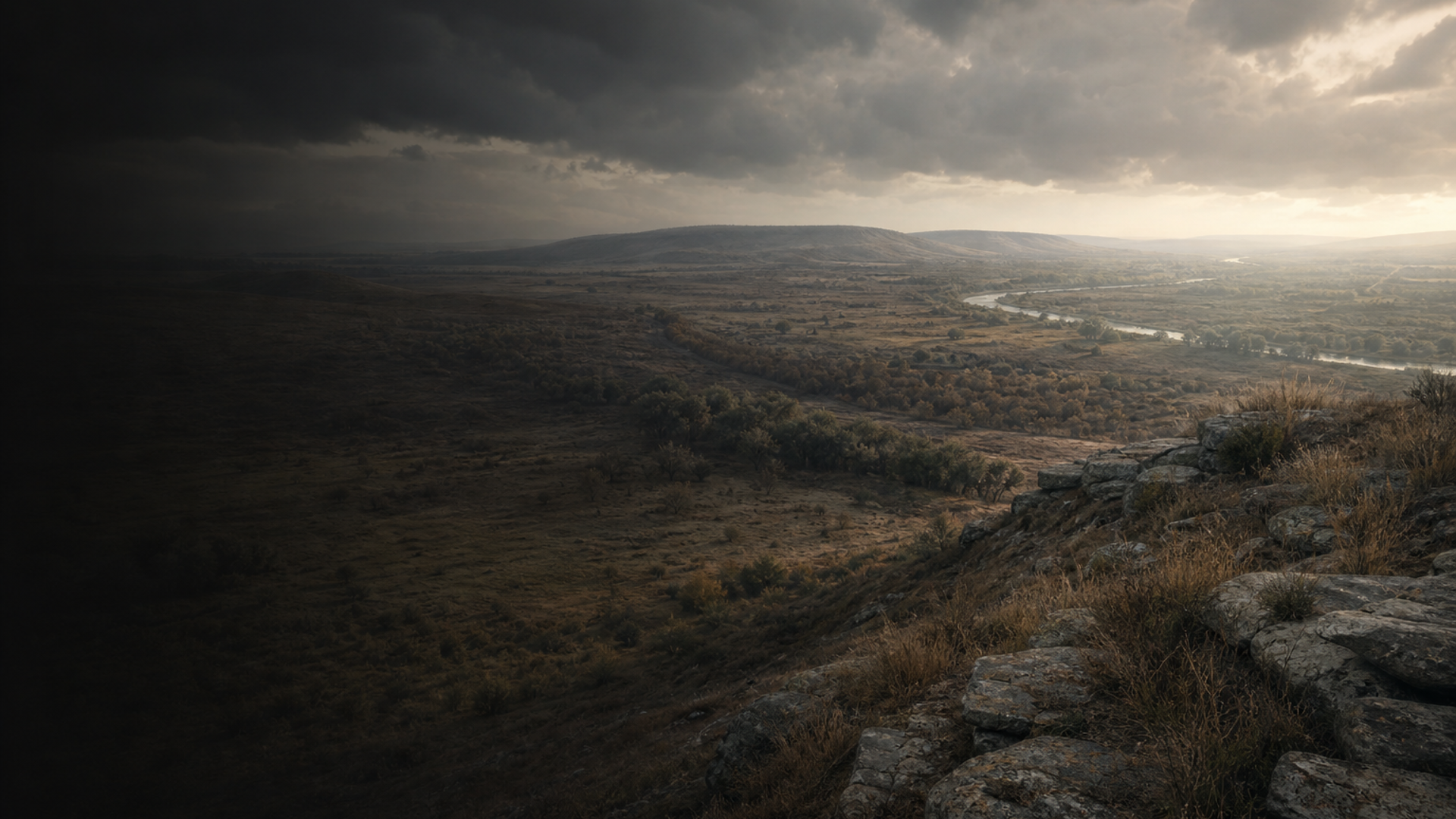
Across the flat, marshy plains and slow rivers of central Ukraine, the first light of the Mesolithic era lingers in hearth lenses and chipped flint. Archaeological data indicates human presence here from at least c. 10509 BCE (oldest sampled individual) through the later Mesolithic around 5921 BCE. Key sites sampled include Vasil'evka (a series of open-air camps), Dereivka I, Vasylivka-1 and Vasylivka-3 (Dnipropetrovsk and Zaporizhia oblasts), and Deriivka (Kirovohrad oblast).

Material culture — microlithic tools, fishing gear, and hearth-built camps — speaks of river-focused economies. Environmental reconstructions indicate riparian forests, abundant fish and game, and seasonal mobility along the Dnieper and tributaries. Archaeological evidence suggests continuity with broader Eastern Hunter‑Gatherer (EHG) networks while also reflecting local adaptations to steppe-forest ecotones.

Genomic analyses of 20 individuals from these sites provide a biological dimension to emergence narratives: patterns are consistent with predominant EHG-related ancestry but not homogeneous across sites or time. Limited evidence of genetic diversity hints at contacts beyond the immediate region. While these results illuminate origins, ongoing sampling and contextual excavation remain essential to refine migration and interaction models.

  • Earliest sampled individual dated to c. 10509 BCE
  • Sites: Vasil'evka, Dereivka I, Vasylivka-1/3, Deriivka
  • Archaeology aligns with Eastern Hunter‑Gatherer networks

Daily Life & Society

Daily life in Mesolithic Ukraine unfolded in a choreography of water, wood, and season. Archaeological layers at Vasil'evka and Dereivka I preserve hearths, bone points, and polished stone tools used for fishing, skinning, and woodworking. Micro-wear studies (where available) indicate intensive on-site processing of fish and game; shell and bone artefacts point to craft and ornament.

Settlement patterns were flexible: small, repeatedly occupied camps on river terraces, likely occupied seasonally, allowed groups to exploit spawning fish runs and migratory herds. Social landscapes were organized around kin groups with high mobility and resource-sharing across river corridors. Burials are relatively scarce but when present can include deliberate placement and grave goods that signal social identity tied to fishing and hunting roles.

Archaeobotanical and faunal remains emphasize a diet rich in freshwater fish, wild ungulates, and gathered plants. Technological continuity in microlithic toolkits suggests long-term knowledge transmission; at the same time, sporadic exotic raw materials and non-local haplogroups in the genetic record hint at episodic connections to distant groups.

  • Riverine camps focused on fishing and seasonal hunting
  • Material culture: microliths, bone tools, ornamentation

Genetic Profile

Genome-wide data from 20 Mesolithic individuals across Ukrainian sites reveal a genetic portrait that largely aligns with Eastern Hunter‑Gatherer (EHG) ancestry components. Mitochondrial DNA is dominated by haplogroup U (10 of 20), with additional U subclades (U4, U4b, U2e) and H lineages—typical of European hunter‑gatherers and indicative of maternal continuity in Mesolithic populations.

Y‑chromosome diversity includes haplogroup I (6 individuals), R (4), Q (2), F (1) and R1b (1). The presence of I and R lineages fits broader Mesolithic European patterns; Q and minor R1b occurrences point to more complex paternal contacts or micro‑regional variation. These counts should be interpreted cautiously: while 20 samples allow robust signals for dominant patterns (notably mtDNA U and Y I), less frequent haplogroups are represented by small numbers and may reflect either rare lineages or sampling of transient individuals.

Population genetics analyses place these individuals within a continuum of EHG-related ancestry, with possible local admixture and intermittent gene flow from neighboring forager groups. Archaeogenetic results therefore connect the material lifeways of Vasil'evka and Dereivka camps to wider population dynamics shaping northeastern European foragers during the early to mid-Holocene.
  • mtDNA dominated by U haplogroups (10/20)
  • Y-DNA shows I and R dominance; Q and R1b present but less frequent

Legacy & Modern Connections

The echoes of Ukraine's Mesolithic peoples ripple into later prehistory. Their river-oriented economies, technological traditions, and genetic heritage contributed to the fabric of subsequent Neolithic and Bronze Age communities across the Pontic corridor. Archaeological continuity in tool types and site locations suggests cultural threads that persisted even as farmers and steppe pastoralists later transformed the region.

Genetic continuity is seen in the persistence of maternal U lineages into later European populations, although later migrations diluted many Mesolithic signatures. The combination of archaeology and ancient DNA shows that modern eastern European genetic landscapes are palimpsests: Mesolithic ancestries form an important, though partial, layer beneath later demographic events. While 20 samples help map major patterns, continued sampling across Ukraine will refine how these early hunter‑gatherers connect to present-day populations and to broader Eurasian prehistory.

  • Maternal U lineages persist as a Mesolithic legacy
  • Archaeogenetics shows Mesolithic contribution beneath later migrations

مساعد الذكاء الاصطناعي

مساعد الذكاء الاصطناعي من DNA Genics

فتح هذه الميزة
اطرح أسئلة عن ثقافة Voices of the Ukrainian Mesolithic. يمكن للمساعد شرح النتائج الجينية والسياق التاريخي والأدلة الأثرية والصلات بالعصر الحديث.
مثال على تحليل بالذكاء الاصطناعي

لمحة عن ثقافة Voices of the Ukrainian Mesolithic

تساعد عينات الحمض النووي القديم الباحثين على دراسة أنماط الهجرة والعلاقات الجينية بين المجموعات السكانية القديمة.

هذه معاينة للتحليل. يتيح المساعد الكامل استكشاف الموضوعات التالية:

  • التركيب الجيني والأصول
  • أنماط الهجرة والأصول
  • الحياة اليومية والممارسات الثقافية
  • الإرث الجيني المعاصر




