Introduction
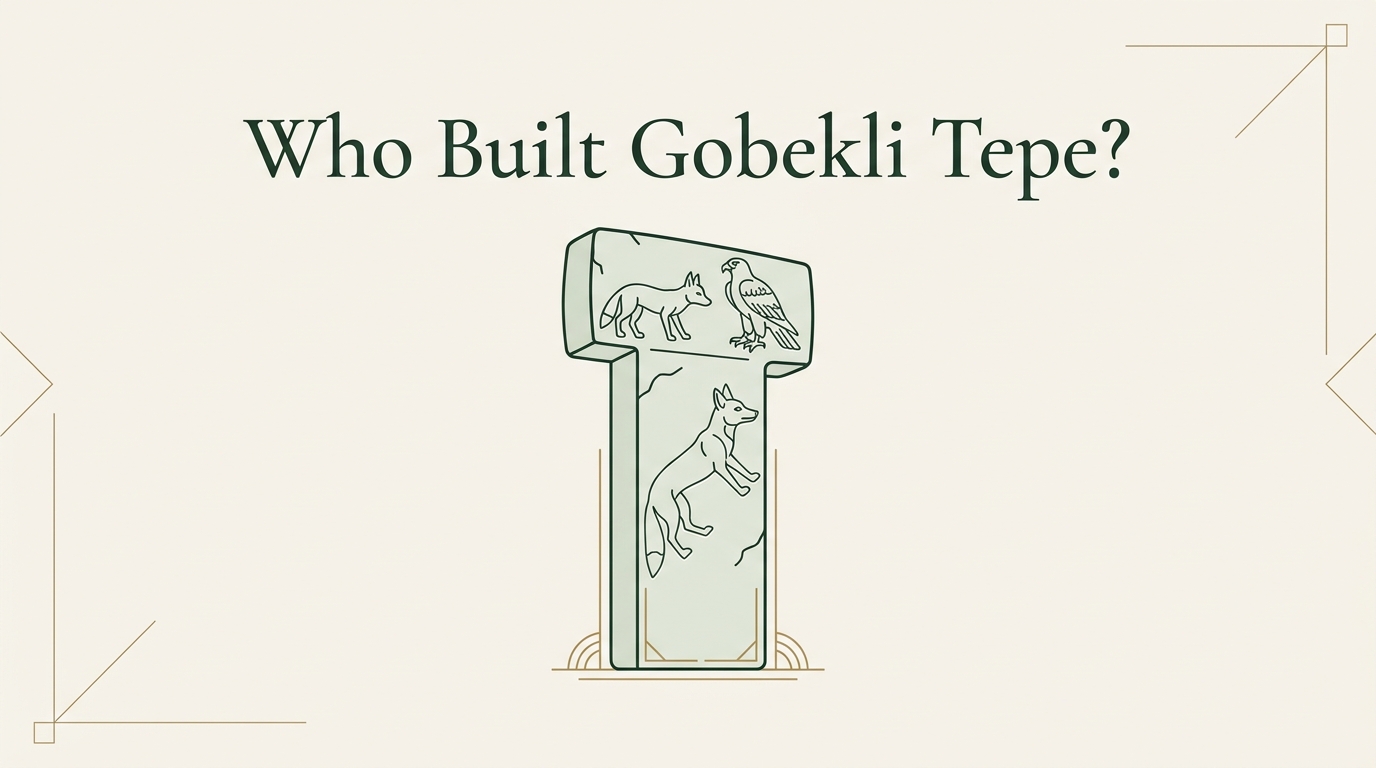
Gobekli Tepe, in southeastern Turkey, transformed how archaeologists think about the early Neolithic. More than 11,000 years ago, communities erected monumental circular enclosures with T-shaped limestone pillars, some reaching 5.5 metres high. Their carvings of animals, including foxes, snakes, boars, and birds of prey, show remarkable planning and artistic skill long before writing, pottery, or fully developed farming.
The central question is not whether these people were mysterious outsiders, but how they fit into the human landscape of Southwest Asia. No published ancient DNA genome yet comes directly from Gobekli Tepe. However, genomes from nearby Upper Mesopotamian sites, together with evidence from Anatolia, the Levant, the Zagros Mountains, and the Caucasus, allow researchers to outline the likely genetic setting of its builders.
This evidence matters for anyone exploring DNA ancestry because it reveals that the Fertile Crescent was never a single, genetically uniform homeland. It was a connected region where hunter-gatherer communities, early cultivators, materials, ideas, and people moved across substantial distances. Gobekli Tepe stood near one of the most important crossroads in early human population history.
Key Discoveries / Main Points
Gobekli Tepe was built from about 9600 BC by communities living before the full development of agriculture, pottery, and writing. Archaeology now indicates that the site included domestic activity as well as monumental architecture, rather than serving only as a periodic ritual destination.
There are currently no published genomes from Gobekli Tepe itself. The best genetic proxies come from nearby sites, especially Cayonu on the upper Tigris, Boncuklu Tarla near Mardin, and Nemrik 9 in northern Iraq.
Upper Mesopotamian ancestry formed a west-to-east gradient. People closer to Cayonu showed greater genetic similarity to ancient Anatolian and Levantine groups, while Boncuklu Tarla and Nemrik 9 showed more similarity to early populations of the Zagros and Caucasus.
A four-way population genetics model finds varying contributions related to central Anatolia, the Levant, the Zagros, and the Caucasus in Upper Mesopotamian individuals. These are reference-based statistical models, not literal records of four separate tribes arriving at one village.
Migration and local continuity both shaped the Neolithic. Central Anatolian farming populations largely descended from earlier local hunter-gatherers, while later movements from Upper Mesopotamia contributed ancestry to parts of central Anatolia.
What This Means for Your DNA
For people using DNA tests to investigate West Asian, Anatolian, Caucasus, Levantine, or Mesopotamian ancestry, Gobekli Tepe provides an important lesson: ancient populations do not map neatly onto modern nationalities or ethnicity estimates. A modern DNA result is compared with present-day or ancient reference datasets and reports statistical similarity. It cannot demonstrate that a person descends directly from the people who raised a particular pillar at Gobekli Tepe.
Still, ancient DNA helps explain why overlapping genetic signals are common across the wider region. The people around Upper Mesopotamia carried ancestry related to groups from several neighboring regions. In modern ancestry analysis, this deep shared history can appear as broad affinities across Anatolia, the Levant, the Caucasus, Iraq, Iran, and surrounding areas. Such affinities reflect repeated population contact over thousands of years, followed by later migrations and local population changes.
Haplogroups can add another layer of information, but they should be interpreted carefully. A Y-DNA or mitochondrial DNA haplogroup traces only one narrow paternal or maternal line, while autosomal DNA reflects ancestry across many lines. Ancient DNA studies of Neolithic populations are especially useful because they show that people who lived in the same broad region could still have diverse genetic backgrounds. Your DNA may share some population-level similarities with ancient reference groups, but it does not assign an ancient identity or prove descent from a specific archaeological community.
Historical and Archaeological Context
Gobekli Tepe lies near Sanliurfa in southeastern Anatolia, at the northern edge of the Fertile Crescent. Its earliest monumental enclosures date broadly to about 9600 BC, a period when communities still relied heavily on hunting, gathering, and intensive use of wild plants and animals. The site was identified in a 1963 survey, but archaeologist Klaus Schmidt recognized its extraordinary prehistoric importance in 1994 and began major excavations the following year.
Early interpretations presented Gobekli Tepe primarily as a sanctuary used by mobile hunter-gatherers. Later excavations have complicated that picture. Researchers have identified features including rainwater cisterns, domestic structures, and large numbers of grinding stones, indicating that people also lived and worked at the site. Nearby sites, including Karahan Tepe and other locations in the Tas Tepeler, or stone hills, region, share related monumental forms and imagery. Rather than an isolated wonder, Gobekli Tepe was part of a wider cultural landscape.
The chronology also places the site near a major transition in food production. Genetic research on einkorn wheat points to the nearby Karacadag Mountains as a likely area of early domestication. At roughly the same time, communities across Southwest Asia developed new settlement patterns, cultivation practices, and social institutions. This does not mean that a single monument caused agriculture, but it does show that monument building, ritual life, exchange networks, and early farming developed together in closely connected regions.
Human remains from Gobekli Tepe remain limited. Researchers previously examined fragmented bones incorporated into building fill and identified modified skull fragments, suggesting complex mortuary practices. The source material also reports the publication of intact burials dated to roughly 8700 to 8000 BC. If DNA preservation permits successful sequencing, these burials may eventually provide the first direct genetic evidence from the site and test models based on neighboring populations.
The Science Behind It
The strongest current evidence comes from ancient DNA sampled across a broad geographic arc. A hunter-gatherer from Pinarbasi in central Anatolia, dating to roughly 15,000 years ago, showed that the first farmers of central Anatolia derived most of their ancestry from local hunter-gatherer populations. This is a major finding because it demonstrates that farming could spread through cultural adoption and local population continuity, not only through large-scale migration.
Genomes from Cayonu, Boncuklu Tarla, and Nemrik 9 reveal a more mixed genetic landscape in Upper Mesopotamia. In a local principal component analysis, ancient individuals are placed according to patterns of genetic variation relative to reference groups. The first axis in the reported analysis runs broadly from ancient Anatolian and Levantine populations in the west toward Zagros and Caucasus hunter-gatherer-related populations in the east. Upper Mesopotamian individuals fall between these poles, consistent with their geographic position.
A separate four-source model used early central Anatolian farmers from Boncuklu, Pre-Pottery Neolithic B Levantine farmers, early Zagros farmers from Ganj Dareh, and Caucasus hunter-gatherers from Kotias as references. Cayonu individuals generally had a larger western-related component, whereas Boncuklu Tarla and Nemrik 9 had higher Zagros- and Caucasus-related components. One Cayonu child differed markedly from other sampled people at the site, illustrating that mobility occurred even within a single community. Because these genomes have relatively low coverage, estimated proportions can shift when researchers change the reference populations. The robust result is the regional gradient, not any exact percentage.
In Simple Terms: Ancient DNA works like comparing old genetic “fingerprints” from different places. The people near Gobekli Tepe look genetically intermediate between populations to the west and east. That does not mean they were four separate peoples mixed in exact portions, but that their ancestors had long-standing connections across several neighboring regions.
Why It Matters
The DNA story of Gobekli Tepe replaces sensational explanations with a more compelling reality. The monument builders were likely local communities within a densely connected Upper Mesopotamian world, not members of a vanished super-civilization or people detached from their neighbors. Their region linked Anatolia, the Levant, the Zagros, and the Caucasus, and those links involved people as well as objects and ideas.
Future ancient DNA from Gobekli Tepe could refine this picture substantially. Direct genomes may reveal whether its inhabitants resembled Cayonu most closely, represented an even more western population, or included people from several communities. Combined with archaeology, radiocarbon dating, isotopes, haplogroups, and broader population genetics, such data can show how early monuments, migration, and the origins of farming shaped the ancestry landscape of Southwest Asia.
References / Further Reading
- Feldman, M. et al. (2019). Ancient genomes from central Anatolia and the genetic origins of early farming populations.
- Altinisik, N. E. et al. (2022). Ancient genomes from Cayonu and population connections in Upper Mesopotamia.
- Lazaridis, I., Reich, D. et al. (2022). Ancient DNA evidence from Upper Mesopotamian Neolithic populations, including Boncuklu Tarla and Nemrik 9.
- Gresky, J. et al. (2017). Study of modified human skull fragments from Gobekli Tepe.
- UNESCO World Heritage Centre. Gobekli Tepe.