Menu
mtDNA Haplogroup • Maternal Lineage

B2A4A1

mtDNA Haplogroup B2A4A1

~4,000 years ago
Central / South America
0 subclades
Scroll to explore
Chapter I

The Story

The journey of mtDNA haplogroup B2A4A1

Origins and Evolution

B2A4A1 is a subclade of the Native American maternal lineage B2A4A, itself nested within haplogroup B2. Based on the phylogenetic position of B2A4A1 under B2A4A and the estimated age of the parent clade, B2A4A1 most likely originated during the mid-to-late Holocene (around 4.5 kya) in Central or northern South America. Its emergence is consistent with localized diversification of maternal lineages after the initial peopling of the Americas, when regional population structure and demographic processes (local drift, founder effects, and small-scale expansions) produced new, geographically-restricted subclades.

Subclades

B2A4A1 is itself a terminal or near-terminal branch within the B2A4A sub-tree in many published phylogenies; depending on the resolution of mitogenome sequencing, researchers may recover further downstream branches (e.g., B2A4A1a, B2A4A1b) in denser sampling of Amazonian and Andean populations. Because it is a relatively recent, regionally restricted lineage, subclade diversity is limited compared with deeper pan-American haplogroups.

Geographical Distribution

The distribution of B2A4A1 mirrors that of its parent clade but with a stronger concentration in specific South American regions. It is most frequent in Amazonian and Andean indigenous groups, reflecting localized diversification and persistence in those populations. Lower-frequency and sporadic occurrences are documented in Central America and southern Mexico, occasionally in northern North America (likely due to historic or prehistoric northward movements and gene flow), and in coastal island/Caribbean contexts where pre-contact travel or later movements introduced diverse maternal lineages. Modern admixed populations in the Americas can carry B2A4A1 at low frequencies because of indigenous ancestry components.

Historical and Cultural Significance

As a Holocene lineage with a primarily Amazonian/Andean distribution, B2A4A1 provides insights into post-glacial demographic processes, regional settlement patterns, and the movements of people associated with late Holocene cultural developments in South and Central America. Its presence in both inland riverine and highland Andean contexts suggests maternal continuity in populations practicing a variety of subsistence strategies (foraging, horticulture, later agriculture). In archaeological genetics, detection of B2A4A1 in ancient samples helps to trace local maternal continuity, patterns of interaction across ecological zones (for example, upland–lowland exchange), and the formation of regional genetic structure during the Late Holocene.

Research and Ancient DNA Context

B2A4A1 has been recovered in mitogenome studies that target indigenous populations and ancient remains across parts of South and Central America. Because it is a relatively localized clade, the haplogroup is most informative for regional phylogeography rather than for continent-wide colonization events. Ancient DNA occurrences attributed to B2A4A1 or closely related B2A4A branches support mid-to-late Holocene age estimates and indicate continuity in some regions over several millennia.

Conclusion

B2A4A1 is a geographically focused, Holocene-derived maternal lineage descended from B2A4A, most strongly associated with Amazonian and Andean indigenous populations. It is valuable for reconstructing regional maternal histories, tracking local continuity and migration within northern South America and adjacent areas, and for refining the finer-scale phylogeography of Native American mitochondrial diversity.

Key Points

  • Origins and Evolution
  • Subclades
  • Geographical Distribution
  • Historical and Cultural Significance
  • Research and Ancient DNA Context
Chapter II

Tree & Relationships

Phylogenetic context and subclades

Evolution Path

This haplogroup's evolutionary journey from its earliest ancestor to the present.

Steps Haplogroup Age Estimate Archaeology Era Time Passed Immediate Descendants Tested Modern Descendants Ancient Connections
1 B2A4A1 Current ~4,000 years ago 🔶 Bronze Age 4,500 years 0 0 0
2 B2A4A ~4,000 years ago 🔶 Bronze Age 4,500 years 1 0 6
3 B2A4 ~7,000 years ago 🌾 Neolithic 7,000 years 1 0 0
4 B2A ~12,000 years ago 🌾 Neolithic 12,000 years 4 10 19
5 B2 ~15,000 years ago 🏹 Mesolithic 15,000 years 11 768 4
6 B ~50,000 years ago 🦴 Paleolithic 50,000 years 4 1,196 75

Subclades (0)

Terminal branch - no known subclades

Chapter III

Where in the World

Geographic distribution and modern presence

Place of Origin

Central / South America

Modern Distribution

The populations where mtDNA haplogroup B2A4A1 is found include:

  1. Indigenous peoples of South America (especially Amazonian and Andean groups)
  2. Indigenous populations of Central America and southern Mexico
  3. Indigenous North American groups (lower frequency, localized occurrences)
  4. Pre-contact coastal and island populations of the Caribbean and Pacific (regional occurrences)
  5. Admixed populations in the Americas affected by historic movements (low frequency)
  6. Samples from ancient DNA studies in Holocene archaeological contexts across the Americas
CHAPTER IV

When in Time

Your haplogroup in the context of human history

~10k years ago

Neolithic Revolution

Agriculture begins, settled communities form

~5k years ago

Bronze Age

Metalworking, writing, and early civilizations

~4k years ago

Haplogroup B2A4A1

Your mtDNA haplogroup emerged in Central / South America

Central / South America
~3k years ago

Iron Age

Iron tools, expanded trade networks

~2k years ago

Classical Antiquity

Greek and Roman civilizations flourish

Present

Present Day

Modern era

Your Haplogroup
Historical Era
Chapter IV-B

Linked Cultures

Ancient cultures associated with mtDNA haplogroup B2A4A1

Cultural Heritage

These ancient cultures have been linked to haplogroup B2A4A1 based on matching ancient DNA samples from archaeological excavations. The presence of this haplogroup in these cultures provides insights into the migrations and population movements of populations carrying this haplogroup.

Ancient Beringian Lapa do Santo Loma San Gabriel Tayopa Trail Creek Culture
Culture assignments are based on archaeological context of ancient DNA samples and may represent regional associations during specific time periods.
Chapter V

Sample Catalog

6 direct carriers of haplogroup B2A4A1

6 / 6 samples
Portrait Sample Country Era Date Culture mtDNA Match
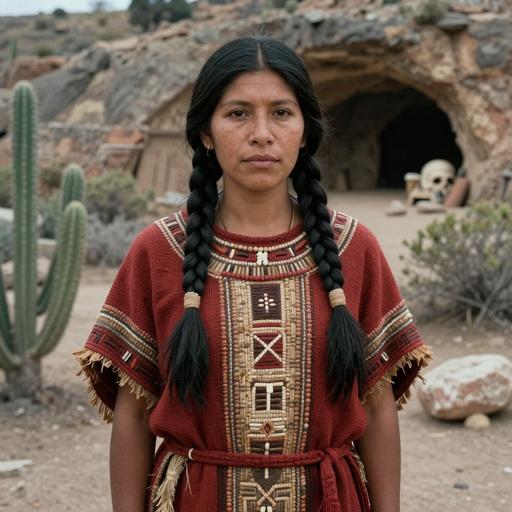
Portrait of ancient individual I11984 from Mexico, dated 100 CE - 1400 CE
I11984
Mexico Cueva de los Muertos Chiquitos 100 CE - 1400 CE Loma San Gabriel B2a4a1 Direct
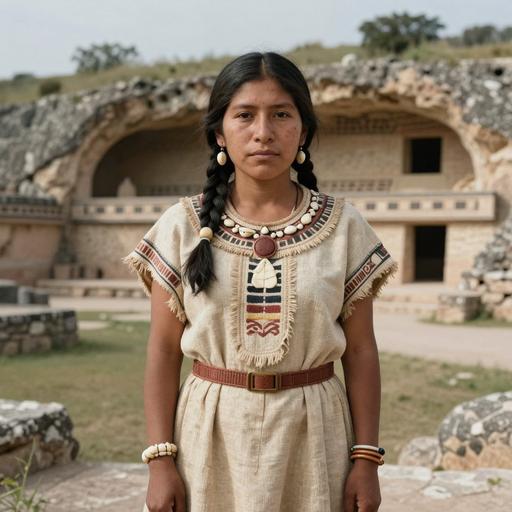
Portrait of ancient individual I11987 from Mexico, dated 100 CE - 1400 CE
I11987
Mexico Cueva de los Muertos Chiquitos 100 CE - 1400 CE Loma San Gabriel B2a4a1 Direct
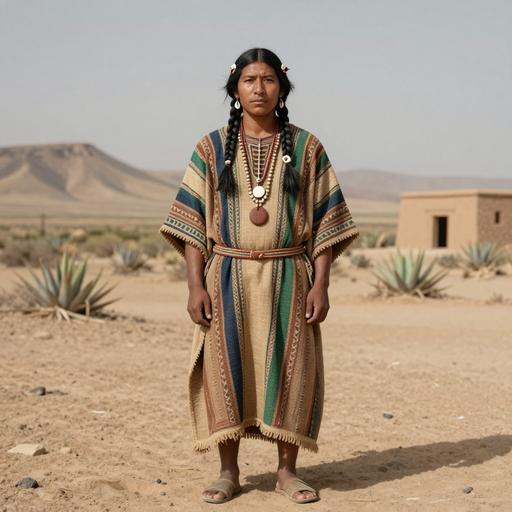
Portrait of ancient individual I8237 from Mexico, dated 500 CE - 1400 CE
I8237
Mexico Tayopa Culture 500 CE - 1400 CE Tayopa B2a4a1 Direct
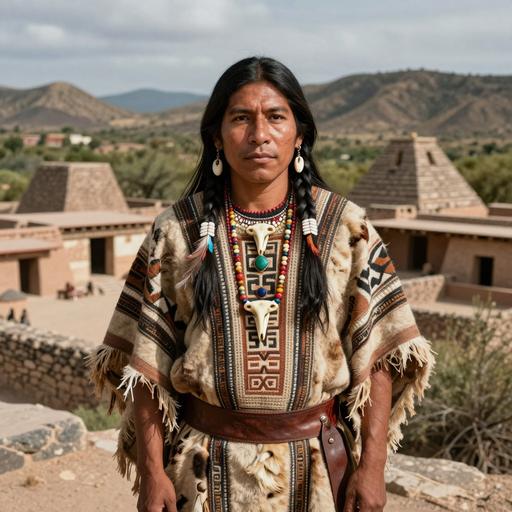
Portrait of ancient individual I17096 from Mexico, dated 500 CE - 1400 CE
I17096
Mexico Tayopa Culture 500 CE - 1400 CE Tayopa B2a4a1 Direct
Portrait of ancient individual I11988 from Mexico, dated 650 CE - 773 CE
I11988
Mexico Cueva de los Muertos Chiquitos 650 CE - 773 CE Loma San Gabriel B2a4a1 Direct
Portrait of ancient individual I12570 from Mexico, dated 887 CE - 986 CE
I12570
Mexico Cueva de los Muertos Chiquitos 887 CE - 986 CE Loma San Gabriel B2a4a1 Direct
Chapter VI

Carrier Distribution Map

Geographic distribution of 6 ancient DNA samples (direct and subclade carriers of B2A4A1)

Direct carrier
Time Period Filter
All Time Periods
Showing all samples
Chapter VII

Temporal Distribution

Distribution of carriers across archaeological periods

Chapter VIII

Geographic Distribution

Distribution by country of origin (direct and subclade carriers shown by default)

Chapter IX

Country × Era Distribution

Cross-tabulation of carrier countries and archaeological periods (direct and subclade carriers shown by default)

Data

Data & Provenance

Source information and data quality

Last Updated 2026-02-16
Confidence Score 50/100
Coverage Low
Data Source

We use the latest phylotree for MTDNA haplogroup classification and data.