The Story
The journey of mtDNA haplogroup B2AS
Origins and Evolution
B2AS is a downstream subclade of mtDNA haplogroup B2A, itself derived from the larger Native American clade B2. The parent clade B2A likely diversified within the Americas during the early Holocene following the initial Late Pleistocene/Beringian entry of maternal lineages into the New World (commonly dated ~12 kya for diversification of B2A). Given this phylogenetic position, B2AS most plausibly represents a Holocene diversification event within Central or South America, with a reasonable time estimate in the mid-Holocene (approximately 7 kya) based on relative branching and the geographic concentration of observed modern occurrences.
Subclades (if applicable)
At present, B2AS is treated as a specific sublineage beneath B2A. Depending on the depth of sequencing and available samples, additional downstream subbranches may be recognized in future mitochondrial phylogenies; however, as currently characterized B2AS is a relatively localized lineage with limited reported substructure in published datasets. The limited number of ancient and high-coverage modern mitogenomes assigned to this clade constrains fine-scale resolution of internal subclades.
Geographical Distribution
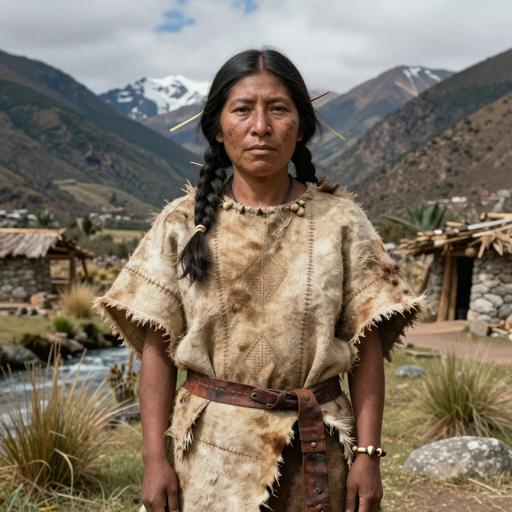
B2AS is primarily recorded within South America, particularly in Amazonian populations and some Andean groups, with secondary occurrences in parts of Central America and southern Mexico. Low-frequency, localized occurrences have been reported in a small number of indigenous North American contexts and in coastal/island archaeological samples in the Caribbean/Pacific, consistent with regional movements and coastal dispersal routes. The lineage is also observed at low frequency in admixed populations in the Americas where indigenous maternal ancestry persists. One published ancient DNA sample assigned to B2A-level lineages in databases provides direct archaeological context for the parent clade; B2AS itself is currently best documented from modern and a small number of regional datasets.
Historical and Cultural Significance
The distribution of B2AS mirrors patterns expected for maternal lineages that diversified within the Americas after initial colonization: persistence in tropical rainforest and Andean ecological zones, and continuity through preceramic to late pre-Columbian periods. Its presence in Amazonian groups suggests involvement in long-term local population histories, possibly including riverine-based population continuities and regional demographic expansions during the Holocene. Because mtDNA tracks only maternal descent, B2AS complements autosomal and Y-chromosome evidence used to reconstruct population structure, migration, and cultural transmission among indigenous American societies.
Conclusion
B2AS represents a regional daughter lineage of B2A reflecting Holocene maternal diversification within Central and South America, most notably in Amazonian and Andean populations. Current knowledge is limited by sparse ancient DNA and uneven modern sampling; as more complete mitogenomes and targeted ancient samples become available, the time depth, internal structure, and finer geographic patterning of B2AS should become clearer. For now, it serves as one piece of the maternal genetic mosaic that documents postglacial population dynamics across the Americas.
Key Points
- Origins and Evolution
- Subclades (if applicable)
- Geographical Distribution
- Historical and Cultural Significance
- Conclusion