Menu
mtDNA Haplogroup • Maternal Lineage

B2G

mtDNA Haplogroup B2G

~9,000 years ago
Western South America (Andes)
1 subclades
7 ancient samples
Scroll to explore
Chapter I

The Story

The journey of mtDNA haplogroup B2G

Origins and Evolution

mtDNA haplogroup B2G is a downstream branch of the Native American haplogroup B2, itself derived from the East/Southeast Asian haplogroup B brought into Beringia during the Late Pleistocene. While B2 originated as part of the initial founder pool that entered the Americas (commonly dated to ~15 kya), B2G represents a later, regional diversification that likely arose in the Early Holocene (a reasonable estimate ~9 kya) as human groups spread into and established populations in the Andean highlands and adjacent lowland environments. The emergence of B2G is consistent with founder-effect processes and localized maternal lineage drift after population splits within South America.

Subclades (if applicable)

As an intermediate clade derived from B2, B2G may contain a small number of geographically restricted sub-lineages or private mutations identified in modern and ancient samples. At present, dense phylogenetic resolution for B2G is limited by sampling; additional whole-mtDNA sequencing from under-sampled Andean and Amazonian groups could reveal further internal structure. For now, B2G should be treated as a regional branch of B2 with potential local subclades defined by private SNPs.

Geographical Distribution

B2G is primarily concentrated in western South America, with the highest frequencies and diversity observed among Andean populations and neighboring Amazonian groups. Its distribution pattern is consistent with: (1) local diversification after the initial peopling of South America, and (2) limited later dispersals that carried the lineage into adjacent Central American or coastal populations at low frequencies. Outside the Americas true B2G is extremely rare and occurrences are most often attributable to recent historical admixture rather than ancient presence.

Historical and Cultural Significance

Although mtDNA lineages do not map one-to-one with archaeological cultures, B2G likely played a role in the maternal ancestry of preceramic and Formative Andean populations. Its presence in ancient DNA from Early and Middle Holocene contexts would support scenarios of early local continuity and demographic stability in parts of the Andes and adjacent lowlands. In later periods, B2G-bearing maternal lines became part of the genetic substrate of pre-Columbian Andean societies and were transmitted into admixed populations after European contact.

Conclusion

B2G is best interpreted as a regional, post-founder diversification of the Native American B2 lineage that documents localized maternal evolution in western South America. It highlights how a small number of founding mitochondrial lineages expanded and differentiated across diverse ecological zones of the Americas. Continued targeted sampling and full mitogenome sequencing from both modern and ancient remains will refine the internal topology and precise timing of B2G's emergence and spread.

Key Points

  • Origins and Evolution
  • Subclades (if applicable)
  • Geographical Distribution
  • Historical and Cultural Significance
  • Conclusion
Chapter II

Tree & Relationships

Phylogenetic context and subclades

Evolution Path

This haplogroup's evolutionary journey from its earliest ancestor to the present.

Steps Haplogroup Age Estimate Archaeology Era Time Passed Immediate Descendants Tested Modern Descendants Ancient Connections
1 B2G Current ~9,000 years ago 🌾 Neolithic 9,000 years 1 9 7
2 B2 ~15,000 years ago 🏹 Mesolithic 15,000 years 11 768 4
3 B ~50,000 years ago 🦴 Paleolithic 50,000 years 4 1,196 75

Siblings (10)

Other branches from the same parent haplogroup

Chapter III

Where in the World

Geographic distribution and modern presence

Place of Origin

Western South America (Andes)

Modern Distribution

The populations where mtDNA haplogroup B2G is found include:

  1. Indigenous Andean populations of western South America (e.g., highland Peru, Bolivia, Ecuador)
  2. Adjacent Amazonian groups in western Amazonia (regional occurrences)
  3. Indigenous populations of Central America (low to moderate frequencies, local pockets)
  4. Indigenous North American groups (rare, localized occurrences)
  5. Ancient DNA samples from Early and Middle Holocene archaeological contexts in South America
  6. Admixed populations in Latin America (low frequency due to post-contact admixture)
CHAPTER IV

When in Time

Your haplogroup in the context of human history

~10k years ago

Neolithic Revolution

Agriculture begins, settled communities form

~9k years ago

Haplogroup B2G

Your mtDNA haplogroup emerged in Western South America (Andes)

Western South America (Andes)
~5k years ago

Bronze Age

Metalworking, writing, and early civilizations

~3k years ago

Iron Age

Iron tools, expanded trade networks

~2k years ago

Classical Antiquity

Greek and Roman civilizations flourish

Present

Present Day

Modern era

Your Haplogroup
Historical Era
Chapter IV-B

Linked Cultures

Ancient cultures associated with mtDNA haplogroup B2G

Cultural Heritage

These ancient cultures have been linked to haplogroup B2G based on matching ancient DNA samples from archaeological excavations. The presence of this haplogroup in these cultures provides insights into the migrations and population movements of populations carrying this haplogroup.

Ancient Beringian Atajadizo Ceramic Colonial Maya Cueva Esqueletos Huaca Prieta Kaingang Sambaqui Lapa do Santo Limão Sambaqui Tiwanaku Trail Creek Culture
Culture assignments are based on archaeological context of ancient DNA samples and may represent regional associations during specific time periods.
Chapter V

Sample Catalog

7 subclade carriers of haplogroup B2G (no exact B2G samples sequenced yet)

7 / 7 samples
Portrait Sample Country Era Date Culture mtDNA Match
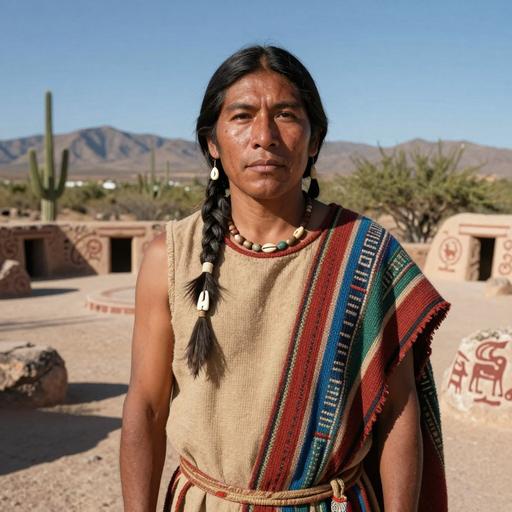
Portrait of ancient individual I23706 from Mexico, dated 823 BCE - 511 BCE
I23706
Mexico Trincheras Culture La Playa 2500 Before Present 823 BCE - 511 BCE Trincheras B2g1 Downstream
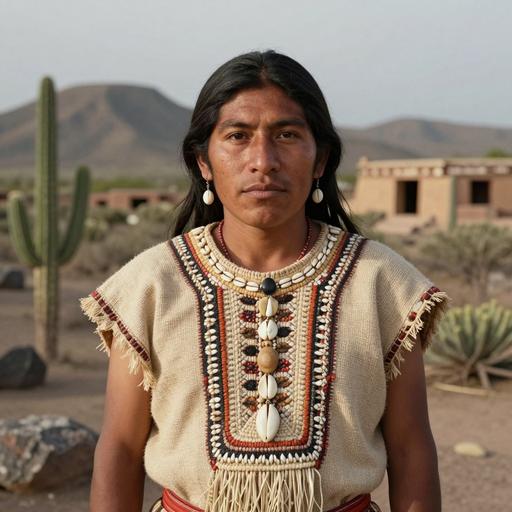
Portrait of ancient individual BC30 from Mexico, dated 1200 CE - 1700 CE
BC30
Mexico Pericues Culture, Mexico 1200 CE - 1700 CE Pericues B2g1 Downstream
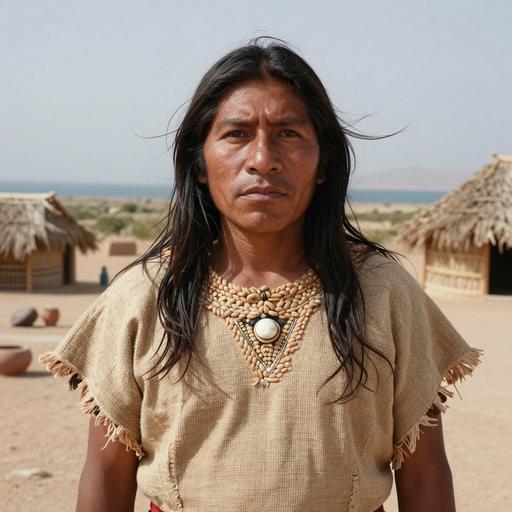
Portrait of ancient individual BC27 from Mexico, dated 1200 CE - 1700 CE
BC27
Mexico Pericues Culture, Mexico 1200 CE - 1700 CE Pericues B2g1 Downstream
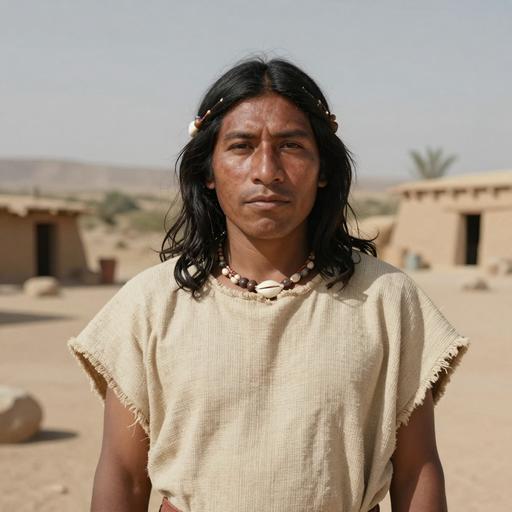
Portrait of ancient individual BC23 from Mexico, dated 1200 CE - 1700 CE
BC23
Mexico Pericues Culture, Mexico 1200 CE - 1700 CE Pericues B2g1 Downstream
Portrait of ancient individual BC23 from Mexico, dated 1200 CE - 1700 CE
BC23
Mexico Pre-Columbian Central America 1200 CE - 1700 CE B2g1 Downstream
Portrait of ancient individual BC27 from Mexico, dated 1200 CE - 1700 CE
BC27
Mexico Pre-Columbian Central America 1200 CE - 1700 CE B2g1 Downstream
Portrait of ancient individual BC30 from Mexico, dated 1200 CE - 1700 CE
BC30
Mexico Pre-Columbian Central America 1200 CE - 1700 CE B2g1 Downstream
Chapter VI

Carrier Distribution Map

Geographic distribution of 7 ancient DNA samples (direct and subclade carriers of B2G)

Subclade carrier
Time Period Filter
All Time Periods
Showing all samples
Chapter VII

Temporal Distribution

Distribution of carriers across archaeological periods

Chapter VIII

Geographic Distribution

Distribution by country of origin (direct and subclade carriers shown by default)

Chapter IX

Country × Era Distribution

Cross-tabulation of carrier countries and archaeological periods (direct and subclade carriers shown by default)

Data

Data & Provenance

Source information and data quality

Last Updated 2026-02-16
Confidence Score 50/100
Coverage Low
Data Source

We use the latest phylotree for MTDNA haplogroup classification and data.