The Story
The journey of mtDNA haplogroup C5A
Origins and Evolution
mtDNA haplogroup C5a is a daughter lineage of haplogroup C5, itself a branch of the broader haplogroup C that expanded across northern Eurasia after the Last Glacial Maximum. Based on phylogenetic position and coalescence estimates, C5a most likely arose in the early Holocene (on the order of ~9 kya), during a period of post-glacial population dispersals and regional diversification across central and eastern Siberia and adjacent Mongolia. The timing and geographic context are consistent with population re-expansion into formerly marginal northern environments as climates warmed.
C5a shows the signature of a regional founder lineage: it is nested within C5 and bears private mutations that mark a maternal lineage that became locally common among some northern Eurasian groups. Its distribution and age imply that it diversified locally rather than representing a recent long-distance introduction.
Subclades (if applicable)
Several downstream branches have been reported in the literature and in sequence databases under names such as C5a1 and C5a2 (and additional minor subbranches), each reflecting further local diversification. These subclades are usually defined by one or a few diagnostic coding- and/or control-region mutations and tend to show geographically restricted distributions — for example, some subbranches are concentrated among Mongolic-speaking groups, while others appear more often in Tungusic or particular Siberian ethnicities. Continued high-resolution sequencing (complete mitogenomes) has clarified these splits and revealed additional microstructure within C5a.
Geographical Distribution
C5a is most frequent among northern Eurasian and adjacent populations. Modern occurrences are concentrated among:
- Siberian ethnic groups (e.g., Yakut, Evenk, Chukchi, Nenets, Tuvan) where it can reach moderate to high relative frequencies in local samples.
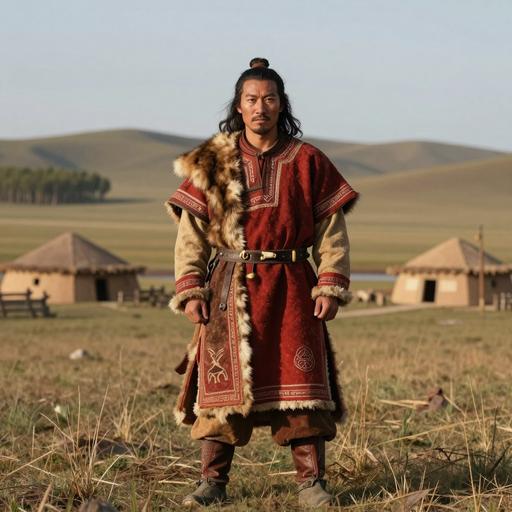
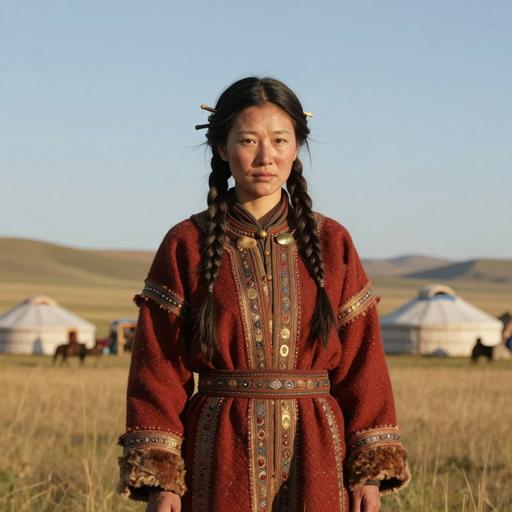
- Mongolic and Tungusic-speaking groups (e.g., Buryats, some Mongolian and Even groups), reflecting long-term regional continuity and gene flow across the Mongolian-Siberian borderlands.
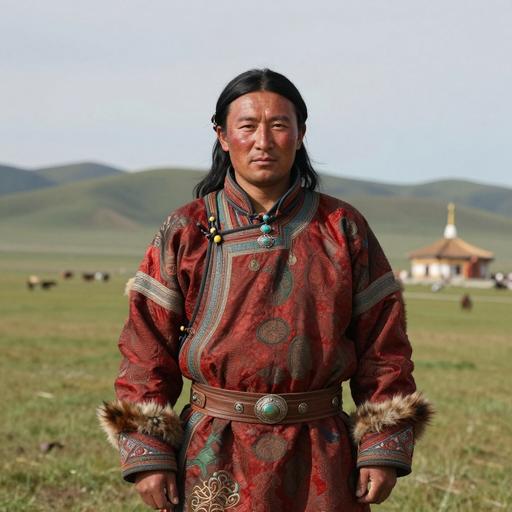
- Tibetan and Himalayan populations at low-to-moderate frequency (several studies report C5a in Tibetans and some Tibeto-Burman groups), suggesting either ancient north–south contacts or later highland introductions.
- Central Asian groups (e.g., Kazakh and Altaians) at low-to-moderate frequency, consistent with east–west mobility across the steppe.
- Selected South Asian populations in Himalayan foothills and among Tibeto-Burman speakers at low frequency.
- East Asian populations (Korean, Japanese) only at very low frequency or in isolated reports.
- Ancient DNA contexts: C5a has been identified in a limited number of archaeological samples across northern Eurasia (the database referenced contains nine ancient occurrences), confirming its presence in prehistoric populations of the region.
The pattern — concentrated in Siberia and adjacent regions with scattered occurrences beyond — is consistent with a regional origin followed by limited dispersal via trade, migration, and pastoral or highland transhumance.
Historical and Cultural Significance
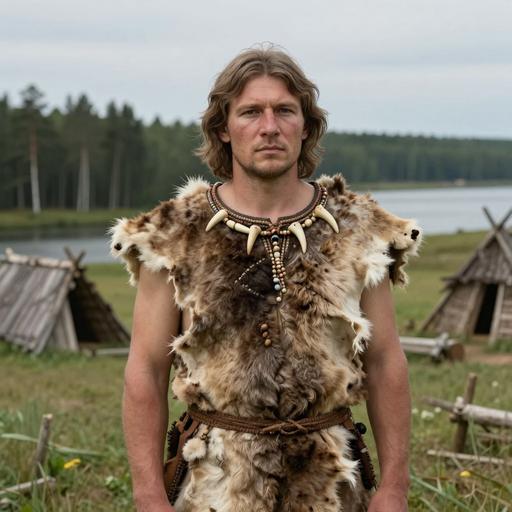
Because C5a is concentrated among northern Eurasian groups, it is associated with the maternal genetic substratum of indigenous Siberian, Mongolic, and Tungusic communities. Its presence in Tibetan and Himalayan groups at low frequency suggests episodes of gene flow down mountain corridors or assimilation of small northern-origin maternal lineages into highland populations. In archaeological terms, C5a’s continuity from prehistoric northern Eurasian samples into modern Siberian populations supports models of long-term local continuity of maternal lineages in parts of Siberia through the Holocene.
C5a may appear in archaeological cultures connected to Siberian Bronze Age and later pastoralist complexes; while it is not a diagnostic marker of any single archaeological horizon, it contributes to genetic profiles used to reconstruct population interactions across the forest–steppe–mountain zones. In combination with paternal lineages typical of northern Eurasia (for example Y-DNA haplogroups C2 and N), C5a helps characterize the maternal component of those regional ancestries.
From a genetic genealogy perspective, finding C5a in a mitogenome indicates maternal ancestry tied to northern Eurasian populations; however, specific geographic resolution within the vast Siberian-Mongolian region often requires subclade-level (complete mitogenome) data and comparison to population databases.
Conclusion
mtDNA haplogroup C5a is a Holocene-aged maternal lineage that arose within the C5 branch in central–eastern Siberia or adjacent Mongolia and persisted as a distinctive component of northern Eurasian maternal diversity. Its modern distribution — concentrated in Siberian, Mongolic and Tungusic groups with scattered occurrences in Tibet, Central Asia and parts of South and East Asia — plus its identification in ancient remains, supports a history of local continuity with episodic dispersal along north–south and east–west corridors. High-resolution mitogenome sequencing and broader ancient DNA sampling will continue to refine the internal topology and historical movements of C5a and its subclades.
Key Points
- Origins and Evolution
- Subclades (if applicable)
- Geographical Distribution
- Historical and Cultural Significance
- Conclusion