The Story
The journey of mtDNA haplogroup C5B
Origins and Evolution
mtDNA haplogroup C5B is a downstream lineage of haplogroup C5, itself a branch of the broader haplogroup C that expanded across northern Asia after the Last Glacial Maximum. Based on the phylogenetic position under C5 and comparative coalescence estimates for C subclades, C5B most likely differentiated during the Late Glacial to early Holocene period (roughly ~12 kya), in a geographic zone around Central-East Siberia and adjacent Mongolia. The emergence of C5B reflects local diversification among maternal lineages adapted to northern Eurasian environments following population re-expansions as ice sheets retreated and hunter-gatherer groups recolonized high-latitude landscapes.
Subclades
C5B contains several recognized downstream branches in phylogenetic databases and mtDNA studies (sometimes labeled as C5b1, C5b2, etc. in different nomenclatures). These sublineages show additional geographic structuring, with some lineages more common in northeastern Siberian groups and others occurring at low frequency in Mongolic/Tungusic and Himalayan/Tibeto-Burman populations. The exact branching order and age estimates for these internal subclades continue to be refined as more full mitogenomes from northern Eurasia are sequenced. Deep sequencing and better sampling across Siberia and the Tibetan Plateau are important to resolve finer substructure within C5B.
Geographical Distribution
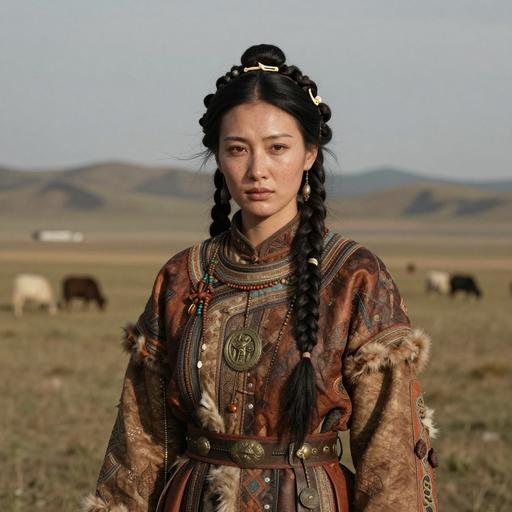
C5B is concentrated in northern Eurasia, with its highest relative frequencies and diversity in Siberian and Mongolic/Tungusic-speaking populations. It is also found at lower frequencies in some Tibetan and Himalayan groups, scattered Central Asian populations (Altaians, Kazakhs), and occasionally in admixed individuals farther afield (including parts of northeastern Europe where historical Siberian gene flow occurred). Observations of C5B in ancient DNA from northern Eurasian archaeological contexts confirm its long-standing presence in the region, though the haplogroup is not among the most frequent maternal lineages overall.
Historical and Cultural Significance
The distribution of C5B aligns with patterns of persistence of postglacial hunter-gatherer maternal lineages in northern Eurasia and later interactions with mobile pastoralist and steppe-associated groups. C5B likely persisted in local hunter-gatherer and forager networks through the early Holocene and then experienced varying levels of continuity or admixture during Bronze Age and historic-period movements (including Scythian/Xiongnu-era contacts and later medieval expansions such as Turkic and Mongolic dispersals). In modern populations, C5B contributes to the mitochondrial signature characterizing many Siberian, Mongolic and Tungusic communities.
Conclusion
As a regional subclade of C5, C5B is an informative marker of maternal ancestry across northern Eurasia. Its temporal depth near the Pleistocene–Holocene transition and its modern distribution underscore the long-term continuity of certain maternal lineages in Siberia and adjacent regions, as well as episodic gene flow into Central Asia, the Tibetan Plateau and beyond. Continued sampling of whole mitogenomes, especially from underrepresented northern and highland populations and from ancient remains, will sharpen age estimates and clarify internal structure within C5B.
Key Points
- Origins and Evolution
- Subclades
- Geographical Distribution
- Historical and Cultural Significance
- Conclusion