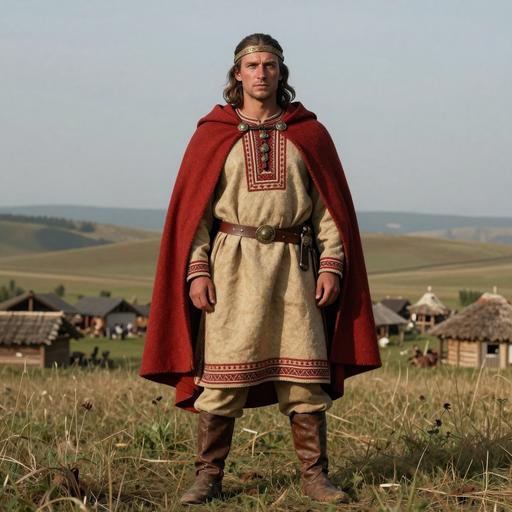
The Story
The journey of mtDNA haplogroup I1A1A
Origins and Evolution
mtDNA haplogroup I1A1A is a downstream branch of mtDNA I1A1, itself part of the broader I1/I1A maternal lineage that is reconstructed to have diversified in the Near East/Anatolia region during the early Neolithic. Given the parent clade's estimated age (~9 kya) and the phylogenetic position of I1A1A as a subclade, a plausible origin time for I1A1A is on the order of approximately 7–8 thousand years ago. The emergence of this subclade likely occurred within populations that participated in the demic diffusion of farming from Anatolia into adjacent regions, so its early history is tied to Neolithic population movements and local admixture events.
Subclades (if applicable)
I1A1A is a fine-scale sublineage beneath I1A1. Because it is a relatively small and sparsely-sampled branch, there are limited named downstream subclades recorded in public mtDNA phylogenies; additional substructure may be discovered as more complete mitochondrial genomes from the Near East, Caucasus, and Neolithic archaeological contexts are sequenced. Current evidence treats I1A1A as a minor terminal or near-terminal branch with restricted representation in modern and ancient datasets.
Geographical Distribution
Modern occurrences of I1A1A are patchy and generally low-to-moderate in frequency. It is most consistently observed in populations of the Near East and the Caucasus, with scattered presence in southern and eastern Europe (particularly the Balkans and parts of Italy), low-frequency detections across Central and South Asia, and occasional finds in North African and Jewish community samples. Archaeogenetic recovery of I1A1A in multiple early Neolithic contexts reinforces a prehistoric distribution tied to farming expansions out of Anatolia into neighboring regions.
Historical and Cultural Significance
The distribution and age of I1A1A tie it to the early Neolithic demographic processes: the spread of agriculture, the movement of people and their maternal lineages from Anatolia into the Caucasus, the Balkans, and along Mediterranean corridors. In archaeological terms, lineages like I1A1A are informative for reconstructing maternal ancestry of Early European Farmer (EEF) related groups and for tracing the mixture between incoming farmers and local hunter-gatherer populations. While not a high-frequency marker that defines a single archaeological culture, its presence in Neolithic sites provides supporting evidence for Anatolian-derived maternal ancestry in those contexts.
Limitations and Research Needs
I1A1A remains a low-frequency and under-sampled lineage in global mtDNA datasets. Only a small number of ancient DNA samples have been attributed to this subclade so far, which limits confident inference about fine-scale phylogeography and demographic events tied specifically to I1A1A. Increased sampling of complete mitochondrial genomes from Anatolia, the Caucasus, the Balkans, and early Neolithic sites will improve resolution of its origin date, substructure, and post-Neolithic fate.
Conclusion
mtDNA I1A1A represents a Near Eastern/Anatolian-derived maternal lineage that likely arose in the early Neolithic and participated in the spread of farming into adjacent regions. It appears at low-to-moderate frequency in modern Near Eastern, Caucasus, and some southern European populations and is present in several ancient Neolithic contexts, making it a useful, if currently limited, marker for tracing early farmer maternal ancestry and subsequent regional admixture.
Key Points
- Origins and Evolution
- Subclades (if applicable)
- Geographical Distribution
- Historical and Cultural Significance
- Limitations and Research Needs