Menu
mtDNA Haplogroup • Maternal Lineage

I1C

mtDNA Haplogroup I1C

~9,000 years ago
Near East
1 subclades
11 ancient samples
Scroll to explore
Chapter I

The Story

The journey of mtDNA haplogroup I1C

Origins and Evolution

mtDNA haplogroup I1C is a subclade of haplogroup I1, itself part of the broader mtDNA haplogroup I family. Based on the phylogenetic position of I1 and the archaeological contexts in which closely related lineages appear, I1C most likely arose in Western Asia (the Near East) during the early Neolithic transition, roughly ~9 kya. As a downstream branch of I1, I1C carries the defining mutations of I and I1 plus additional private mutations that distinguish it from sister clades. Its time depth and geographic origin are consistent with maternal lineages that expanded with early farming and post-Last Glacial Maximum re-settlements in West Eurasia.

Subclades

Current sampling of mtDNA I1 substructure is limited compared with major pan-European haplogroups, and I1C appears to be one of several low-frequency sub-branches within the I1 phylogeny. Where population-level sequencing is available, I1C can sometimes be subdivided further (for example into local sub-branches identifiable by private mutations), but many of these finer clades remain poorly resolved due to sparse sampling. Future whole-mitogenome surveys and ancient DNA will clarify internal structure and demographic history.

Geographical Distribution

I1C shows a concentrated but low-to-moderate presence across parts of the Near East and adjacent regions. The highest densities are observed in areas consistent with early farming origins and the later demographic networks that connected Anatolia, the Levant and the Caucasus with southeastern Europe. Detectable, though lower-frequency, occurrences appear in the Balkans and Italy and as scattered lineages further into eastern Europe and parts of Central/South Asia. Sporadic reports from North Africa and some Jewish communities reflect historic mobility and population contacts across the Mediterranean and Near East.

Historical and Cultural Significance

I1C's association with the Near East and early Neolithic contexts links it to the broad demographic processes that spread agriculture into Europe. In archaeogenetic datasets, related I1 lineages have been recovered from Neolithic farmer contexts (Anatolian and early European farming sites) and occasionally in later Bronze Age and Iron Age samples where population movement and exchange continued. While not a hallmark lineage of steppe migrations, I1C may mark local maternal continuity in regions of Anatolia and the southern Balkans or reflect female-mediated gene flow along Neolithic and later Mediterranean networks.

Conclusion

mtDNA I1C is a low-frequency maternal lineage rooted in the I1 subclade family, with a Near Eastern Neolithic origin and a patchy but persistent presence in the Caucasus, parts of southern and eastern Europe and neighboring regions. Its current low frequency and incomplete sampling mean that more mitogenome sequencing and additional ancient DNA studies are needed to refine its internal branching, precise age estimates and detailed migration history. For genetic genealogy, finding I1C in a maternal linepoints to a likely Near Eastern/Anatolian ancestral component with possible links to early farming populations and subsequent regional admixture.

Key Points

  • Origins and Evolution
  • Subclades
  • Geographical Distribution
  • Historical and Cultural Significance
  • Conclusion
Chapter II

Tree & Relationships

Phylogenetic context and subclades

Evolution Path

This haplogroup's evolutionary journey from its earliest ancestor to the present.

Steps Haplogroup Age Estimate Archaeology Era Time Passed Immediate Descendants Tested Modern Descendants Ancient Connections
1 I1C Current ~9,000 years ago 🌾 Neolithic 9,000 years 1 8 11
2 I1 ~16,000 years ago 🏹 Mesolithic 16,000 years 4 130 6
3 I ~25,000 years ago 🦴 Paleolithic 25,000 years 7 296 66

Siblings (3)

Other branches from the same parent haplogroup

Chapter III

Where in the World

Geographic distribution and modern presence

Place of Origin

Near East

Modern Distribution

The populations where mtDNA haplogroup I1C is found include:

  1. Near Eastern populations (Anatolia, Levant, Iran)
  2. Caucasus populations (Armenia, Georgia, Azerbaijan)
  3. Southern and Eastern European populations (Balkans, Italy, parts of the Mediterranean)
  4. Central and South Asian groups (low frequency, scattered)
  5. North African populations (sporadic, generally low frequency)
  6. Jewish communities (including some lineages within Ashkenazi and Sephardic groups, at low frequency)
  7. Ancient Neolithic farmer communities (Anatolian/early European farming contexts)
CHAPTER IV

When in Time

Your haplogroup in the context of human history

~10k years ago

Neolithic Revolution

Agriculture begins, settled communities form

~9k years ago

Haplogroup I1C

Your mtDNA haplogroup emerged in Near East

Near East
~5k years ago

Bronze Age

Metalworking, writing, and early civilizations

~3k years ago

Iron Age

Iron tools, expanded trade networks

~2k years ago

Classical Antiquity

Greek and Roman civilizations flourish

Present

Present Day

Modern era

Your Haplogroup
Historical Era
Chapter IV-B

Linked Cultures

Ancient cultures associated with mtDNA haplogroup I1C

Cultural Heritage

These ancient cultures have been linked to haplogroup I1C based on matching ancient DNA samples from archaeological excavations. The presence of this haplogroup in these cultures provides insights into the migrations and population movements of populations carrying this haplogroup.

Armenian Neolithic Early Roman Lebanese Geoksyur Culture Iranian Chalcolithic Late Roman Linear Pottery Culture Loebanr Culture Sapalli Spanish Medieval Tepe Hissar
Culture assignments are based on archaeological context of ancient DNA samples and may represent regional associations during specific time periods.
Chapter V

Sample Catalog

7 direct carriers and 4 subclade carriers of haplogroup I1C

11 / 11 samples
Portrait Sample Country Era Date Culture mtDNA Match
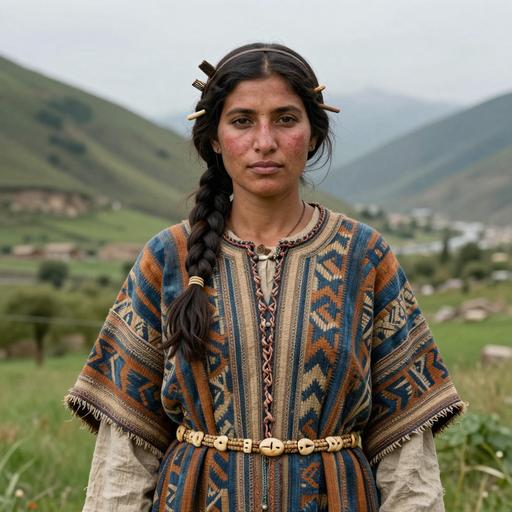
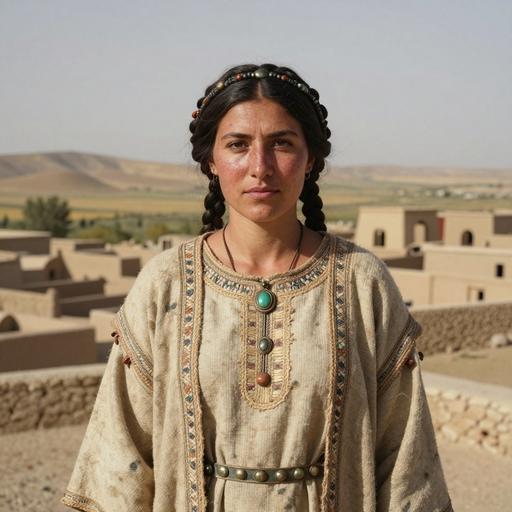
Portrait of ancient individual R120 from Italy, dated 400 CE - 600 CE
R120
Italy Late Antiquity Italy 400 CE - 600 CE Late Roman I1c Direct
Portrait of ancient individual I12137 from Pakistan, dated 1000 BCE - 800 BCE
I12137
Pakistan The Loebanr Iron Age Culture of Pakistan 1000 BCE - 800 BCE Loebanr Culture I1c Direct
Portrait of ancient individual I12137 from Pakistan, dated 1000 BCE - 800 BCE
I12137
Pakistan The SPGT Culture 1000 BCE - 800 BCE I1c Direct
Portrait of ancient individual I10897 from Spain, dated 1040 CE - 1214 CE
I10897
Spain Medieval Spain 1040 CE - 1214 CE Spanish Medieval I1c Direct
Portrait of ancient individual I10897 from Spain, dated 1040 CE - 1214 CE
I10897
Spain Medieval Iberia 1040 CE - 1214 CE I1c Direct
Portrait of ancient individual I4286 from Uzbekistan, dated 1886 BCE - 1750 BCE
I4286
Uzbekistan Bronze Age Sapalli Tepe 1886 BCE - 1750 BCE Sapalli I1c Direct
Portrait of ancient individual I1674 from Iran, dated 3978 BCE - 3798 BCE
I1674
Iran Chalcolithic Iran 3978 BCE - 3798 BCE Iranian Chalcolithic I1c Direct
Portrait of ancient individual KNT001 from Kazakhstan, dated 249 CE - 375 CE
KNT001
Kazakhstan Late Iron Age Kazakhstan 249 CE - 375 CE Late Iron Age I1c1 Downstream
Portrait of ancient individual I12456 from Pakistan, dated 1000 BCE - 800 BCE
I12456
Pakistan The Loebanr Iron Age Culture of Pakistan 1000 BCE - 800 BCE Loebanr Culture I1c1 Downstream
Portrait of ancient individual I12482 from Turkmenistan, dated 3400 BCE - 2800 BCE
I12482
Turkmenistan Chalcolithic Geoksyur 3400 BCE - 2800 BCE Geoksyur Culture I1c1 Downstream
Chapter VI

Carrier Distribution Map

Geographic distribution of 11 ancient DNA samples (direct and subclade carriers of I1C)

Direct carrier Subclade carrier
Time Period Filter
All Time Periods
Showing all samples
Chapter VII

Temporal Distribution

Distribution of carriers across archaeological periods

Chapter VIII

Geographic Distribution

Distribution by country of origin (direct and subclade carriers shown by default)

Chapter IX

Country × Era Distribution

Cross-tabulation of carrier countries and archaeological periods (direct and subclade carriers shown by default)

Data

Data & Provenance

Source information and data quality

Last Updated 2026-02-16
Confidence Score 50/100
Coverage Low
Data Source

We use the latest phylotree for MTDNA haplogroup classification and data.