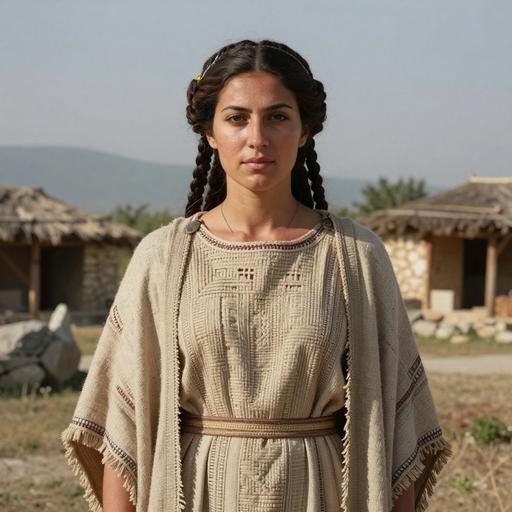
The Story
The journey of mtDNA haplogroup I5C
Origins and Evolution
Haplogroup I5C is a downstream branch of mtDNA haplogroup I5, itself a West Eurasian lineage probably arising in the Near East or Anatolia during the early postglacial to Neolithic interval. As a subclade, I5C most plausibly originated after the establishment of I5, during the later Neolithic or Bronze Age periods (several thousand years after the parent clade), reflecting further local diversification within Anatolia/Caucasus‑adjacent populations. The lineage's low modern frequency and its patchy ancient DNA record suggest a history of localized founder events, drift and episodic dispersal rather than a broad rapid expansion.
Subclades (if applicable)
I5C is itself a defined sub-branch of I5; available population and ancient DNA sampling to date indicate only a few downstream lineages or private branches detected in archaeological and modern samples. Because I5 and its subclades are relatively uncommon in broad population screens, the internal structure of I5C remains incompletely resolved and may expand as more complete mitochondrial genomes from the Near East, Anatolia and neighbouring regions are sequenced.
Geographical Distribution
Today and in published ancient DNA datasets, I5C appears at low frequencies and is concentrated in and around the Near East and eastern Mediterranean. Detectable occurrences cluster in Anatolia and the Levant, the Caucasus, and parts of the Balkans and southern Europe (notably Greece, Cyprus and Italy). Sporadic occurrences have also been reported in some Jewish communities (reflecting Near Eastern maternal lineages retained in diaspora groups) and as rare, patchy occurrences in North Africa and parts of Central/South Asia—consistent with long‑distance contacts, trade routes and historic migrations.
Historical and Cultural Significance
Because of its Near Eastern origin and presence in early farmer contexts, I5C is informative for studies of Neolithic demography and subsequent regional population dynamics. Its association with Anatolian Neolithic and Early European Farmer-associated contexts implies a role in the maternal ancestry that spread with farming technology into southeastern Europe. Later Bronze Age movements across the Aegean and Caucasus region could also have redistributed I5C lineages, but unlike some pan‑Eurasian mtDNA haplogroups, I5C does not show evidence for a major continent‑wide expansion; rather it marks more localized maternal ancestries that can help resolve regional continuity versus replacement in archaeological sequences.
Conclusion
I5C is a low-frequency, regionally informative mtDNA subclade of I5 that likely formed in the Near East/Anatolia in the post‑Neolithic/Bronze Age timeframe. Its distribution—concentrated in Anatolia, the Caucasus and parts of the eastern Mediterranean with scattered downstream occurrences—makes it useful for fine‑scale studies of maternal lineages tied to early farming, regional interchange and localized demographic events. Expanded high‑coverage mitogenome sampling from undersampled Near Eastern and Caucasus populations will clarify I5C's internal structure and past movements.
Key Points
- Origins and Evolution
- Subclades (if applicable)
- Geographical Distribution
- Historical and Cultural Significance
- Conclusion