Menu
mtDNA Haplogroup • Maternal Lineage

K1A4B

mtDNA Haplogroup K1A4B

~4,000 years ago
Near East / Anatolia
0 subclades
15 ancient samples
Scroll to explore
Chapter I

The Story

The journey of mtDNA haplogroup K1A4B

Origins and Evolution

mtDNA haplogroup K1A4B is a downstream subclade of K1a4 (within haplogroup K, itself a branch of U8b'K) and reflects a later diversification within the K1a4 lineage. Haplogroup K1a4 is well-attested as a lineage associated with Near Eastern/Anatolian early farmers who expanded into Europe during the Neolithic; K1A4B appears to have arisen after that primary Neolithic dispersal, with phylogenetic dating and the relative paucity of derived lineages suggesting an origin in the mid to late Holocene (on the order of ~4 kya). The clade is defined by a small set of coding-region mutations that distinguish it from other K1a4 sublineages; because sampling remains limited, the internal branching structure of K1A4B is still being resolved by high-resolution mitogenome sequencing.

Subclades

As of current published and database-backed mitogenome surveys, K1A4B shows limited internal diversity compared with older K subclades. A few downstream branches have been tentatively identified in phylogenies built from full mitogenomes, but many apparent sub-branches are based on single or very few samples. This limited diversity is consistent with a relatively recent origin and/or a demographic history involving small maternal effective population size or localized expansions. Continued targeted sequencing of modern and ancient mitogenomes is required to robustly define named subclades (e.g., K1A4B1) and to identify diagnostic mutations for each branch.

Geographical Distribution

K1A4B is a low-frequency haplogroup found at trace to low-moderate levels across parts of Southern Europe and in the Near East. Its geographic pattern is consistent with a Near Eastern/Anatolian origin followed by limited dispersal into Mediterranean Europe, likely mediated by later Chalcolithic–Bronze Age movements and continuing gene flow across the Anatolia–Balkans–Mediterranean corridor. Modern detections occur in:

  • Southern European populations (Italy, Greece, Iberia, the Balkans) at low-to-moderate frequencies in localized studies
  • Anatolia and Levantine Near Eastern populations at low frequency, consistent with an origin in that region
  • Small numbers in some Jewish communities and in modern diaspora populations (e.g., North America, South America) reflecting recent migration

Ancient DNA records that can be assigned confidently to K1a4 and related subclades are primarily Neolithic farmer contexts; K1A4B itself has been reported in a small number of archaeological samples, which supports continuity of K-derived maternal lineages in the region across the Holocene.

Historical and Cultural Significance

While K1A4B is not a high-frequency lineage that defines a broad population, it is informative for tracing finer-scale maternal ancestry and post-Neolithic movements in the Near East and Mediterranean. Because K1a lineages are strongly associated with the early agricultural populations that spread from Anatolia into Europe, downstream subclades like K1A4B can mark local founder events, demographic bottlenecks, or later migrations (for example, Chalcolithic-to-Bronze Age mobility, regional trade networks, or community-level founder effects). The occasional presence of K1A4-derived lineages in some Jewish maternal genealogies likewise indicates that K-derived maternal variation entered and persisted in multiple ethnogeographic communities over the last several millennia.

Conclusion

mtDNA haplogroup K1A4B represents a relatively young, low-frequency maternal lineage nested within the K1a4 clade that likely originated in the Near East/Anatolia around the mid-Holocene (~4 kya). Its distribution—scarce but detectable in Southern Europe, Anatolia/the Levant, and in some diaspora and Jewish-associated samples—fits a model of Near Eastern origin with limited subsequent dispersal and localized persistence. Greater sampling of modern populations and additional ancient mitogenomes will refine its internal structure, age estimate, and historical pathways.

Key Points

  • Origins and Evolution
  • Subclades
  • Geographical Distribution
  • Historical and Cultural Significance
  • Conclusion
Chapter II

Tree & Relationships

Phylogenetic context and subclades

Evolution Path

This haplogroup's evolutionary journey from its earliest ancestor to the present.

Steps Haplogroup Age Estimate Archaeology Era Time Passed Immediate Descendants Tested Modern Descendants Ancient Connections
1 K1A4B Current ~4,000 years ago 🔶 Bronze Age 4,000 years 0 2 15
2 K1a4 ~7,000 years ago 🌾 Neolithic 7,000 years 8 224 0
3 K1A ~12,000 years ago 🌾 Neolithic 12,000 years 7 538 358
4 K1 ~13,000 years ago 🏹 Mesolithic 13,000 years 8 1,072 116
5 K ~16,000 years ago 🏹 Mesolithic 16,000 years 7 1,393 55

Subclades (0)

Terminal branch - no known subclades

Siblings (7)

Other branches from the same parent haplogroup

Chapter III

Where in the World

Geographic distribution and modern presence

Place of Origin

Near East / Anatolia

Modern Distribution

The populations where mtDNA haplogroup K1A4B is found include:

  1. Southern European populations (Italy, Greece, Iberia, Balkans)
  2. Western European populations (France, Britain — low-to-moderate occurrences)
  3. Near Eastern populations (Anatolia, Levant)
  4. Jewish communities (including some Ashkenazi and other Jewish maternal lineages at low frequency)
  5. Caucasus and Anatolian fringe populations (low frequency)
  6. Modern diasporas (Americas) at low frequency due to recent migration
CHAPTER IV

When in Time

Your haplogroup in the context of human history

~10k years ago

Neolithic Revolution

Agriculture begins, settled communities form

~5k years ago

Bronze Age

Metalworking, writing, and early civilizations

~4k years ago

Haplogroup K1A4B

Your mtDNA haplogroup emerged in Near East / Anatolia

Near East / Anatolia
~3k years ago

Iron Age

Iron tools, expanded trade networks

~2k years ago

Classical Antiquity

Greek and Roman civilizations flourish

Present

Present Day

Modern era

Your Haplogroup
Historical Era
Chapter IV-B

Linked Cultures

Ancient cultures associated with mtDNA haplogroup K1A4B

Cultural Heritage

These ancient cultures have been linked to haplogroup K1A4B based on matching ancient DNA samples from archaeological excavations. The presence of this haplogroup in these cultures provides insights into the migrations and population movements of populations carrying this haplogroup.

Armenian LBA-EIA Bell Beaker Bulgarian Neolithic Corded Ware El Argar Krasnoyarsk Culture Nazarlebi PPNB Culture Proto-Nagyrév Roman Turkey Srubnaya-Alakul
Culture assignments are based on archaeological context of ancient DNA samples and may represent regional associations during specific time periods.
Chapter V

Sample Catalog

15 direct carriers of haplogroup K1A4B

15 / 15 samples
Portrait Sample Country Era Date Culture mtDNA Match
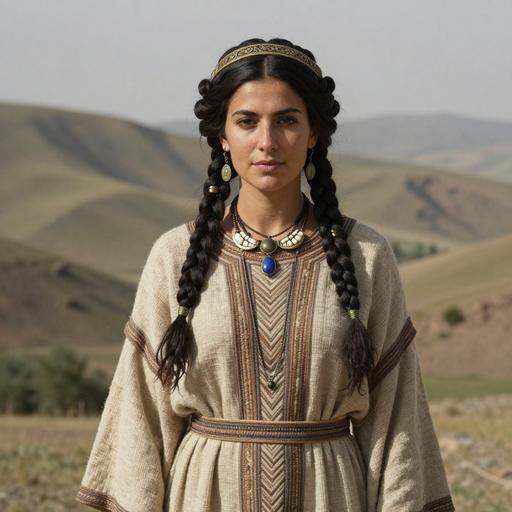
Portrait of ancient individual I20001 from Turkey, dated 27 BCE - 476 CE
I20001
Turkey Roman Period 5 Turkey 27 BCE - 476 CE Roman Turkey K1a4b Direct
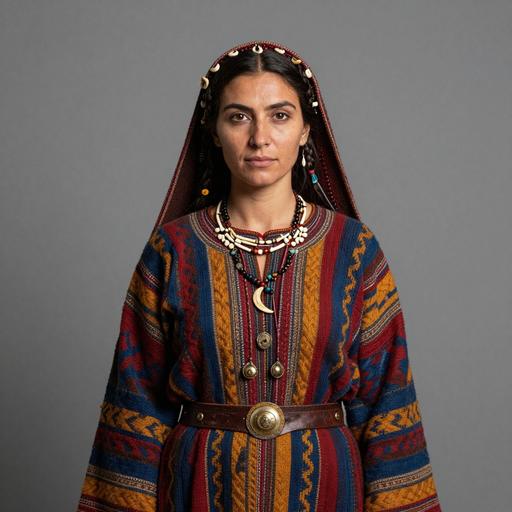
Portrait of ancient individual I16196 from Armenia, dated 1250 BCE - 1100 BCE
I16196
Armenia Late Bronze Age to Early Iron Age Armenia 1250 BCE - 1100 BCE Armenian LBA-EIA K1a4b Direct
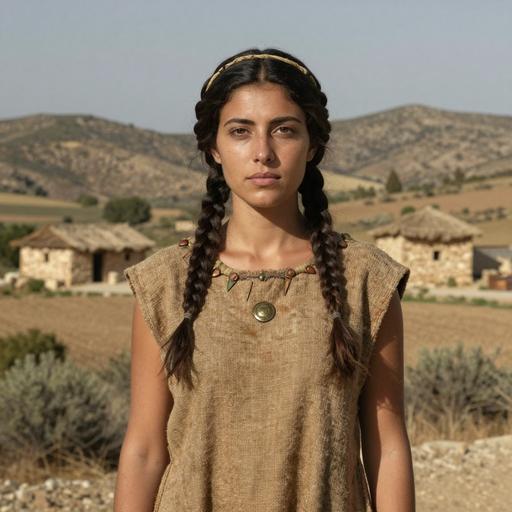
Portrait of ancient individual I18247 from Armenia, dated 1250 BCE - 1100 BCE
I18247
Armenia Late Bronze Age to Early Iron Age Armenia 1250 BCE - 1100 BCE Armenian LBA-EIA K1a4b Direct
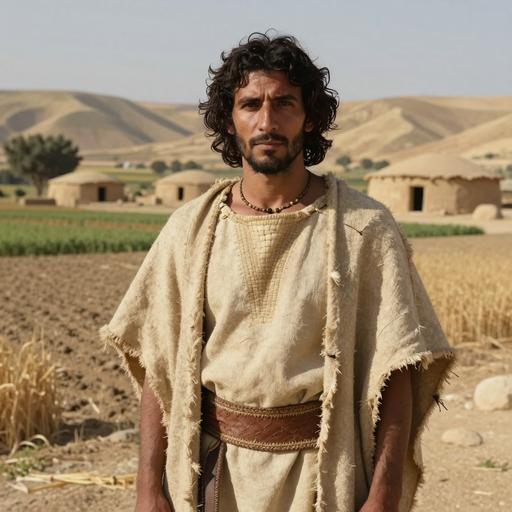
Portrait of ancient individual gur019 from Georgia, dated 1500 BCE - 1000 BCE
gur019
Georgia Nazarlebi Culture of Georgia 1500 BCE - 1000 BCE Nazarlebi K1a4b Direct
Portrait of ancient individual I1828 from Russia, dated 1612 BCE - 1465 BCE
I1828
Russia Mid-Late Bronze Krasnoyarsk 1612 BCE - 1465 BCE Krasnoyarsk Culture K1a4b Direct
Portrait of ancient individual mur002 from Russia, dated 1680 BCE - 1509 BCE
mur002
Russia Srubnaya-Alakul Culture, Russia 1680 BCE - 1509 BCE Srubnaya-Alakul K1a4b Direct
Portrait of ancient individual mur002 from Russia, dated 1680 BCE - 1509 BCE
mur002
Russia The Srubnaya Culture 1680 BCE - 1509 BCE K1a4b Direct
Portrait of ancient individual ALM068 from Spain, dated 1750 BCE - 1550 BCE
ALM068
Spain The Argaric Culture of Spain 1750 BCE - 1550 BCE El Argar K1a4b Direct
Portrait of ancient individual ALM077 from Spain, dated 2000 BCE - 1750 BCE
ALM077
Spain The Argaric Culture of Spain 2000 BCE - 1750 BCE El Argar K1a4b Direct
Portrait of ancient individual I5659 from Germany, dated 2500 BCE - 2000 BCE
I5659
Germany Bell Beaker Culture, Germany 2500 BCE - 2000 BCE Bell Beaker K1a4b Direct
Chapter VI

Carrier Distribution Map

Geographic distribution of 15 ancient DNA samples (direct and subclade carriers of K1A4B)

Direct carrier
Time Period Filter
All Time Periods
Showing all samples
Chapter VII

Temporal Distribution

Distribution of carriers across archaeological periods

Chapter VIII

Geographic Distribution

Distribution by country of origin (direct and subclade carriers shown by default)

Chapter IX

Country × Era Distribution

Cross-tabulation of carrier countries and archaeological periods (direct and subclade carriers shown by default)

Data

Data & Provenance

Source information and data quality

Last Updated 2026-02-16
Confidence Score 50/100
Coverage Low
Data Source

We use the latest phylotree for MTDNA haplogroup classification and data.