mtDNA · Maternal lineage

K1A4C

mtDNA Haplogroup K1A4C

A reference profile for one lineage branch. Shared haplogroups do not establish a family relationship or cultural identity.

Reference profile

Branch background

Historical context for mtDNA lineage branch K1A4C

Origins and Evolution

mtDNA haplogroup K1A4C is a downstream subclade of K1a4, itself a branch of haplogroup K (which derives from the U8/K node). Based on the phylogenetic position of K1a4 and the archaeological record for related lineages, K1A4C most plausibly arose in the Near East or Anatolia during the early to mid-Neolithic (approximately ~6 kya). Its emergence is best understood in the context of the Neolithic demographic expansion: maternal lineages that diversified in Anatolian and Levantine farming populations were carried westward into Europe with the spread of agriculture, producing low-to-moderate frequencies of K-derived lineages across Southern and Western Europe.

Subclades

K1A4C is a relatively deep but rare subclade within K1a4. Published and database-level sampling has identified only a small number of distinct K1A4C haplotypes, and no widely reported, deeply branching named subclades have been consistently described in the literature to date. This limited diversity likely reflects either a recent origin relative to other K1a lineages or undersampling in populations where it occurs. Additional high-resolution mitogenome sequencing in Anatolia, the Levant and Southern Europe could reveal further internal structure.

Geographical Distribution

The geographic footprint of K1A4C mirrors that of its parent clade but at lower frequency. Modern occurrences are concentrated in Southern Europe (Italy, Greece, the Balkans, Iberia) and the Near East/Anatolia, with sporadic finds in Western Europe (France, Britain) and the Caucasus fringe. The lineage is also reported at low levels in some Jewish communities, consistent with documented Near Eastern maternal ancestry components in those groups. A handful of ancient DNA hits (several Neolithic-associated samples in databases) indicate the lineage was present in archaeological contexts tied to early farming communities, supporting a Neolithic-era dispersal into Europe.

Historical and Cultural Significance

K1A4C is not associated with a high-frequency, culturally defining demographic event on its own, but its distribution and age tie it to the broader story of the Early European Farmers (EEF) and the Anatolian Neolithic. As a low-frequency marker of Neolithic ancestry, K1A4C helps reconstruct maternal contributions to regional populations during the transition to agriculture. Its presence in some modern Jewish maternal lineages may reflect either ancient Near Eastern shared ancestry or later founder events and gene flow between Mediterranean and Levantine populations.

Conclusion

K1A4C is a rare, regionally distributed subclade of K1a4 that most likely originated in the Near East/Anatolia in the Neolithic and spread into Europe with farming populations. Because it is uncommon and sparsely sampled, improved mitogenome coverage in key regions (Anatolia, the Levant, Southern Europe and Jewish communities) will clarify its internal structure, age estimates and historical trajectories. For now, K1A4C functions as a useful but low-frequency marker of Neolithic Near Eastern maternal ancestry in Europe and adjacent regions.

Key Points

  • Origins and Evolution
  • Subclades
  • Geographical Distribution
  • Historical and Cultural Significance
  • Conclusion
Reference profile

Tree & Relationships

Phylogenetic context and subclades

Evolution Path

Follow the recorded parent branches toward K1A4C. Dates are estimates and can change as reference data is revised.

Steps Haplogroup Age Estimate Archaeology Era Time Passed Immediate Descendants Tested Modern Descendants Ancient Connections
1 K1A4C Current ~6,000 years ago Chalcolithic 6,000 years 1 20 7
2 K1a4 ~7,000 years ago Neolithic 7,000 years 10 300 0
3 K1A ~12,000 years ago Neolithic 12,000 years 20 770 358
4 K1 ~13,000 years ago Mesolithic 13,000 years 8 1,405 116
5 K ~16,000 years ago Mesolithic 16,000 years 4 1,769 55
6 U8B ~30,000 years ago Paleolithic 30,000 years 2 1,805 1
7 U8B'C - - - 2 1,834 0
8 U8 ~45,000 years ago Paleolithic 45,000 years 2 1,873 5
9 U2'3'4'7'8'9 - - - 5 3,500 0
10 U ~46,000 years ago Paleolithic 46,000 years 5 5,557 110
11 R ~55,000 years ago Paleolithic 55,000 years 17 22,830 57
12 NA - - - 1 22,830 0
13 N ~60,000 years ago Paleolithic 60,000 years 16 26,150 13
14 L3 ~70,000 years ago Paleolithic 70,000 years 7 30,162 6
15 L3'4 - - - 2 30,212 0
16 L3'4'6 - - - 2 30,216 0
17 L2'3'4'6 - - - 2 31,333 0
18 L2'3'4'5'6'7 - - - 2 31,349 0
19 L1'2'3'4'5'6'7 - - - 2 31,852 0
20 L ~160,000 years ago Paleolithic 160,000 years 2 32,236 5

Siblings (9)

Other branches from the same parent haplogroup

Reference profile

Where in the World

Geographic distribution and modern presence

Recorded origin

Near East / Anatolia

Modern Distribution

The populations where mtDNA haplogroup K1A4C is found include:

  1. Southern European populations (Italy, Greece, Iberia, Balkans)
  2. Western European populations (France, Britain, low-to-moderate occurrences)
  3. Near Eastern populations (Anatolia, Levant)
  4. Jewish communities (including some Ashkenazi and other eastern Mediterranean maternal lineages)
  5. Caucasus and Anatolian fringe populations (low frequency)
  6. Modern diasporas (Americas) at low frequency due to recent migration
Historical context

A branch through time

Estimated formation in a broad historical timeline. Period markers provide context and do not imply a connection with particular cultures.

  1. ~10k years ago

    Neolithic Revolution

    Agriculture begins, settled communities form

  2. ~6k years ago

    Haplogroup K1A4C

    Estimated formation of this mtDNA branch; dates and locations are reference estimates.

    This branch
  3. ~5k years ago

    Bronze Age

    Metalworking, writing, and early civilizations

  4. ~3k years ago

    Iron Age

    Iron tools, expanded trade networks

  5. ~2.5k years ago

    Classical Antiquity

    Greek and Roman civilizations flourish

  6. Present

    Present Day

    Modern era

Reference profile

Archaeological context

Recorded archaeological associations for mtDNA branch K1A4C

Recorded associations

These labels describe archaeological contexts recorded for reference samples linked to K1A4C. An association does not establish that all carriers belonged to a culture or followed a particular migration route.

Anatolian Neolithic Çayönü Culture Central Anatolian PPN Early Byzantine Early Iron Age Armenian Körös Culture Middle Bronze Age Armenian Pottery Neolithic
Culture assignments are based on archaeological context of ancient DNA samples and may represent regional associations during specific time periods.
Reference profile

Sample Catalog

5 direct carriers and 2 subclade carriers of haplogroup K1A4C

7 shown · 7 matching samples

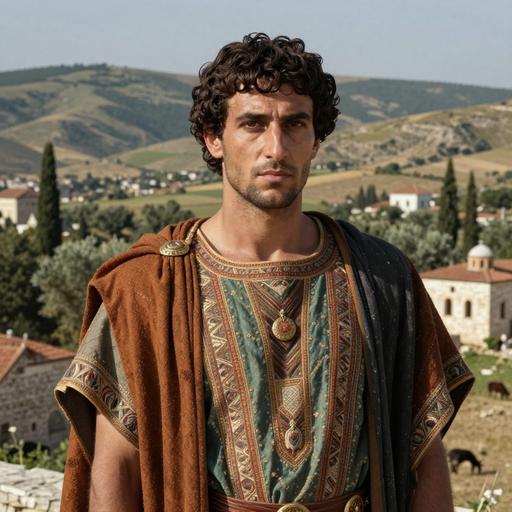
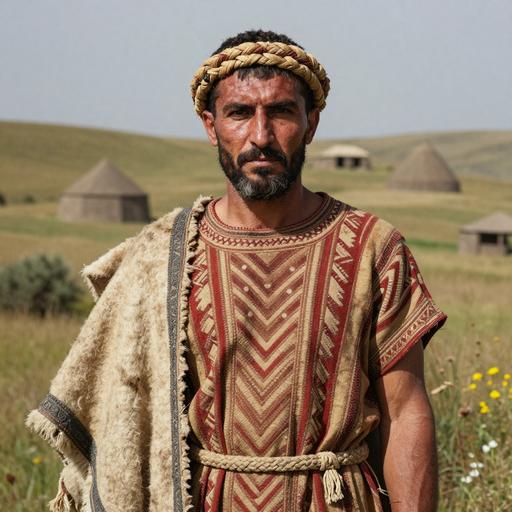
Portraits are AI-generated illustrations. Sample labels and accession IDs identify the reference records.

Portrait Sample Country Era Date Culture mtDNA Match
AI-generated illustrative portrait of Late Antiquity Byzantine individual, Samantaş (Aegean. Muğla. Yatağan), Turkey (491-717 CE)
Sample ID: I20265
Turkey Early Byzantine Period 2 Turkey 450-750 CE Early Byzantine K1a4c Direct
AI-generated illustrative portrait of Late Antiquity Byzantine individual, Samantaş (Aegean. Muğla. Yatağan), Turkey (491-717 CE)
Sample ID: I20264
Turkey Early Byzantine Period 2 Turkey 450-750 CE Early Byzantine K1a4c Direct
AI-generated illustrative portrait of Brardzryal IA Urartian individual, Bragdzor cemetery, Armenia (950-750 BCE)
Sample ID: I16553
Armenia Early Iron Age Armenia 950-750 BCE Early Iron Age Armenian K1a4c Direct
AI-generated illustrative portrait of Brardzryal IA Urartian individual, Bragdzor cemetery, Armenia (950-750 BCE)
Sample ID: I16546
Armenia Early Iron Age Armenia 950-750 BCE Early Iron Age Armenian K1a4c Direct
AI-generated illustrative portrait of Ancient Near Eastern Civilization individual, Keti, Armenia (1,398-1,228 BCE)
Sample ID: I17183
Armenia Middle Bronze Age Armenia 1398 BCE - 1228 BCE Middle Bronze Age Armenian K1a4c Direct
AI-generated illustrative portrait of Lazio Late Antiquity Roman individual, Marcellino & Pietro, Italy (300-500 CE)
Sample ID: R134
Italy Late Antiquity Italy 300-500 CE Late Roman K1a4c1 Subclade
AI-generated illustrative portrait of MLBA individual, Hatay. Tell Atchana (Alalakh), Turkey (2,000-1,200 BCE)
Sample ID: ALA130
Turkey Middle to Late Bronze Age Tell Atchana, Turkey 2000-1200 BCE Tell Atchana K1a4c1 Subclade
MATERNAL LINEAGE · ANCIENT DNA

Ancient lineage evidence map

Follow parent clades toward this branch and explore where ancient carriers were found.

Loading ancient observations…

Markers are archaeological find locations. A dashed connector is an uncertain, proposed geographic transition between consecutive branches supported by multiple dated observations; it is not an exact travel route, birthplace or proof of direct descent. Parent-clade samples may belong to other descendant branches. Gaps remain where evidence is insufficient. Sample dates differ from haplogroup formation dates.

Reference profile

Carrier Distribution Map

Geographic distribution of 7 ancient DNA samples (direct and subclade carriers of K1A4C)

Direct carrier Subclade carrier
Time Period Filter
All Time Periods
Showing all samples
Reference profile

Temporal Distribution

Distribution of carriers across archaeological periods

Reference profile

Geographic Distribution

Counts by recorded sample country. These reflect the available reference selection, not population frequencies.

Reference profile

Country × Era Distribution

Compare recorded sample counts across countries and archaeological periods. Select a populated cell to inspect a sample.

Data

Data & Provenance

Source information and data quality

Last Updated 2026-02-16
Confidence Score 50/100
Coverage Low

Data Source

Classification, estimated dates and geographic context reflect the recorded reference data and may change as evidence is revised. Sample coverage is uneven; recorded locations and archaeological associations do not establish personal origin or cultural identity.