The Story
The journey of mtDNA haplogroup K1B1B1
Origins and Evolution
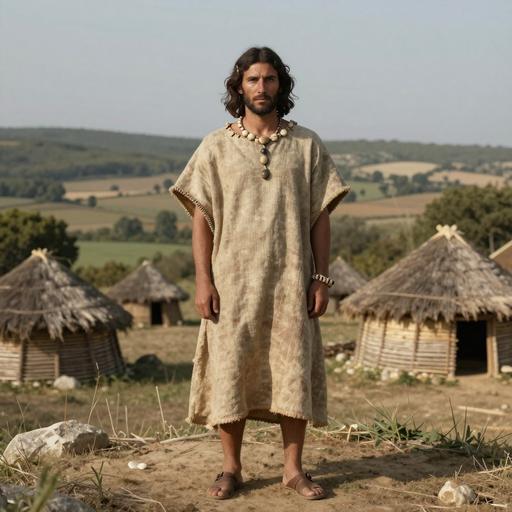
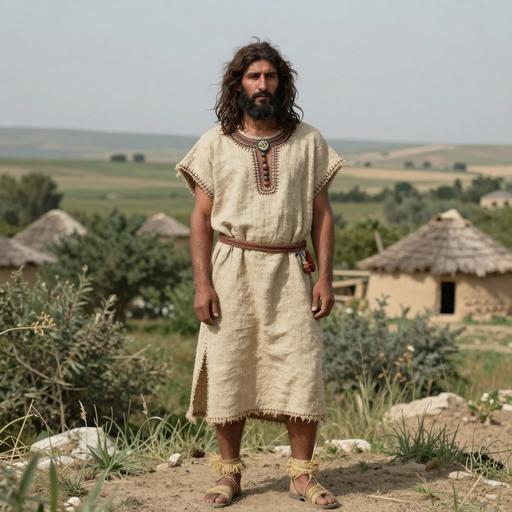
mtDNA haplogroup K1B1B1 sits as a downstream branch of K1B1B within macro-haplogroup K, a lineage strongly associated with Neolithic farming expansions from Anatolia and the Near East into Europe. Based on phylogenetic relationships and coalescence estimates for parent clades, K1B1B1 most plausibly emerged in Anatolia or adjacent parts of the Near East in the early to mid-Holocene (around ~7 kya). From that origin it was carried westward and northward by populations associated with the spread of agriculture and later movements, producing the low-to-moderate and sometimes patchy distribution seen today.
Subclades (if applicable)
K1B1B1 is a terminal or near-terminal subclade beneath K1B1B in published K phylogenies; while some studies resolve additional downstream branches, many published datasets treat K1B1B1 as a distinct shallow clade with limited internal diversity. Because of its relatively recent origin and occurrences in founder-affected groups, K1B1B1 often appears as a tight cluster of closely related haplotypes in population and community-level sampling. Ongoing high-resolution mitogenome sequencing may reveal further substructure in geographically isolated samples.
Geographical Distribution
The present-day distribution of K1B1B1 is consistent with a Near Eastern/Anatolian origin followed by Neolithic dispersal into Mediterranean and parts of Europe. Frequencies are typically low to moderate: it is most detectable in Near Eastern and Anatolian samples and in parts of Southern Europe (Italy, Greece, Iberia), with lower-frequency occurrences in Central and Western Europe, the Caucasus, and coastal North Africa where historical Near Eastern gene flow occurred. K1B1B1 is also reported at elevated relative frequencies in some diasporic and isolated communities—most notably in certain Jewish populations—where historical founder events and demographic bottlenecks amplified specific maternal lineages.
Ancient DNA recoveries that include K1-derived lineages support a role for K subclades in the Neolithic agricultural expansion (for example, K-lineages in Anatolian Neolithic and early European farmer contexts). The user's database note of eight ancient K1B1B1 occurrences is consistent with limited but geographically informative archaeogenetic detection across Neolithic and later contexts.
Historical and Cultural Significance
Because K1B1B1 traces to the same broad maternal ancestry that accompanied early farmers out of Anatolia, it is informative for reconstructing demographic processes such as the spread of agriculture (e.g., the Anatolian Neolithic into Europe, LBK-related expansions) and subsequent population interactions in the Mediterranean basin. In medieval and modern times, founder effects in diasporic groups (notably some Jewish communities) and in island or isolated populations (e.g., Sardinia and other Mediterranean islands) produced locally higher frequencies and distinct haplotype clusters, making K1B1B1 useful in studies of historical demography and maternal genealogies.
While K1B1B1 by itself is not tied to a single archaeological culture, its presence in early farmer-associated contexts (Anatolian Neolithic, early LBK-associated populations) and in later Mediterranean populations links the clade to major cultural and demographic transitions from the Neolithic onward.
Conclusion
K1B1B1 is a regional, relatively recent maternal lineage that exemplifies how Near Eastern-derived mitochondrial diversity entered Europe with agriculture and persisted through later historical processes. Its low-to-moderate frequency, patchy geographic distribution, and occurrence in founder-affected groups make it a valuable marker for studying Neolithic dispersal, regional continuity in the Mediterranean and Near East, and demographic events in diasporic populations. Continued mitogenome sampling and ancient DNA work will refine its internal structure and timeline, but current evidence supports an Anatolian/Near Eastern origin around ~7 kya with subsequent spread across the Mediterranean and into parts of Europe and the Caucasus.
Key Points
- Origins and Evolution
- Subclades (if applicable)
- Geographical Distribution
- Historical and Cultural Significance
- Conclusion