Menu
mtDNA Haplogroup • Maternal Lineage

K1E

mtDNA Haplogroup K1E

~9,000 years ago
Near East / Anatolia
1 subclades
11 ancient samples
Scroll to explore
Chapter I

The Story

The journey of mtDNA haplogroup K1E

Origins and Evolution

mtDNA haplogroup K1E is a downstream branch of haplogroup K1, itself a major derivative of mitochondrial haplogroup K. K1 likely arose in the Near East / Anatolia during the Late Glacial to Early Holocene and is closely tied to the expansion of farming populations. By phylogenetic position and coalescence estimates for many K1 subclades, K1E plausibly diversified in the Early Holocene (roughly around 9 kya, with uncertainty spanning a few thousand years) in or near Anatolia/the Levant and later spread westward with Neolithic demographic expansions.

Like other K1 lineages, K1E carries mutations on the mitochondrial genome that define a recognizably distinct maternal branch; its age and geographic pattern reflect a history of early farmer dispersals, local founder effects, and later regional migrations and admixture.

Subclades

K1E sits under the K1 node and may itself contain finer substructure detectable with complete mitochondrial genomes. Published phylogenies of haplogroup K1 show multiple sublineages (e.g., K1a/K1b/K1c and deeper internal branches), and K1E should be treated as one branch within that diversity. Where high-resolution mitogenomes are available, researchers can resolve K1E into further subclades that may have more restricted geographic or population associations — for example, lineages that show local founder effects in island populations or demic isolates.

Geographical Distribution

The observed and inferred distribution of K1E follows the broader distribution of K1 but is typically more concentrated in regions tied to early farmer ancestry. Key patterns include:

  • Near East / Anatolia: Elevated probabilities of origin and continued presence; K1E is consistent with an Anatolian/Levantine source associated with the spread of agriculture.
  • Southern Europe and the Mediterranean: Moderate frequencies in coastal and island populations (Italy, Greece, Iberia, Sardinia and other Mediterranean islands) reflecting Neolithic and later maritime connections.
  • Central and Western Europe: Detectable at low-to-moderate levels through Neolithic-derived and later mixed populations, often associated with early farmer-derived maternal lineages.
  • Caucasus and Levant: Present at low-to-moderate levels, reflecting Near Eastern continuity and regional gene flow.
  • North Africa and Central Asia: Low but detectable frequencies in areas with documented Near Eastern admixture or historical contacts.

Ancient DNA studies that sample Early Neolithic contexts in Anatolia and Europe frequently recover K and K1 lineages; where K1E is specifically resolved in ancient contexts it supports the scenario of Neolithic-era spread, though the number of securely assigned ancient K1E genomes remains limited and subject to expansion as more mitogenomes are sequenced.

Historical and Cultural Significance

Because haplogroup K1 (and some of its subclades) are characteristic components of the maternal ancestry of early farmers, K1E is of interest for studies of the Neolithic transition in Europe and the demography of the Mediterranean. Specific cultural and historical associations include:

  • Anatolian Neolithic and Early European Farmers (LBK/Cardial): The timing and distribution of K1E fits the demographic expansions tied to farming dispersals from Anatolia into Europe during the early Holocene.
  • Island and coastal founder effects: Like other K subclades, K1E may produce localized higher frequencies where small founding populations or isolation increased its prevalence (e.g., islands, isolated valleys).
  • Later historic admixture: Continued presence in the Near East, Mediterranean and parts of Europe reflects millennia of interaction, trade and migration; in some modern groups K subclades experienced founder events (for example, some K1 branches are notable in Ashkenazi Jewish maternal lineages), although whether K1E specifically was a primary contributor to particular founder events must be assessed on a case-by-case basis using full mitogenomes and robust sampling.

Conclusion

mtDNA haplogroup K1E is best understood as a Near Eastern/Anatolian-derived maternal lineage that expanded with early farming populations into Europe and the Mediterranean. It survives today at low-to-moderate frequencies across a swathe of Eurasia and North Africa and is valuable for reconstructing Neolithic demography, regional founder events, and subsequent historical gene flow. Continued sequencing of complete mitochondrial genomes from both modern and ancient samples will refine the precise age, internal structure, and geographic history of K1E.

Key Points

  • Origins and Evolution
  • Subclades
  • Geographical Distribution
  • Historical and Cultural Significance
  • Conclusion
Chapter II

Tree & Relationships

Phylogenetic context and subclades

Evolution Path

This haplogroup's evolutionary journey from its earliest ancestor to the present.

Steps Haplogroup Age Estimate Archaeology Era Time Passed Immediate Descendants Tested Modern Descendants Ancient Connections
1 K1E Current ~9,000 years ago 🌾 Neolithic 9,000 years 1 1 11
2 K1 ~13,000 years ago 🏹 Mesolithic 13,000 years 8 1,072 116
3 K ~16,000 years ago 🏹 Mesolithic 16,000 years 7 1,393 55

Siblings (7)

Other branches from the same parent haplogroup

Chapter III

Where in the World

Geographic distribution and modern presence

Place of Origin

Near East / Anatolia

Modern Distribution

The populations where mtDNA haplogroup K1E is found include:

  1. Ashkenazi Jewish communities
  2. Anatolian (modern Turkey) populations
  3. European Early Neolithic farmer-descended populations (e.g., LBK-associated descendants)
  4. Southern European populations (Iberia, Italy, Greece)
  5. Western and Northern European populations (British Isles, Scandinavia) at low-to-moderate frequencies
  6. Caucasus populations (Armenians, Georgians)
  7. North African coastal groups with Near Eastern admixture
  8. Iranian and Levantine populations
  9. Island and isolated Mediterranean populations (e.g., Sardinia and other islands)
  10. Small but detectable frequencies in parts of Central Asia due to west–east contacts
CHAPTER IV

When in Time

Your haplogroup in the context of human history

~10k years ago

Neolithic Revolution

Agriculture begins, settled communities form

~9k years ago

Haplogroup K1E

Your mtDNA haplogroup emerged in Near East / Anatolia

Near East / Anatolia
~5k years ago

Bronze Age

Metalworking, writing, and early civilizations

~3k years ago

Iron Age

Iron tools, expanded trade networks

~2k years ago

Classical Antiquity

Greek and Roman civilizations flourish

Present

Present Day

Modern era

Your Haplogroup
Historical Era
Chapter IV-B

Linked Cultures

Ancient cultures associated with mtDNA haplogroup K1E

Cultural Heritage

These ancient cultures have been linked to haplogroup K1E based on matching ancient DNA samples from archaeological excavations. The presence of this haplogroup in these cultures provides insights into the migrations and population movements of populations carrying this haplogroup.

Anatolian Neolithic Danish Early Neolithic Doggerland Frälsegården Iron Gates Culture Kongemose Maglemosian Rossberga Culture Syltholm Culture Wartberg
Culture assignments are based on archaeological context of ancient DNA samples and may represent regional associations during specific time periods.
Chapter V

Sample Catalog

10 direct carriers and 1 subclade carrier of haplogroup K1E

11 / 11 samples
Portrait Sample Country Era Date Culture mtDNA Match
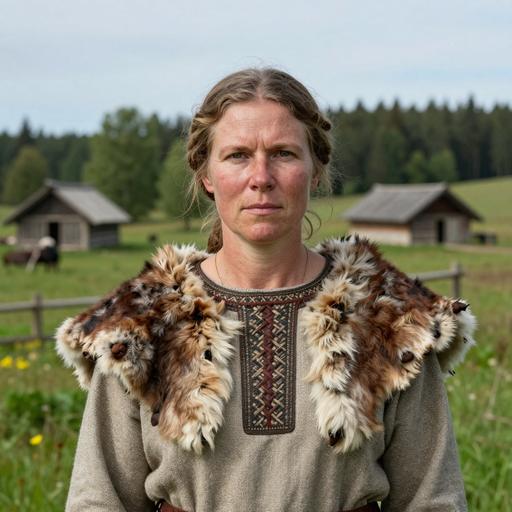
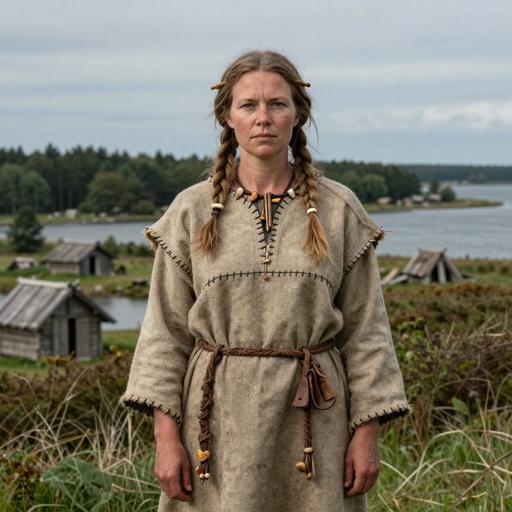
Portrait of ancient individual ROS016 from Sweden, dated 3081 BCE - 2892 BCE
ROS016
Sweden Neolithic Swedish Rossberga Culture 3081 BCE - 2892 BCE Rossberga Culture K1e Direct
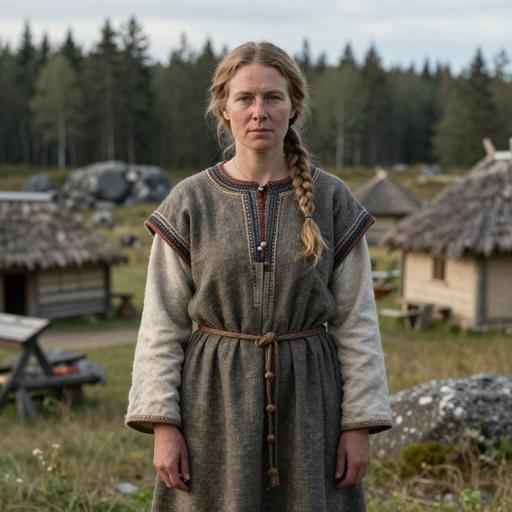
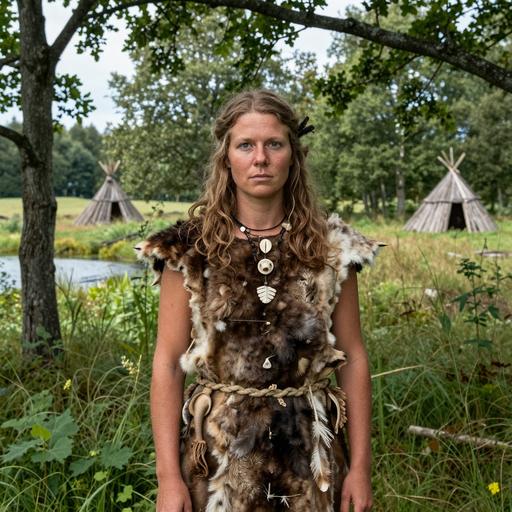
Portrait of ancient individual FRA007 from Sweden, dated 3331 BCE - 2930 BCE
FRA007
Sweden Northern Swedish Frälsegården 3331 BCE - 2930 BCE Frälsegården K1e Direct
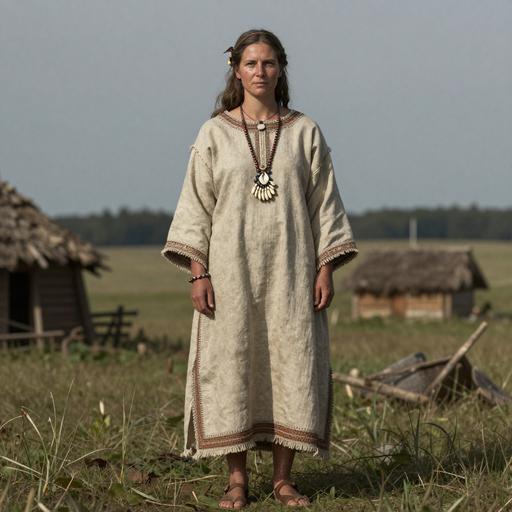
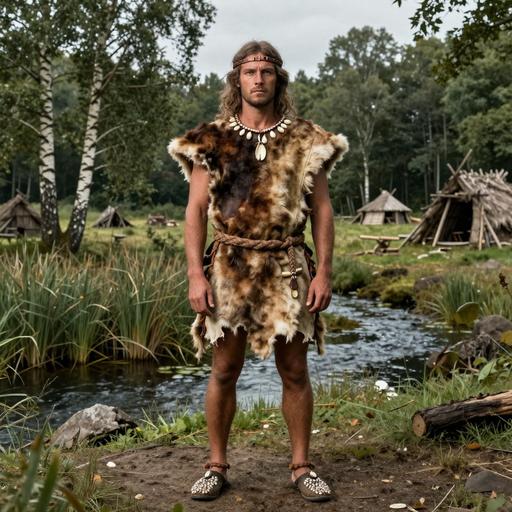
Portrait of ancient individual ROS023 from Sweden, dated 3336 BCE - 2939 BCE
ROS023
Sweden Neolithic Swedish Rossberga Culture 3336 BCE - 2939 BCE Rossberga Culture K1e Direct
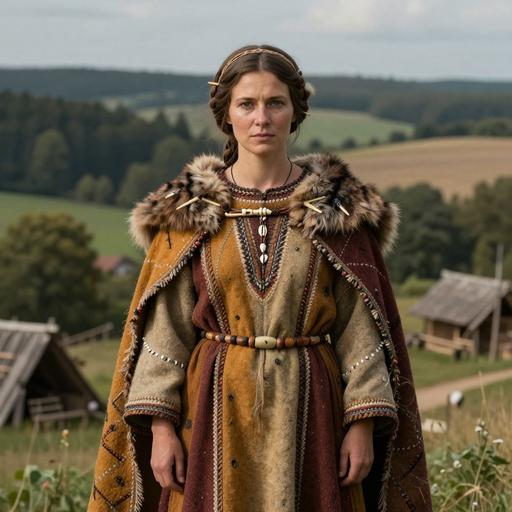
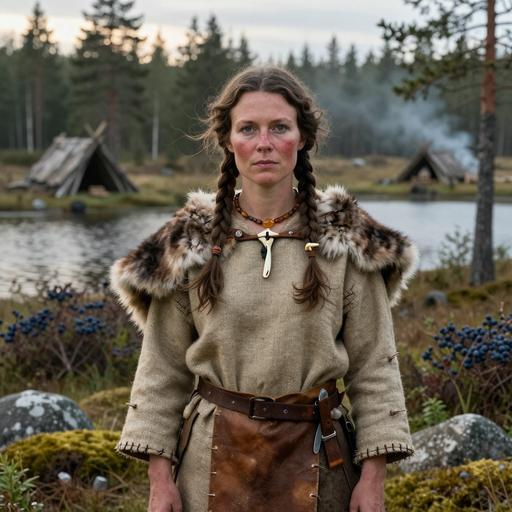
Portrait of ancient individual KH180045 from Germany, dated 3500 BCE - 2800 BCE
KH180045
Germany Wartberg Culture 3500 BCE - 2800 BCE Wartberg K1e Direct
Portrait of ancient individual Syltholm1 from Denmark, dated 3933 BCE - 3710 BCE
Syltholm1
Denmark Syltholm Late Mesolithic to Early Neolithic Denmark 3933 BCE - 3710 BCE Syltholm Culture K1e Direct
Portrait of ancient individual NEO645 from Denmark, dated 4247 BCE - 4054 BCE
NEO645
Denmark Danish Early Neolithic 4247 BCE - 4054 BCE Danish Early Neolithic K1e Direct
Portrait of ancient individual NEO932 from Denmark, dated 5710 BCE - 5540 BCE
NEO932
Denmark Kongemose culture 5710 BCE - 5540 BCE Kongemose K1e Direct
Portrait of ancient individual NEO600 from Denmark, dated 6074 BCE - 5851 BCE
NEO600
Denmark Kongemose culture 6074 BCE - 5851 BCE Kongemose K1e Direct
Portrait of ancient individual NEO91 from Denmark, dated 7337 BCE - 7077 BCE
NEO91
Denmark Maglemosian culture 7337 BCE - 7077 BCE Maglemosian K1e Direct
Portrait of ancient individual DOG007 from Netherlands, dated 7576 BCE - 7201 BCE
DOG007
Netherlands Doggerland Mesolithic Culture 7576 BCE - 7201 BCE Doggerland K1e Direct
Chapter VI

Carrier Distribution Map

Geographic distribution of 11 ancient DNA samples (direct and subclade carriers of K1E)

Direct carrier Subclade carrier
Time Period Filter
All Time Periods
Showing all samples
Chapter VII

Temporal Distribution

Distribution of carriers across archaeological periods

Chapter VIII

Geographic Distribution

Distribution by country of origin (direct and subclade carriers shown by default)

Chapter IX

Country × Era Distribution

Cross-tabulation of carrier countries and archaeological periods (direct and subclade carriers shown by default)

Data

Data & Provenance

Source information and data quality

Last Updated 2026-02-16
Confidence Score 50/100
Coverage Low
Data Source

We use the latest phylotree for MTDNA haplogroup classification and data.