mtDNA · Maternal lineage

L3F1B1

mtDNA Haplogroup L3F1B1

A reference profile for one lineage branch. Shared haplogroups do not establish a family relationship or cultural identity.

Reference profile

Branch background

Historical context for mtDNA lineage branch L3F1B1

Origins and Evolution

mtDNA haplogroup L3F1B1 is a derived subclade nested within L3F1B and the immediate parent clade L3F1BA, placing it within the broader African haplogroup L3 which gave rise to many major maternal lineages across Africa and Eurasia. Based on its position in published phylogenies and the time depths observed for neighboring L3F lineages, L3F1B1 most plausibly arose in the Holocene (several thousand years ago) in East Africa or the Horn of Africa. Like many fine-scale mtDNA subclades, L3F1B1 is defined by a small number of coding- and control-region mutations downstream of L3F1, and its recognition depends on regional sequencing and careful phylogenetic placement.

Subclades

As an intermediate clade, L3F1B1 may contain further downstream branches that have not yet been widely sampled or formally named in public phylogenies. Current information treats L3F1B1 primarily as a terminal or near-terminal branch in many datasets; expanded whole-mtDNA sequencing in under-sampled East African populations is likely to reveal additional internal diversity and potential subclades.

Geographical Distribution

Observed and inferred occurrences of L3F1B1 center on East Africa and the Horn of Africa, consistent with the broader distribution of L3F and related sublineages. Reports and phylogeographic inference suggest the highest frequencies and diversity are likely among Afroasiatic-speaking groups (Cushitic and Omotic speakers) and adjacent Nilotic and Nilo-Saharan populations. Low-frequency occurrences are plausible in North-East African trade corridors and among diaspora populations outside Africa, reflecting historic movement and recent migration.

Historical and Cultural Significance

Because L3F1B1 is a relatively low-frequency, regionally concentrated maternal lineage, its primary value to researchers is as a marker of local maternal ancestry and demographic history in East Africa rather than as a signal of continent-spanning migrations. It may be associated with Holocene demographic events in the Horn and adjacent regions, including expansions of pastoralist and agro-pastoralist groups during the African Neolithic and later historical-era population movements. However, direct association with specific archaeological cultures remains provisional until more ancient DNA and extensive modern sampling place the clade into temporal and cultural context.

Conclusion

L3F1B1 is an informative, regionally focused mtDNA subclade within the L3F branch that highlights the fine-scale maternal structure of East African populations. Current evidence points to an origin in the Holocene in the Horn/East Africa and to a patchy modern distribution; additional whole-mitochondrial sequencing across under-sampled African populations and ancient DNA from the region will be required to refine its age, substructure, and cultural associations. Researchers and genealogists should treat current geographic assignments as provisional and expect updates as new data emerge.

Key Points

  • Origins and Evolution
  • Subclades
  • Geographical Distribution
  • Historical and Cultural Significance
  • Conclusion
Reference profile

Tree & Relationships

Phylogenetic context and subclades

Evolution Path

Follow the recorded parent branches toward L3F1B1. Dates are estimates and can change as reference data is revised.

Steps Haplogroup Age Estimate Archaeology Era Time Passed Immediate Descendants Tested Modern Descendants Ancient Connections
1 L3F1B1 Current ~8,000 years ago Neolithic 8,000 years 1 48 0
2 L3F1BA - - - 2 99 0
3 L3F1B ~12,000 years ago Neolithic 12,000 years 1 178 2
4 L3F1 ~20,000 years ago Mesolithic 20,000 years 2 253 0
5 L3F ~20,000 years ago Mesolithic 20,000 years 2 263 1
6 L3B'F - - - 2 357 0
7 L3 ~70,000 years ago Paleolithic 70,000 years 7 30,162 6
8 L3'4 - - - 2 30,212 0
9 L3'4'6 - - - 2 30,216 0
10 L2'3'4'6 - - - 2 31,333 0
11 L2'3'4'5'6'7 - - - 2 31,349 0
12 L1'2'3'4'5'6'7 - - - 2 31,852 0
13 L ~160,000 years ago Paleolithic 160,000 years 2 32,236 5

Siblings (1)

Other branches from the same parent haplogroup

Reference profile

Where in the World

Geographic distribution and modern presence

Recorded origin

East Africa / Horn of Africa

Modern Distribution

The populations where mtDNA haplogroup L3F1B1 is found include:

  1. Ethiopian highland and Horn of Africa groups (e.g., Amhara, Oromo, Somali-speaking populations)
  2. Neighboring Sudanese and Nile Valley populations (Nilotic and Nubian groups)
  3. Coastal and inland East African populations (Kenya, Tanzania) at low to moderate frequencies
  4. Small numbers in North-East African groups (e.g., Beja, Eritrean populations)
  5. Low-frequency occurrences in diaspora populations outside Africa (resulting from recent migrations)
Historical context

A branch through time

Estimated formation in a broad historical timeline. Period markers provide context and do not imply a connection with particular cultures.

  1. ~10k years ago

    Neolithic Revolution

    Agriculture begins, settled communities form

  2. ~8k years ago

    Haplogroup L3F1B1

    Estimated formation of this mtDNA branch; dates and locations are reference estimates.

    This branch
  3. ~5k years ago

    Bronze Age

    Metalworking, writing, and early civilizations

  4. ~3k years ago

    Iron Age

    Iron tools, expanded trade networks

  5. ~2.5k years ago

    Classical Antiquity

    Greek and Roman civilizations flourish

  6. Present

    Present Day

    Modern era

Reference profile

Archaeological context

Recorded archaeological associations for mtDNA branch L3F1B1

Recorded associations

These labels describe archaeological contexts recorded for reference samples linked to L3F1B1. An association does not establish that all carriers belonged to a culture or followed a particular migration route.

Bungule Corded Ware Early Pastoral Neolithic Elmenteitan Culture Jordanow-Michelsberg Culture Modern Period Mtwapa Slab Grave Culture Spain_ImperialRoman-oAfrica2 St. Helena Colonial Tunisia_N-2
Culture assignments are based on archaeological context of ancient DNA samples and may represent regional associations during specific time periods.
Reference profile

Sample Catalog

4 subclade carriers of haplogroup L3F1B1 (no direct carriers in the current reference selection)

4 shown · 4 matching samples

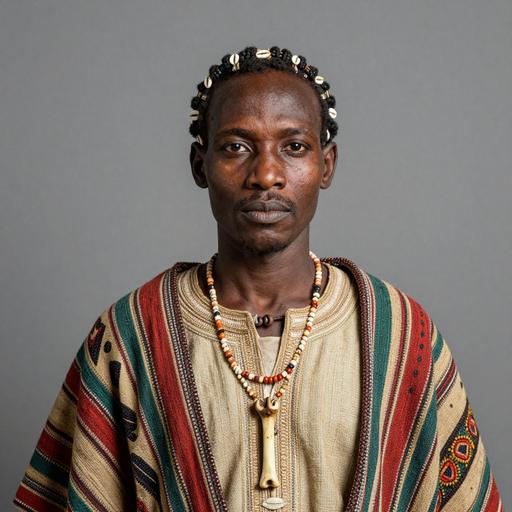
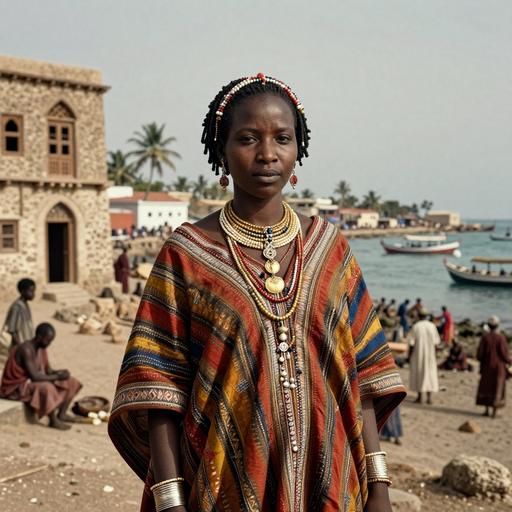
Portraits are AI-generated illustrations. Sample labels and accession IDs identify the reference records.

Portrait Sample Country Era Date Culture mtDNA Match
AI-generated illustrative portrait of Swahili individual, Mtwapa (Kilifi), Kenya (1,250-1,650 CE)
Sample ID: I19419
Kenya Swahili Culture of Mtwapa 1250 CE - 1650 CE Mtwapa L3f1b1a1 Subclade
AI-generated illustrative portrait of Medieval Swahili individual, Mtwapa (Kilifi), Kenya (1,454-1,623 CE)
Sample ID: I21475
Kenya Swahili Culture of Mtwapa 1454-1623 calCE (410±20 BP, PSUAMS-12280) Mtwapa L3f1b1a1 Subclade
AI-generated illustrative portrait of Maryland Historic African American individual, Maryland's Catoctin Furnace African American Cemetery, USA (1,775-1,850 CE)
Sample ID: I15334
USA Modern Era 1775-1850 CE Modern Period L3f1b1a Subclade
AI-generated illustrative portrait of British Empire individual, Rupert’s Valley, St. Helena (1,840-1,940 CE)
Sample ID: STH_358
St. Helena St. Helena 1840 CE - 1940 CE St. Helena Colonial L3f1b1a Subclade
MATERNAL LINEAGE · ANCIENT DNA

Ancient lineage evidence map

Follow parent clades toward this branch and explore where ancient carriers were found.

Loading ancient observations…

Markers are archaeological find locations. A dashed connector is an uncertain, proposed geographic transition between consecutive branches supported by multiple dated observations; it is not an exact travel route, birthplace or proof of direct descent. Parent-clade samples may belong to other descendant branches. Gaps remain where evidence is insufficient. Sample dates differ from haplogroup formation dates.

Reference profile

Carrier Distribution Map

Geographic distribution of 4 ancient DNA samples (direct and subclade carriers of L3F1B1)

Subclade carrier
Time Period Filter
All Time Periods
Showing all samples
Reference profile

Temporal Distribution

Distribution of carriers across archaeological periods

Reference profile

Geographic Distribution

Counts by recorded sample country. These reflect the available reference selection, not population frequencies.

Reference profile

Country × Era Distribution

Compare recorded sample counts across countries and archaeological periods. Select a populated cell to inspect a sample.

Data

Data & Provenance

Source information and data quality

Last Updated 2026-06-14
Confidence Score 50/100
Coverage Low

Data Source

Classification, estimated dates and geographic context reflect the recorded reference data and may change as evidence is revised. Sample coverage is uneven; recorded locations and archaeological associations do not establish personal origin or cultural identity.

A haplogroup follows one maternal or paternal line. The branch prediction depends on which markers the DNA file contains. How our analysis works