mtDNA · Maternal lineage

M20

mtDNA Haplogroup M20

A reference profile for one lineage branch. Shared haplogroups do not establish a family relationship or cultural identity.

Reference profile

Branch background

Historical context for mtDNA lineage branch M20

Origins and Evolution

mtDNA haplogroup M20 is a descendant clade within the macrohaplogroup M and sits beneath the broader M1'20'51A branch in recent phylogenies. Its estimated coalescence in the late Upper Paleolithic (on the order of ~20–30 kya) places its origin after the initial out-of-Africa dispersal but well before major Holocene cultural transitions in South and Southeast Asia. As with many regional M subclades, M20 probably diversified locally from an early maternal lineage that settled and differentiated in South/Southeast Asia during the Late Pleistocene.

Subclades

Genetic surveys and PhyloTree-style classifications treat M20 as an intermediate clade that may contain downstream sublineages (often labeled in literature as M20a, M20b, etc., where sampling resolution permits). The internal structure of M20 is not as deeply sampled or as well resolved as some other mtDNA clades, so many published studies report M20 as a single haplogroup or split into a small number of regional subclades. Better resolution depends on larger whole-mitogenome datasets from understudied tribal and island populations.

Geographical Distribution

M20 is observed mainly across South Asia and Mainland and Island Southeast Asia. It tends to occur at low to moderate frequencies in a patchy distribution: detectable among various indigenous tribal groups of India and Myanmar, among Tibeto-Burman and Austroasiatic-speaking communities in Northeast India and nearby regions, and in parts of mainland Southeast Asia (Thailand, Laos, Cambodia) and the Malay Archipelago at lower frequencies. Its presence in island Southeast Asia and the Philippines is sporadic in published datasets, which suggests either secondary dispersals or low-level persistence from earlier regional populations.

Historical and Cultural Significance

Because of its antiquity and regional distribution, M20 is useful as a marker of local Late Pleistocene and Holocene demographic continuity in South and Southeast Asia. It appears in populations associated today with Austroasiatic-speaking and Tibeto-Burman-speaking groups and may reflect maternal lineages that pre-date, accompany, or were assimilated during Neolithic transitions (rice farming and other subsistence changes) and later cultural expansions (including some Austronesian movements). M20 therefore provides insight into interactions between indigenous hunter-gatherer groups and incoming or expanding agriculturalist groups, although it is not by itself a diagnostic marker of any single archaeological culture.

Conclusion

mtDNA M20 is a regionally informative maternal haplogroup that documents deep local ancestry across South and Southeast Asia. While not extremely frequent, its persistence across a range of tribal and lowland populations—and its likely Late Pleistocene origin—make it a useful lineage for reconstructing maternal population histories in the region. Continued whole-mitochondrial sequencing across understudied groups will improve understanding of M20's internal diversity, precise age estimates, and the timing and routes of its dispersals.

Key Points

  • Origins and Evolution
  • Subclades
  • Geographical Distribution
  • Historical and Cultural Significance
  • Conclusion
Reference profile

Tree & Relationships

Phylogenetic context and subclades

Evolution Path

Follow the recorded parent branches toward M20. Dates are estimates and can change as reference data is revised.

Steps Haplogroup Age Estimate Archaeology Era Time Passed Immediate Descendants Tested Modern Descendants Ancient Connections
1 M20 Current ~25,000 years ago Paleolithic 25,000 years 0 5 0
2 M1'20'51A - - - 1 5 0
3 M1'20'51 - - - 3 105 0
4 M ~60,000 years ago Paleolithic 60,000 years 42 2,671 41
5 L3 ~70,000 years ago Paleolithic 70,000 years 7 30,162 6
6 L3'4 - - - 2 30,212 0
7 L3'4'6 - - - 2 30,216 0
8 L2'3'4'6 - - - 2 31,333 0
9 L2'3'4'5'6'7 - - - 2 31,349 0
10 L1'2'3'4'5'6'7 - - - 2 31,852 0
11 L ~160,000 years ago Paleolithic 160,000 years 2 32,236 5

Subclades (0)

Terminal branch - no recorded subclades

Reference profile

Where in the World

Geographic distribution and modern presence

Recorded origin

South and Southeast Asia

Modern Distribution

The populations where mtDNA haplogroup M20 is found include:

  1. Indigenous tribal groups of South Asia (various Austroasiatic- and Dravidian-speaking tribes)
  2. Tibeto-Burman-speaking populations of Northeast India, Nepal and Myanmar
  3. Mainland Southeast Asian populations (Thailand, Laos, Cambodia)
  4. Malay Archipelago populations at low frequency (Sumatra, Borneo, parts of Indonesia)
  5. Selected Philippine island populations (sporadic occurrences)
  6. Some lowland South Asian groups and caste populations in India (low frequency)
Historical context

A branch through time

Estimated formation in a broad historical timeline. Period markers provide context and do not imply a connection with particular cultures.

  1. ~25k years ago

    Haplogroup M20

    Estimated formation of this mtDNA branch; dates and locations are reference estimates.

    This branch
  2. ~20k years ago

    Last Glacial Maximum

    Peak of the last ice age, populations isolated

  3. ~10k years ago

    Neolithic Revolution

    Agriculture begins, settled communities form

  4. ~5k years ago

    Bronze Age

    Metalworking, writing, and early civilizations

  5. ~3k years ago

    Iron Age

    Iron tools, expanded trade networks

  6. ~2.5k years ago

    Classical Antiquity

    Greek and Roman civilizations flourish

  7. Present

    Present Day

    Modern era

Reference profile

Archaeological context

Recorded archaeological associations for mtDNA branch M20

Recorded associations

These labels describe archaeological contexts recorded for reference samples linked to M20. An association does not establish that all carriers belonged to a culture or followed a particular migration route.

Andamanese British Neolithic Goyet Cave Gravettian Ostuni Culture Spanish Gravettian Transitional Indonesian Udegram Culture Vietnamese Neolithic
Culture assignments are based on archaeological context of ancient DNA samples and may represent regional associations during specific time periods.
Reference profile

Sample Catalog

2 direct carriers of haplogroup M20

2 shown · 2 matching samples

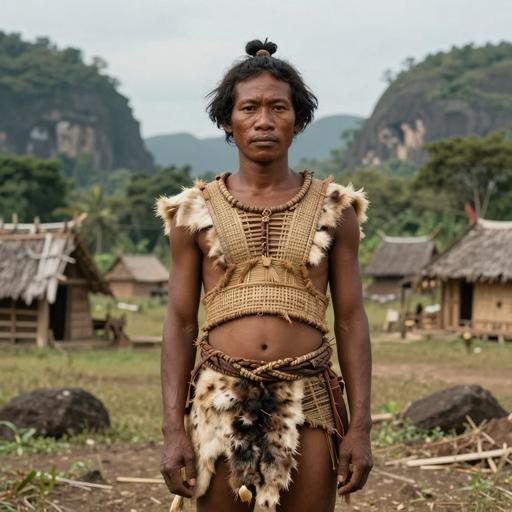
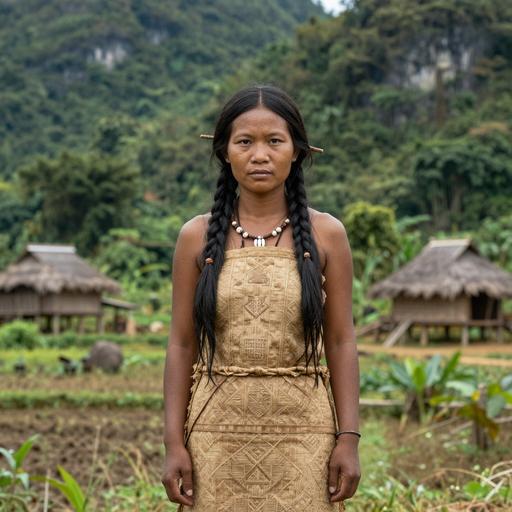
Portraits are AI-generated illustrations. Sample labels and accession IDs identify the reference records.

Portrait Sample Country Era Date Culture mtDNA Match
AI-generated illustrative portrait of LN BA IA individual, Sumatra. Northwest Aceh. Loyang Ujung Cave, Indonesia (353-57 BCE)
Sample ID: In662
Indonesia Indonesia LN BA IA 353-57 calBCE (2152±26 BP, OxA-35574) Transitional Indonesian M20 Direct
AI-generated illustrative portrait of LN individual, Northern Thanh Hoa. Mai Da Dieu, Vietnam (2,343-2,049 BCE)
Sample ID: Vt833
Vietnam Vietnam LN 2343-2049 calBCE (3788±35 BP, OxA-35860) Vietnamese Neolithic M20 Direct
MATERNAL LINEAGE · ANCIENT DNA

Ancient lineage evidence map

Follow parent clades toward this branch and explore where ancient carriers were found.

Loading ancient observations…

Markers are archaeological find locations. A dashed connector is an uncertain, proposed geographic transition between consecutive branches supported by multiple dated observations; it is not an exact travel route, birthplace or proof of direct descent. Parent-clade samples may belong to other descendant branches. Gaps remain where evidence is insufficient. Sample dates differ from haplogroup formation dates.

Reference profile

Carrier Distribution Map

Geographic distribution of 2 ancient DNA samples (direct and subclade carriers of M20)

Direct carrier
Time Period Filter
All Time Periods
Showing all samples
Reference profile

Temporal Distribution

Distribution of carriers across archaeological periods

Reference profile

Geographic Distribution

Counts by recorded sample country. These reflect the available reference selection, not population frequencies.

Reference profile

Country × Era Distribution

Compare recorded sample counts across countries and archaeological periods. Select a populated cell to inspect a sample.

Data

Data & Provenance

Source information and data quality

Last Updated 2026-06-14
Confidence Score 50/100
Coverage Low

Data Source

Classification, estimated dates and geographic context reflect the recorded reference data and may change as evidence is revised. Sample coverage is uneven; recorded locations and archaeological associations do not establish personal origin or cultural identity.

A haplogroup follows one maternal or paternal line. The branch prediction depends on which markers the DNA file contains. How our analysis works