mtDNA · Maternal lineage

M30C

mtDNA Haplogroup M30C

A reference profile for one lineage branch. Shared haplogroups do not establish a family relationship or cultural identity.

Reference profile

Branch background

Historical context for mtDNA lineage branch M30C

Origins and Evolution

mtDNA haplogroup M30C is a downstream subclade of the broader South Asian lineage M30, itself derived from macro-haplogroup M. Based on the phylogenetic position of M30C within M30 and observed sequence variation in modern samples, M30C most likely formed in the early Holocene (several thousand years after the Late Pleistocene expansion of M lineages into South Asia). Its emergence is consistent with localized diversification of maternal lineages within the Indian subcontinent following post-glacial demographic stabilization and the onset of more intensive regional population interactions.

Subclades

As a named subclade of M30, M30C may include internal diversity (private mutations and regional branches) observed in high-resolution full mitogenome studies; however, published sampling has been more limited for finer branching within M30C compared with major South Asian clades. Where datasets allow, M30C branches can be resolved by full mitogenome sequencing to reveal regional substructure tied to specific populations or regions within South Asia.

Geographical Distribution

M30C is concentrated in South Asia, with highest frequencies and diversity recorded in India and Sri Lanka. It appears at low to very low frequencies in adjoining regions (Pakistan, Bangladesh, Nepal) and sporadically in Central and Southeast Asia, usually attributable to historical gene flow. Modern diaspora populations in Europe and the Americas also carry rare instances of M30C through recent migration. Ancient DNA recovery of M30C is currently limited but the presence of at least one archaeological sample indicates the lineage has been present in the region for archaeological timescales.

Historical and Cultural Significance

M30C's distribution across both tribal and caste groups suggests it is part of the deep maternal substratum of South Asia rather than being restricted to a single recent cultural group. Its persistence through the Holocene implies continuity of maternal lines across major cultural transitions in the subcontinent (for example, Neolithic to Chalcolithic and later Bronze Age societies). While M30C is not tied exclusively to any one archaeological culture, its presence in regions associated with the Indus Valley interaction sphere, later megalithic contexts in peninsular India, and continuing rural populations reflects a role as a component of South Asian maternal genetic heritage.

Conclusion

M30C represents a regionally focused maternal lineage within the M30 family, illustrating localized diversification of mtDNA in South Asia during the Holocene. Its pattern — concentrated in the Indian subcontinent with occasional occurrences beyond — is consistent with long-term regional continuity combined with episodic gene flow to neighboring regions. Continued mitogenome sequencing and ancient DNA sampling will clarify internal branching, precise time depth, and finer-scale geographic history of M30C.

Key Points

  • Origins and Evolution
  • Subclades
  • Geographical Distribution
  • Historical and Cultural Significance
  • Conclusion
Reference profile

Tree & Relationships

Phylogenetic context and subclades

Evolution Path

Follow the recorded parent branches toward M30C. Dates are estimates and can change as reference data is revised.

Steps Haplogroup Age Estimate Archaeology Era Time Passed Immediate Descendants Tested Modern Descendants Ancient Connections
1 M30C Current ~8,000 years ago Neolithic 8,000 years 1 4 4
2 M30 ~22,000 years ago Mesolithic 22,000 years 5 95 0
3 M4"67 - - - 8 156 0
4 M ~60,000 years ago Paleolithic 60,000 years 42 2,671 41
5 L3 ~70,000 years ago Paleolithic 70,000 years 7 30,162 6
6 L3'4 - - - 2 30,212 0
7 L3'4'6 - - - 2 30,216 0
8 L2'3'4'6 - - - 2 31,333 0
9 L2'3'4'5'6'7 - - - 2 31,349 0
10 L1'2'3'4'5'6'7 - - - 2 31,852 0
11 L ~160,000 years ago Paleolithic 160,000 years 2 32,236 5

Siblings (4)

Other branches from the same parent haplogroup

Reference profile

Where in the World

Geographic distribution and modern presence

Recorded origin

South Asia

Modern Distribution

The populations where mtDNA haplogroup M30C is found include:

  1. Various South Asian populations (tribal groups and caste populations across India)
  2. Sri Lankan populations (Tamil and Sinhalese groups)
  3. Pakistani populations (selected groups in Punjab, Sindh and adjoining regions)
  4. Bangladeshi populations (low to moderate frequencies in some groups)
  5. Nepalese and Himalayan highland populations (sporadic occurrences)
  6. Central Asian populations (low frequency, typically due to gene flow)
  7. Southeast Asian groups (rare occurrences in Myanmar/Thailand region)
  8. Regional island populations in the Indian Ocean rim (low frequency)
  9. Modern diaspora populations in Europe and the Americas (very low frequency)
  10. Ancient South Asian archaeological individuals (rare/limited ancient DNA occurrences)
Historical context

A branch through time

Estimated formation in a broad historical timeline. Period markers provide context and do not imply a connection with particular cultures.

  1. ~10k years ago

    Neolithic Revolution

    Agriculture begins, settled communities form

  2. ~8k years ago

    Haplogroup M30C

    Estimated formation of this mtDNA branch; dates and locations are reference estimates.

    This branch
  3. ~5k years ago

    Bronze Age

    Metalworking, writing, and early civilizations

  4. ~3k years ago

    Iron Age

    Iron tools, expanded trade networks

  5. ~2.5k years ago

    Classical Antiquity

    Greek and Roman civilizations flourish

  6. Present

    Present Day

    Modern era

Reference profile

Archaeological context

Recorded archaeological associations for mtDNA branch M30C

Recorded associations

These labels describe archaeological contexts recorded for reference samples linked to M30C. An association does not establish that all carriers belonged to a culture or followed a particular migration route.

Butkara Culture Gogdara Culture Gonur Culture Katelai Culture Loebanr Culture Roopkund Culture Saidu Sharif Culture Shahr-i Sokhta
Culture assignments are based on archaeological context of ancient DNA samples and may represent regional associations during specific time periods.
Reference profile

Sample Catalog

1 direct carrier and 3 subclade carriers of haplogroup M30C

4 shown · 4 matching samples

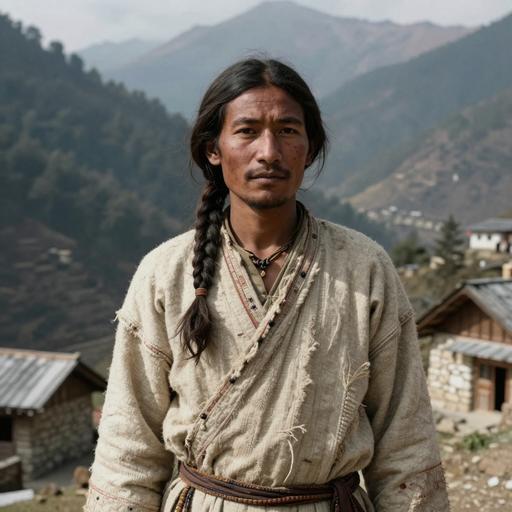
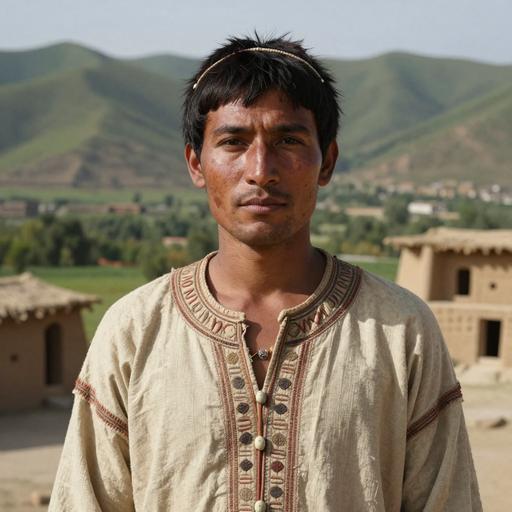
Portraits are AI-generated illustrations. Sample labels and accession IDs identify the reference records.

Portrait Sample Country Era Date Culture mtDNA Match
AI-generated illustrative portrait of Roopkund- A individual, Uttaranchal. Himalaya. Roopkund, India (707-888 CE)
Sample ID: I3346
India India Roopkund A 707-888 calCE (1210±25 BP, PSUAMS-5462) Roopkund Culture M30c Direct
AI-generated illustrative portrait of IA individual, Swat Valley. Katelai, Pakistan (1,000-800 BCE)
Sample ID: I12470
Pakistan The Pakistan Katelai Iron Age Culture 1000-800 BCE Katelai Culture M30c1 Subclade
AI-generated illustrative portrait of Indo-Aryan individual, Swat Valley. Katelai, Pakistan (1,000-800 BCE)
Sample ID: I12149
Pakistan The Pakistan Katelai Iron Age Culture 1000 BCE - 800 BCE Katelai Culture M30c1 Subclade
AI-generated illustrative portrait of Spgt individual, Swat Valley. Katelai, Pakistan (1,000-800 BCE)
Sample ID: I12149
Pakistan The SPGT Culture 1000 BCE - 800 BCE M30c1 Subclade
MATERNAL LINEAGE · ANCIENT DNA

Ancient lineage evidence map

Follow parent clades toward this branch and explore where ancient carriers were found.

Loading ancient observations…

Markers are archaeological find locations. A dashed connector is an uncertain, proposed geographic transition between consecutive branches supported by multiple dated observations; it is not an exact travel route, birthplace or proof of direct descent. Parent-clade samples may belong to other descendant branches. Gaps remain where evidence is insufficient. Sample dates differ from haplogroup formation dates.

Reference profile

Carrier Distribution Map

Geographic distribution of 4 ancient DNA samples (direct and subclade carriers of M30C)

Direct carrier Subclade carrier
Time Period Filter
All Time Periods
Showing all samples
Reference profile

Temporal Distribution

Distribution of carriers across archaeological periods

Reference profile

Geographic Distribution

Counts by recorded sample country. These reflect the available reference selection, not population frequencies.

Reference profile

Country × Era Distribution

Compare recorded sample counts across countries and archaeological periods. Select a populated cell to inspect a sample.

Data

Data & Provenance

Source information and data quality

Last Updated 2026-02-16
Confidence Score 50/100
Coverage Low

Data Source

Classification, estimated dates and geographic context reflect the recorded reference data and may change as evidence is revised. Sample coverage is uneven; recorded locations and archaeological associations do not establish personal origin or cultural identity.

A haplogroup follows one maternal or paternal line. The branch prediction depends on which markers the DNA file contains. How our analysis works