mtDNA · Maternal lineage

M30D1

mtDNA Haplogroup M30D1

A reference profile for one lineage branch. Shared haplogroups do not establish a family relationship or cultural identity.

Reference profile

Branch background

Historical context for mtDNA lineage branch M30D1

Origins and Evolution

mtDNA haplogroup M30D1 is a downstream branch of the South Asian clade M30D, itself part of macro-haplogroup M, which is widespread across Asia. Based on its phylogenetic position within M30 and the coalescence times estimated for neighboring subclades, M30D1 plausibly arose in the early to mid Holocene (approximately 6–8 kya), a period of substantial demographic change in South Asia as foraging groups interacted with incoming or locally developing food-producing societies. The lineage reflects a localized diversification of maternal lineages within the subcontinent rather than a broad, continent-spanning expansion.

Subclades (if applicable)

As a named subclade, M30D1 sits beneath M30D in the phylogeny. Published surveys and phylogenies identify a handful of private mutations that define M30D1 and distinguish it from sister branches of M30D; however, M30D remains a comparatively small and regionally restricted clade, so further deep substructure beneath M30D1 is limited in the current literature. Continued sampling and high-resolution mitogenome sequencing in diverse South Asian groups could reveal additional internal subdivisions.

Geographical Distribution

M30D1 is concentrated in the Indian subcontinent with its highest incidence in western, central and southern India, and detectable presence across Sri Lanka, Pakistan, Bangladesh and Nepal. Frequencies are generally low to moderate at the population level but sustained across many ethnolinguistic groups, indicating long-term presence and regional continuity. Sporadic low-frequency occurrences in neighboring Central and Southeast Asia and among Indian Ocean littoral island populations are best interpreted as the result of historical gene flow and coastal/overland contacts. Four archaeological individuals in available ancient DNA datasets carry M30D-level lineages (including matches assigned to the M30D clade), supporting the presence of this lineage in prehistoric South Asian contexts.

Historical and Cultural Significance

Because M30D1 is primarily restricted to South Asia and occurs across both tribal and caste groups, it provides information about deep maternal ancestry that predates many historically recorded social structures. Its age and distribution suggest continuity from early Holocene populations of the subcontinent through later cultural transformations, including the Neolithic and Bronze Age. M30D1 does not appear to mark a single archaeological culture; rather, it is one component of the heterogeneous maternal gene pool of South Asia, coexisting alongside other autochthonous M-lineages and West Eurasian R-lineages in varying proportions.

Conclusion

M30D1 is a regionally localized mtDNA lineage that documents maternal continuity within South Asia since the early to mid Holocene. It is best interpreted as part of the diverse indigenous mitochondrial landscape of the subcontinent, present at low-to-moderate frequencies across many populations and occasionally detected beyond South Asia through later migration and admixture. Further whole-mitogenome sequencing and broader ancient DNA sampling in the region will refine its internal structure, precise age, and prehistoric dynamics.

Key Points

  • Origins and Evolution
  • Subclades (if applicable)
  • Geographical Distribution
  • Historical and Cultural Significance
  • Conclusion
Reference profile

Tree & Relationships

Phylogenetic context and subclades

Evolution Path

Follow the recorded parent branches toward M30D1. Dates are estimates and can change as reference data is revised.

Steps Haplogroup Age Estimate Archaeology Era Time Passed Immediate Descendants Tested Modern Descendants Ancient Connections
1 M30D1 Current ~7,000 years ago Neolithic 7,000 years 0 18 0
2 M30D ~9,000 years ago Neolithic 9,000 years 1 18 4
3 M30 ~22,000 years ago Mesolithic 22,000 years 5 95 0
4 M4"67 - - - 8 156 0
5 M ~60,000 years ago Paleolithic 60,000 years 42 2,671 41
6 L3 ~70,000 years ago Paleolithic 70,000 years 7 30,162 6
7 L3'4 - - - 2 30,212 0
8 L3'4'6 - - - 2 30,216 0
9 L2'3'4'6 - - - 2 31,333 0
10 L2'3'4'5'6'7 - - - 2 31,349 0
11 L1'2'3'4'5'6'7 - - - 2 31,852 0
12 L ~160,000 years ago Paleolithic 160,000 years 2 32,236 5

Subclades (0)

Terminal branch - no recorded subclades

Reference profile

Where in the World

Geographic distribution and modern presence

Recorded origin

South Asia

Modern Distribution

The populations where mtDNA haplogroup M30D1 is found include:

  1. Various South Asian populations (tribal groups and caste populations across India)
  2. Sri Lankan populations (Tamil and Sinhalese groups)
  3. Pakistani populations (selected groups in Punjab, Sindh and adjoining regions)
  4. Bangladeshi populations (low to moderate frequencies in some groups)
  5. Nepalese and Himalayan highland populations (sporadic occurrences)
  6. Central Asian populations (low frequency, typically due to gene flow)
  7. Southeast Asian groups (rare occurrences in Myanmar/Thailand region)
  8. Regional island populations in the Indian Ocean rim (low frequency)
  9. Modern diaspora populations in Europe and the Americas (very low frequency)
  10. Ancient South Asian archaeological individuals (rare/limited ancient DNA occurrences)
Historical context

A branch through time

Estimated formation in a broad historical timeline. Period markers provide context and do not imply a connection with particular cultures.

  1. ~10k years ago

    Neolithic Revolution

    Agriculture begins, settled communities form

  2. ~7k years ago

    Haplogroup M30D1

    Estimated formation of this mtDNA branch; dates and locations are reference estimates.

    This branch
  3. ~5k years ago

    Bronze Age

    Metalworking, writing, and early civilizations

  4. ~3k years ago

    Iron Age

    Iron tools, expanded trade networks

  5. ~2.5k years ago

    Classical Antiquity

    Greek and Roman civilizations flourish

  6. Present

    Present Day

    Modern era

Reference profile

Archaeological context

Recorded archaeological associations for mtDNA branch M30D1

Recorded associations

These labels describe archaeological contexts recorded for reference samples linked to M30D1. An association does not establish that all carriers belonged to a culture or followed a particular migration route.

Butkara Culture Gogdara Culture Gonur Culture Katelai Culture Loebanr Culture Mtwapa Roopkund Culture Saidu Sharif Culture Shahr-i Sokhta
Culture assignments are based on archaeological context of ancient DNA samples and may represent regional associations during specific time periods.
Reference profile

Sample Catalog

4 direct carriers of haplogroup M30D1

4 shown · 4 matching samples

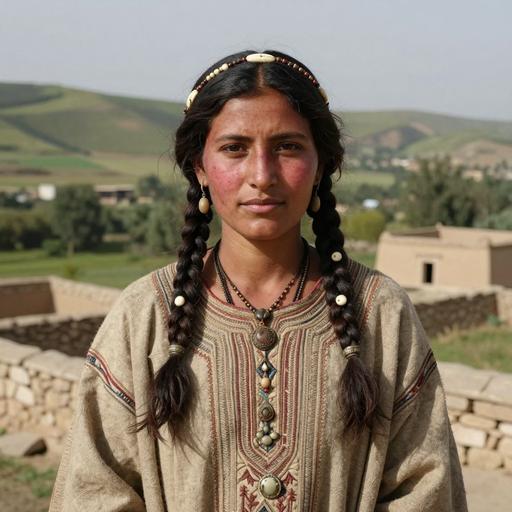
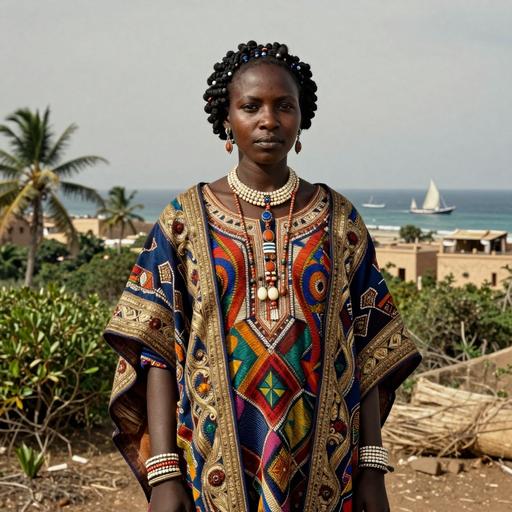
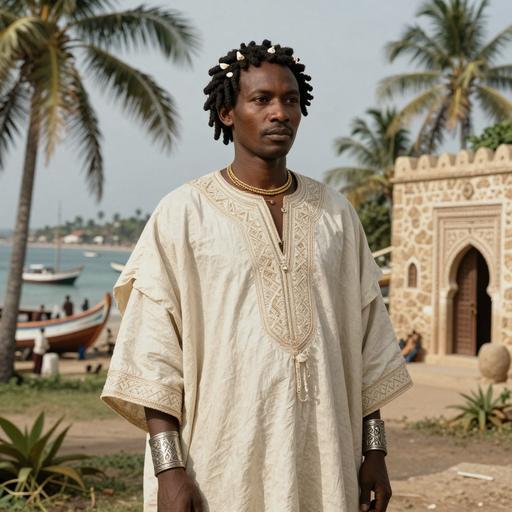
Portraits are AI-generated illustrations. Sample labels and accession IDs identify the reference records.

Portrait Sample Country Era Date Culture mtDNA Match
AI-generated illustrative portrait of Historic individual, Swat Valley. Saidu Sharif, Pakistan (400-200 BCE)
Sample ID: I7723
Pakistan Saidu Sharif Iron Age Complex in Swat Valley, Pakistan 400-200 BCE Saidu Sharif Culture M30d1 Direct
AI-generated illustrative portrait of IA individual, Swat Valley. Katelai, Pakistan (1,000-800 BCE)
Sample ID: I12461
Pakistan The Pakistan Katelai Iron Age Culture 1000-800 BCE Katelai Culture M30d1 Direct
AI-generated illustrative portrait of Medieval Swahili individual, Mtwapa (Kilifi), Kenya (1,150-1,350 CE)
Sample ID: I23550
Kenya Swahili Culture of Mtwapa 1150-1350 CE Mtwapa M30d1 Direct
AI-generated illustrative portrait of Medieval Swahili individual, Mtwapa (Kilifi), Kenya (1,226-1,297 CE)
Sample ID: I17409
Kenya Swahili Culture of Mtwapa 1226-1297 calCE (780±20 BP, PSUAMS-12145) Mtwapa M30d1 Direct
MATERNAL LINEAGE · ANCIENT DNA

Ancient lineage evidence map

Follow parent clades toward this branch and explore where ancient carriers were found.

Loading ancient observations…

Markers are archaeological find locations. A dashed connector is an uncertain, proposed geographic transition between consecutive branches supported by multiple dated observations; it is not an exact travel route, birthplace or proof of direct descent. Parent-clade samples may belong to other descendant branches. Gaps remain where evidence is insufficient. Sample dates differ from haplogroup formation dates.

Reference profile

Carrier Distribution Map

Geographic distribution of 4 ancient DNA samples (direct and subclade carriers of M30D1)

Direct carrier
Time Period Filter
All Time Periods
Showing all samples
Reference profile

Temporal Distribution

Distribution of carriers across archaeological periods

Reference profile

Geographic Distribution

Counts by recorded sample country. These reflect the available reference selection, not population frequencies.

Reference profile

Country × Era Distribution

Compare recorded sample counts across countries and archaeological periods. Select a populated cell to inspect a sample.

Data

Data & Provenance

Source information and data quality

Last Updated 2026-02-16
Confidence Score 50/100
Coverage Low

Data Source

Classification, estimated dates and geographic context reflect the recorded reference data and may change as evidence is revised. Sample coverage is uneven; recorded locations and archaeological associations do not establish personal origin or cultural identity.

A haplogroup follows one maternal or paternal line. The branch prediction depends on which markers the DNA file contains. How our analysis works