mtDNA · Maternal lineage

M42A1B

mtDNA Haplogroup M42A1B

A reference profile for one lineage branch. Shared haplogroups do not establish a family relationship or cultural identity.

Reference profile

Branch background

Historical context for mtDNA lineage branch M42A1B

Origins and Evolution

Haplogroup M42A1B is a subclade of M42A1, itself a branch of the broader macro-haplogroup M, which is one of the dominant maternal lineages in South and Southeast Asia. Based on the phylogenetic position of M42A1B downstream of M42A1 and the estimated coalescence of M42A1 in the early Holocene (~10 kya), M42A1B most likely arose later during the Holocene (a plausible estimate ~6 kya). Its emergence reflects continued diversification of indigenous maternal lineages in South Asia following the Last Glacial Maximum and during the transition to more sedentary and regionally differentiated populations in the Holocene.

Genetic studies of contemporary and ancient South Asian populations show that many M-derived lineages persisted and diversified locally, producing multiple low-frequency, geographically structured subclades like M42A1B. The lineage's mutational profile places it as an intermediate clade linking older M42-derived diversity to more recent, localized maternal lineages.

Subclades

As a downstream branch of M42A1, M42A1B may itself contain internal diversity (subbranches) detectable only with high-resolution complete mitogenome sequencing. At present, available population surveys typically identify M42A1B at low counts; therefore detailed internal substructure is incompletely characterized in published datasets. With increased sampling of tribal and Himalayan populations and more ancient DNA from South Asia, further subclades could be resolved and dated.

Geographical Distribution

M42A1B shows a distribution concentrated in the Indian subcontinent with patchy, low-frequency occurrences in adjacent regions. It is most often observed among tribal and indigenous groups (including some Dravidian-speaking tribal populations and upland communities) and at lower frequencies among caste and general-population samples across North and South India. Sporadic occurrences are reported in Himalayan edge populations (including Nepali and Tibetan-adjacent groups), Sri Lanka (both Tamil and Sinhalese samples at low frequency), eastern South Asia (Bangladesh, eastern India), parts of Myanmar and Southeast Asian fringe groups, and occasional low-frequency detections in Pakistan and very sporadic finds in Central Asia. A small number of Holocene ancient South Asian samples also carry related M42A1-lineage markers, supporting a long-standing regional presence.

The observed pattern — higher localized frequencies in some highland tribal groups and very low, scattered presence elsewhere — is consistent with a lineage that diversified within South Asia and remained largely autochthonous, with limited dispersal into neighboring regions.

Historical and Cultural Significance

Because M42A1B is primarily a low-frequency, regionally restricted maternal lineage, its significance is most informative for reconstructing local demographic histories rather than representing a major continent-scale migration. The lineage likely persisted through major cultural transitions in South Asia (Mesolithic–Neolithic shifts and later Bronze Age urbanization), serving as part of the indigenous maternal substrate upon which incoming cultural and linguistic changes were layered.

In population-genetic terms, M42A1B can be used as a marker for continuity in tribal and highland groups, and its presence in some ancient Holocene samples supports continuity between prehistoric local populations and some present-day indigenous communities. Associations with archaeological cultures are indirect and cautious: the lineage is best interpreted as part of the autosubsisting maternal diversity of Holocene South Asia rather than a signature of a single, expansive archaeological culture.

Conclusion

M42A1B is a modestly aged Holocene maternal subclade rooted in South Asia that exemplifies the fine-scale diversification of mtDNA lineages among indigenous South Asian populations. Its low-to-moderate local frequencies and sporadic distribution outside the subcontinent reflect long-term regional persistence with limited outward dispersal. Future dense mitogenome sequencing and targeted ancient DNA from diverse South Asian contexts will clarify its internal structure, precise age, and historical dynamics.

Key Points

  • Origins and Evolution
  • Subclades
  • Geographical Distribution
  • Historical and Cultural Significance
  • Conclusion
Reference profile

Tree & Relationships

Phylogenetic context and subclades

Evolution Path

Follow the recorded parent branches toward M42A1B. Dates are estimates and can change as reference data is revised.

Steps Haplogroup Age Estimate Archaeology Era Time Passed Immediate Descendants Tested Modern Descendants Ancient Connections
1 M42A1B Current ~6,000 years ago Chalcolithic 6,000 years 1 0 1
2 M42A1 ~10,000 years ago Neolithic 10,000 years 1 0 0
3 M42A ~12,000 years ago Neolithic 12,000 years 1 2 0
4 M42 ~50,000 years ago Paleolithic 50,000 years 1 4 0
5 M42'74 - - - 2 5 0
6 M ~60,000 years ago Paleolithic 60,000 years 42 2,671 41
7 L3 ~70,000 years ago Paleolithic 70,000 years 7 30,162 6
8 L3'4 - - - 2 30,212 0
9 L3'4'6 - - - 2 30,216 0
10 L2'3'4'6 - - - 2 31,333 0
11 L2'3'4'5'6'7 - - - 2 31,349 0
12 L1'2'3'4'5'6'7 - - - 2 31,852 0
13 L ~160,000 years ago Paleolithic 160,000 years 2 32,236 5
Reference profile

Where in the World

Geographic distribution and modern presence

Recorded origin

South Asia

Modern Distribution

The populations where mtDNA haplogroup M42A1B is found include:

  1. Tribal and indigenous groups across India (including some Dravidian-speaking tribal populations)
  2. Caste and general-population samples from North and South India (low–moderate frequency)
  3. Nepali and Himalayan edge groups (including Tibetan-adjacent populations at low frequency)
  4. Sri Lankan populations (both Tamil and Sinhalese groups, low frequency)
  5. Bengali and eastern South Asian populations (Bangladesh and eastern India, sporadic)
  6. Myanmar and adjacent Southeast Asian fringe groups (low, patchy frequency)
  7. Pakistani samples (Sindhi, Punjabi and neighbouring groups at low frequency)
  8. Select Central Asian samples (sporadic, very low frequency)
  9. Some Himalayan highland and foothill groups with locally higher frequency
  10. A small number of archaeological/ancient South Asian Holocene samples
Historical context

A branch through time

Estimated formation in a broad historical timeline. Period markers provide context and do not imply a connection with particular cultures.

  1. ~10k years ago

    Neolithic Revolution

    Agriculture begins, settled communities form

  2. ~6k years ago

    Haplogroup M42A1B

    Estimated formation of this mtDNA branch; dates and locations are reference estimates.

    This branch
  3. ~5k years ago

    Bronze Age

    Metalworking, writing, and early civilizations

  4. ~3k years ago

    Iron Age

    Iron tools, expanded trade networks

  5. ~2.5k years ago

    Classical Antiquity

    Greek and Roman civilizations flourish

  6. Present

    Present Day

    Modern era

Reference profile

Archaeological context

Recorded archaeological associations for mtDNA branch M42A1B

Recorded associations

These labels describe archaeological contexts recorded for reference samples linked to M42A1B. An association does not establish that all carriers belonged to a culture or followed a particular migration route.

Australia_PreEuropean British Neolithic Goyet Cave Gravettian Loebanr Culture Medieval Italian North Queensland Aboriginal Ostuni Culture Roopkund Culture Spanish Gravettian
Culture assignments are based on archaeological context of ancient DNA samples and may represent regional associations during specific time periods.
Reference profile

Sample Catalog

1 subclade carrier of haplogroup M42A1B (no direct carriers in the current reference selection)

1 shown · 1 matching samples

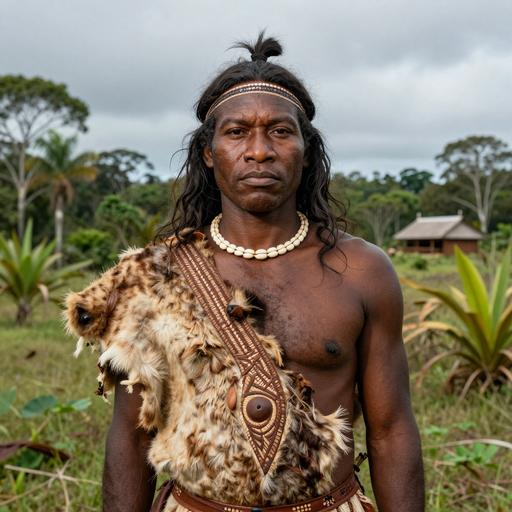
Portraits are AI-generated illustrations. Sample labels and accession IDs identify the reference records.

Portrait Sample Country Era Date Culture mtDNA Match
AI-generated illustrative portrait of Aboriginal Australian individual, Cairns (North Queensland, Mulgrave District), Australia (410-1,788 CE)
Sample ID: PA109uncontaminated
Australia Aboriginal North Queensland 410 CE - 1788 CE North Queensland Aboriginal M42a1b2 Subclade
MATERNAL LINEAGE · ANCIENT DNA

Ancient lineage evidence map

Follow parent clades toward this branch and explore where ancient carriers were found.

Loading ancient observations…

Markers are archaeological find locations. A dashed connector is an uncertain, proposed geographic transition between consecutive branches supported by multiple dated observations; it is not an exact travel route, birthplace or proof of direct descent. Parent-clade samples may belong to other descendant branches. Gaps remain where evidence is insufficient. Sample dates differ from haplogroup formation dates.

Reference profile

Carrier Distribution Map

Geographic distribution of 1 ancient DNA sample (direct and subclade carriers of M42A1B)

Subclade carrier
Time Period Filter
All Time Periods
Showing all samples
Reference profile

Temporal Distribution

Distribution of carriers across archaeological periods

Reference profile

Geographic Distribution

Counts by recorded sample country. These reflect the available reference selection, not population frequencies.

Reference profile

Country × Era Distribution

Compare recorded sample counts across countries and archaeological periods. Select a populated cell to inspect a sample.

Data

Data & Provenance

Source information and data quality

Last Updated 2026-02-16
Confidence Score 50/100
Coverage Low

Data Source

Classification, estimated dates and geographic context reflect the recorded reference data and may change as evidence is revised. Sample coverage is uneven; recorded locations and archaeological associations do not establish personal origin or cultural identity.

A haplogroup follows one maternal or paternal line. The branch prediction depends on which markers the DNA file contains. How our analysis works