Menu
mtDNA Haplogroup • Maternal Lineage

N1B1A2

mtDNA Haplogroup N1B1A2

~6,000 years ago
Near East / Caucasus
0 subclades
Scroll to explore
Chapter I

The Story

The journey of mtDNA haplogroup N1B1A2

Origins and Evolution

mtDNA haplogroup N1B1A2 is a downstream subclade within the broader N1b/N1B1 phylogeny and derives from the parent clade N1B1A, which has been associated with Holocene population structure in the Near East and adjacent regions. Based on its phylogenetic position and the time depth of its parent, N1B1A2 most likely originated in the Near East or the Caucasus during the Mid-Holocene (~6 thousand years ago). As a relatively rare and geographically focused lineage, N1B1A2 reflects local maternal continuity and limited outward dispersal compared with more widespread European or West Asian haplogroups.

Genetic evidence (including modern population surveys and a modest number of ancient DNA identifications) indicates that N1B1A2 diversified after the main Early Holocene expansions of N1B1A, surviving in pockets of Near Eastern and Mediterranean populations where local demographic continuity and repeated regional contacts preserved rare maternal lineages.

Subclades (if applicable)

N1B1A2 is often observed as a terminal or near-terminal branch in published phylogenies and population surveys; sampling density remains limited. Where deeper resolution has been obtained, N1B1A2 shows low internal diversity, consistent with a relatively recent origin followed by persistence in localized populations. Additional minor sub-branches (e.g., hypothetical N1B1A2a/b) have been proposed in high-resolution datasets but are not yet well represented across broad population samples.

Geographical Distribution

N1B1A2 is concentrated in the Near East and adjoining regions with scattered occurrences elsewhere around the Mediterranean and into northeast Africa. Recorded occurrences include the Levant (Palestinians, Druze, Lebanese), Anatolia (various Turkish groups), the Caucasus (Armenians, Georgians, Azeris), parts of Iran and the Zagros, North African coastal populations (Egyptian and Maghrebi coastal groups), and the Horn of Africa (Ethiopia, Somalia, Eritrea). Low-frequency detection in southern Europe (Italy, Greece, Sardinia), Jewish communities (Ashkenazi, Sephardic, Mizrahi lineages), and Arabian Peninsula groups has been reported. Ancient DNA hits (13 samples in the referenced database) show that N1B1A2 has been present in archaeological contexts across the Near East and Mediterranean from the later Neolithic/Bronze Age horizons through historic periods, supporting both local continuity and episodic dispersal.

Historical and Cultural Significance

Although N1B1A2 is not a marker of any single large-scale migration, its distribution is informative about regional continuity in the Near East and the complex web of contacts in the Mediterranean and Northeast Africa. The haplogroup's geographical pattern is compatible with:

  • persistence of Holocene Near Eastern maternal lineages in Levantine and Anatolian farming communities;
  • later movement via coastal trade and colonization networks (e.g., Phoenician, Greek, Roman maritime activity) that produced low-frequency spread around the Mediterranean;
  • population movements and cultural contacts in the Bronze and Iron Ages, followed by medieval and historic-era mobility (including Arab expansions and diaspora movements) that redistributed rare maternal lineages into North Africa, the Arabian Peninsula, and Jewish communities.

For genealogical and forensic contexts, the presence of N1B1A2 in an individual's mtDNA can point to a Near Eastern/Caucasus maternal origin or ancestry connected to populations with historic ties to that region, but the haplogroup's rarity means results should be interpreted alongside autosomal and other uniparental markers.

Conclusion

N1B1A2 is a modestly aged, regionally focused maternal lineage that illuminates pockets of maternal continuity in the Near East and surrounding regions. Its pattern—low-to-moderate local frequencies, sporadic Mediterranean and Northeast African occurrences, and representation in ancient samples—highlights how relatively rare mtDNA branches can persist through millennia and become useful markers for fine-scale ancestry and regional population history. Continued high-resolution sampling and ancient DNA recovery will refine the internal structure and dispersal history of N1B1A2.

Key Points

  • Origins and Evolution
  • Subclades (if applicable)
  • Geographical Distribution
  • Historical and Cultural Significance
  • Conclusion
Chapter II

Tree & Relationships

Phylogenetic context and subclades

Evolution Path

This haplogroup's evolutionary journey from its earliest ancestor to the present.

Steps Haplogroup Age Estimate Archaeology Era Time Passed Immediate Descendants Tested Modern Descendants Ancient Connections
1 N1B1A2 Current ~6,000 years ago 🪨 Chalcolithic 6,000 years 0 12 0
2 N1B1A ~9,000 years ago 🌾 Neolithic 9,000 years 6 50 42
3 N1B1 ~14,000 years ago 🏹 Mesolithic 14,000 years 2 158 0
4 N1B ~22,000 years ago 🏹 Mesolithic 22,000 years 1 171 10
5 N1 ~55,000 years ago 🦴 Paleolithic 55,000 years 2 276 21
6 N ~60,000 years ago 🦴 Paleolithic 60,000 years 15 15,452 13
7 L3 ~70,000 years ago 🦴 Paleolithic 70,000 years 11 17,621 6
8 L ~160,000 years ago 🦴 Paleolithic 160,000 years 7 18,987 5

Subclades (0)

Terminal branch - no known subclades

Siblings (5)

Other branches from the same parent haplogroup

Chapter III

Where in the World

Geographic distribution and modern presence

Place of Origin

Near East / Caucasus

Modern Distribution

The populations where mtDNA haplogroup N1B1A2 is found include:

  1. Levantine populations (Palestinians, Druze, Lebanese)
  2. Anatolia / Turkey (various Anatolian groups)
  3. Caucasus populations (Armenians, Georgians, Azeris)
  4. Iran and the Zagros region
  5. North African coastal groups (Egyptians, Libyans, Tunisian coast)
  6. Horn of Africa populations (Ethiopians, Somali, Eritreans)
  7. Southern European Mediterranean groups (Italy, Greece, Sardinia at low-moderate levels)
  8. Jewish communities (observed in some Ashkenazi, Sephardic and Mizrahi lineages at low frequencies)
  9. Arabian Peninsula groups (Yemen, Oman at low-to-moderate frequencies)
  10. Scattered occurrences in Balkan and Central Mediterranean populations
CHAPTER IV

When in Time

Your haplogroup in the context of human history

~10k years ago

Neolithic Revolution

Agriculture begins, settled communities form

~6k years ago

Haplogroup N1B1A2

Your mtDNA haplogroup emerged in Near East / Caucasus

Near East / Caucasus
~5k years ago

Bronze Age

Metalworking, writing, and early civilizations

~3k years ago

Iron Age

Iron tools, expanded trade networks

~2k years ago

Classical Antiquity

Greek and Roman civilizations flourish

Present

Present Day

Modern era

Your Haplogroup
Historical Era
Chapter IV-B

Linked Cultures

Ancient cultures associated with mtDNA haplogroup N1B1A2

Cultural Heritage

These ancient cultures have been linked to haplogroup N1B1A2 based on matching ancient DNA samples from archaeological excavations. The presence of this haplogroup in these cultures provides insights into the migrations and population movements of populations carrying this haplogroup.

Aidonia Culture Anatolian Iron Age Avar Avar Culture Canaanite Late Anatolian Chalcolithic Late Bronze Age Armenian Late Bronze Jordan Nubian Christian PPNB Tepecik-Çiftlik
Culture assignments are based on archaeological context of ancient DNA samples and may represent regional associations during specific time periods.
Chapter V

Sample Catalog

13 direct carriers of haplogroup N1B1A2

13 / 13 samples
Portrait Sample Country Era Date Culture mtDNA Match
Portrait of ancient individual RKF260 from Hungary, dated 580 CE - 804 CE
RKF260
Hungary Avar Khaganate 580 CE - 804 CE Avar N1b1a2 Direct
Portrait of ancient individual I18517 from Sudan, dated 650 CE - 1050 CE
I18517
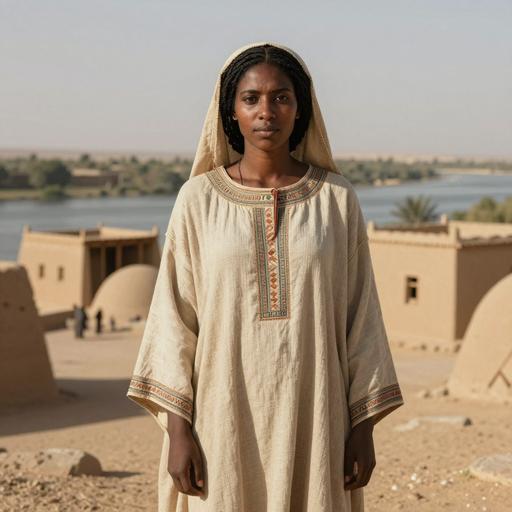
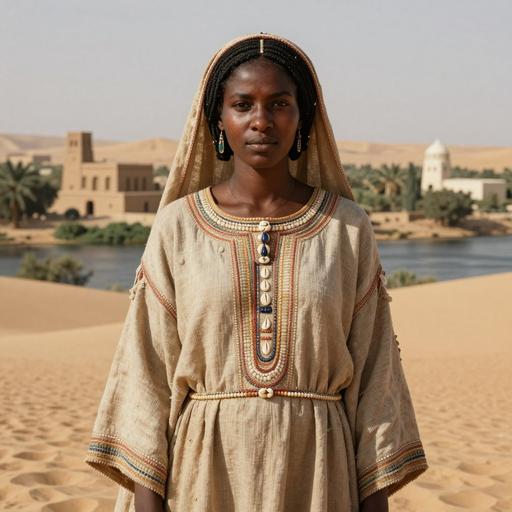
Sudan Early Christian Era in Sudan 650 CE - 1050 CE Nubian Christian N1b1a2 Direct
Portrait of ancient individual I18521 from Sudan, dated 650 CE - 1050 CE
I18521
Sudan Early Christian Era in Sudan 650 CE - 1050 CE Nubian Christian N1b1a2 Direct
Portrait of ancient individual KK1-245 from Hungary, dated 675 CE - 740 CE
KK1-245
Hungary Middle to Late Avar Period Hungary 675 CE - 740 CE Avar Culture N1b1a2 Direct
Portrait of ancient individual I6329 from Sudan, dated 772 CE - 892 CE
I6329
Sudan Early Christian Era in Sudan 772 CE - 892 CE Nubian Christian N1b1a2 Direct
Portrait of ancient individual I20577 from Turkey, dated 850 BCE - 750 BCE
I20577
Turkey Iron Age Turkey 850 BCE - 750 BCE Anatolian Iron Age N1b1a2 Direct
Portrait of ancient individual I19353 from Armenia, dated 1117 BCE - 935 BCE
I19353
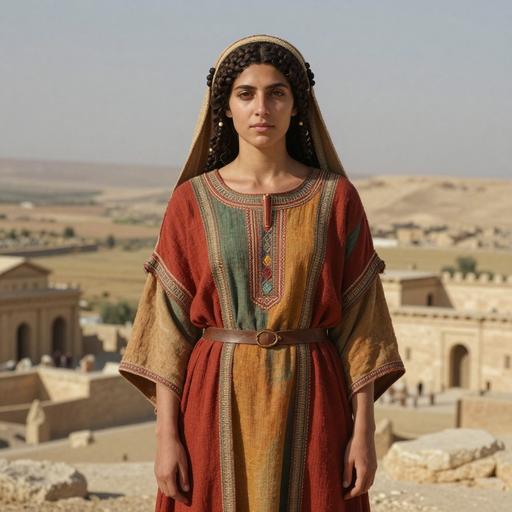
Armenia Late Bronze Age Armenia 1117 BCE - 935 BCE Late Bronze Age Armenian N1b1a2 Direct
Portrait of ancient individual AID007 from Greece, dated 1400 BCE - 1200 BCE
AID007
Greece Late Helladic Culture of Aidonia 1400 BCE - 1200 BCE Aidonia Culture N1b1a2 Direct
Portrait of ancient individual AID008 from Greece, dated 1400 BCE - 1200 BCE
AID008
Greece Late Helladic Culture of Aidonia 1400 BCE - 1200 BCE Aidonia Culture N1b1a2 Direct
Portrait of ancient individual I3985 from Jordan, dated 1415 BCE - 1230 BCE
I3985
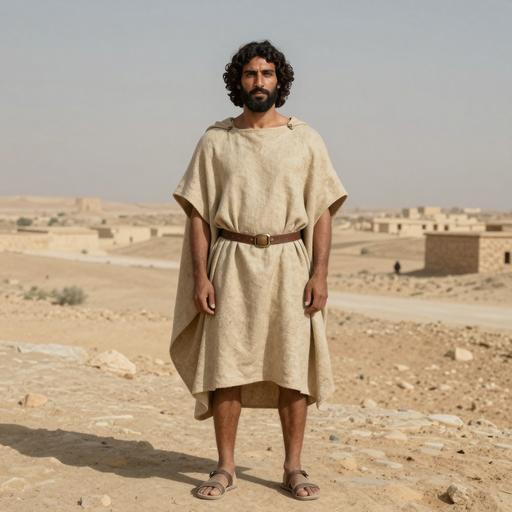
Jordan Late Bronze Age Jordan 1415 BCE - 1230 BCE Late Bronze Jordan N1b1a2 Direct
Chapter VI

Carrier Distribution Map

Geographic distribution of 13 ancient DNA samples (direct and subclade carriers of N1B1A2)

Direct carrier
Time Period Filter
All Time Periods
Showing all samples
Chapter VII

Temporal Distribution

Distribution of carriers across archaeological periods

Chapter VIII

Geographic Distribution

Distribution by country of origin (direct and subclade carriers shown by default)

Chapter IX

Country × Era Distribution

Cross-tabulation of carrier countries and archaeological periods (direct and subclade carriers shown by default)

Data

Data & Provenance

Source information and data quality

Last Updated 2026-02-16
Confidence Score 50/100
Coverage Low
Data Source

We use the latest phylotree for MTDNA haplogroup classification and data.