Menu
mtDNA Haplogroup • Maternal Lineage

Z1A1A

mtDNA Haplogroup Z1A1A

~6,000 years ago
Northeast Asia / Siberia
0 subclades
2 ancient samples
Scroll to explore
Chapter I

The Story

The journey of mtDNA haplogroup Z1A1A

Origins and Evolution

mtDNA haplogroup Z1A1A is a downstream branch of Z1A1, itself a northeastern Eurasian offshoot of haplogroup Z. The parent clade Z1A1 has been dated to the early Holocene (around 9 kya) and Z1A1A likely diversified somewhat later as human populations expanded and reoccupied northern Eurasian landscapes after the Last Glacial Maximum. Its emergence is consistent with population continuity and local differentiation among Holocene hunter‑gatherer and early pastoralist groups in Siberia and adjacent regions.

Z1A1A's distribution and age point to an origin in the forest‑steppe or boreal zones of Siberia or the adjacent Mongolian region, where climatic amelioration in the early Holocene enabled demographic growth and regional gene flow. The lineage then persisted at low to moderate frequencies in relict hunter‑gatherer and later pastoralist populations, with sporadic westward and eastward dispersals driven by mobility, trade and later cultural movements.

Subclades (if applicable)

As a relatively narrowly defined subclade of Z1A1, Z1A1A appears to be a small, geographically focused branch with limited downstream diversification documented so far. Sampling density for many Siberian and Mongolian groups remains incomplete, so additional minor downstream branches may be discovered with wider ancient and modern mtDNA sequencing. At present, Z1A1A is best treated as a localized sublineage within the broader Z1A1 radiation.

Geographical Distribution

Modern occurrences of Z1A1A are concentrated in northeastern Eurasia. Present-day populations with detectable frequencies include indigenous Siberian groups (for example Evenk and Yakut/Sakha), some Tungusic and Samoyedic peoples, Mongolian and Inner Mongolian groups, and populations in northeastern China (provinces such as Heilongjiang and Liaoning). The haplogroup is also recorded at very low frequency in some Central Asian populations (Altai, western Mongolia, parts of Kazakhstan) and in rare instances in northern Europe, including Sámi and other Scandinavian samples, likely reflecting historic long‑distance contacts or small founder events.

Archaeogenetic evidence for Z1A1 and its subclades indicates continuity of Z lineages in Siberia since the Holocene; Z1A1A itself has been identified rarely in ancient DNA datasets, consistent with a long‑term but low‑frequency presence.

Historical and Cultural Significance

The presence of Z1A1A in Siberian and Mongolian ethnolinguistic groups ties it to the deep history of northeastern Eurasian hunter‑gatherers and the later mosaic of pastoralist and mixed subsistence groups. As a Holocene lineage, Z1A1A likely participated in regional demographic processes such as the recolonization of forest and tundra margins after the LGM, local population expansions in the early to mid‑Holocene, and later cultural interactions (trade, marriage networks) that accompanied Bronze Age and Iron Age mobility across Eurasia.

Low-frequency occurrences of Z1A1A in northern Europe (including Sámi) probably reflect secondary movements or gene flow from eastern Eurasia into Fennoscandia associated with Uralic‑speaking migrations, long‑distance trade connections or isolated founder events rather than a broad demographic replacement.

Conclusion

mtDNA Z1A1A is a geographically focused mitochondrial lineage that illustrates how maternal diversity in northeastern Eurasia was reshaped during the early Holocene. It is informative for studies of Siberian population structure, Holocene dispersals across the forest‑steppe belt, and episodic eastern contributions to northern European maternal gene pools. Continued sampling of underrepresented Siberian and Mongolian groups, together with targeted ancient DNA work, will clarify its internal diversity and the timing and routes of its occasional westward spread.

Key Points

  • Origins and Evolution
  • Subclades (if applicable)
  • Geographical Distribution
  • Historical and Cultural Significance
  • Conclusion
Chapter II

Tree & Relationships

Phylogenetic context and subclades

Evolution Path

This haplogroup's evolutionary journey from its earliest ancestor to the present.

Steps Haplogroup Age Estimate Archaeology Era Time Passed Immediate Descendants Tested Modern Descendants Ancient Connections
1 Z1A1A Current ~6,000 years ago 🪨 Chalcolithic 6,500 years 0 5 2
2 Z1A1 ~9,000 years ago 🌾 Neolithic 9,000 years 2 7 0
3 Z1A ~12,000 years ago 🌾 Neolithic 12,000 years 1 9 8
4 Z1 ~20,000 years ago 🏹 Mesolithic 20,000 years 1 10 2
5 Z ~25,000 years ago 🦴 Paleolithic 25,000 years 3 36 6

Subclades (0)

Terminal branch - no known subclades

Siblings (1)

Other branches from the same parent haplogroup

Chapter III

Where in the World

Geographic distribution and modern presence

Place of Origin

Northeast Asia / Siberia

Modern Distribution

The populations where mtDNA haplogroup Z1A1A is found include:

  1. Indigenous Siberian groups (e.g., Evenk, Yakut/Sakha, Nganasan)
  2. Mongolian and Inner Mongolian populations (including Buryat and western Mongolian groups)
  3. Northern Chinese populations (northeast provinces such as Heilongjiang and Liaoning)
  4. Central Asian groups (Altai region, western Mongolia, some Kazakh groups)
  5. Northern European / Sámi and Scandinavian populations (very low frequencies)
  6. Tungusic‑speaking populations in eastern Siberia
  7. Small or isolated occurrences in other northern Eurasian hunter‑gatherer descendant groups
CHAPTER IV

When in Time

Your haplogroup in the context of human history

~10k years ago

Neolithic Revolution

Agriculture begins, settled communities form

~6k years ago

Haplogroup Z1A1A

Your mtDNA haplogroup emerged in Northeast Asia / Siberia

Northeast Asia / Siberia
~5k years ago

Bronze Age

Metalworking, writing, and early civilizations

~3k years ago

Iron Age

Iron tools, expanded trade networks

~2k years ago

Classical Antiquity

Greek and Roman civilizations flourish

Present

Present Day

Modern era

Your Haplogroup
Historical Era
Chapter IV-B

Linked Cultures

Ancient cultures associated with mtDNA haplogroup Z1A1A

Cultural Heritage

These ancient cultures have been linked to haplogroup Z1A1A based on matching ancient DNA samples from archaeological excavations. The presence of this haplogroup in these cultures provides insights into the migrations and population movements of populations carrying this haplogroup.

Avar Culture Bolshoy Oleni Ostrov Bolshoy Oleniy Early Avar Kazakh Eneolithic Late Medieval Mongolian Northern West Siberian Culture Turkic Nomadic Culture Xiongnu
Culture assignments are based on archaeological context of ancient DNA samples and may represent regional associations during specific time periods.
Chapter V

Sample Catalog

2 direct carriers of haplogroup Z1A1A

2 / 2 samples
Portrait Sample Country Era Date Culture mtDNA Match
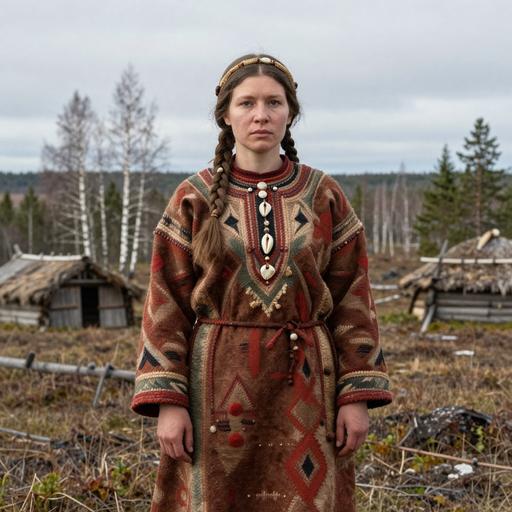
Portrait of ancient individual NEO62 from Russia, dated 1687 BCE - 1461 BCE
NEO62
Russia Bolshoy Oleniy Ostrov Culture 1687 BCE - 1461 BCE Bolshoy Oleniy Z1a1a Direct
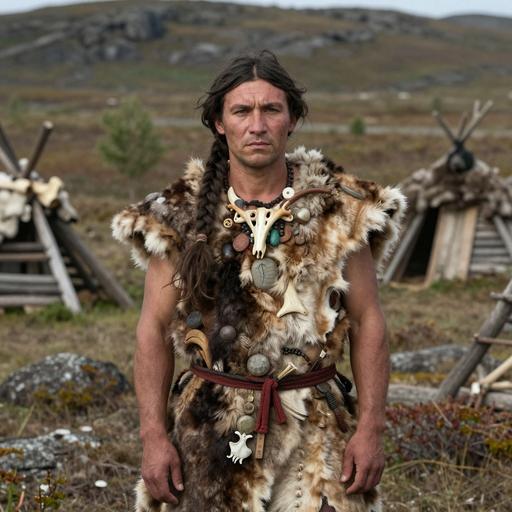
Portrait of ancient individual BOO002 from Russia, dated 2050 BCE - 1500 BCE
BOO002
Russia Bolshoy Oleni Ostrov Site, Russia 2050 BCE - 1500 BCE Bolshoy Oleni Ostrov Z1a1a Direct
Chapter VI

Carrier Distribution Map

Geographic distribution of 2 ancient DNA samples (direct and subclade carriers of Z1A1A)

Direct carrier
Time Period Filter
All Time Periods
Showing all samples
Chapter VII

Temporal Distribution

Distribution of carriers across archaeological periods

Chapter VIII

Geographic Distribution

Distribution by country of origin (direct and subclade carriers shown by default)

Chapter IX

Country × Era Distribution

Cross-tabulation of carrier countries and archaeological periods (direct and subclade carriers shown by default)

Data

Data & Provenance

Source information and data quality

Last Updated 2026-02-16
Confidence Score 50/100
Coverage Low
Data Source

We use the latest phylotree for MTDNA haplogroup classification and data.