Y-DNA · Paternal lineage

J

J (M304)

Y-DNA Haplogroup J

A reference profile for one lineage branch. Shared haplogroups do not establish a family relationship or cultural identity.

Reference profile

Branch background

Historical context for Y-DNA lineage branch J

Origins and Evolution

Y-DNA haplogroup J is a major branch of the human Y-chromosome tree and is generally interpreted as having diversified in West Asia / the Near East during the late Upper Paleolithic to early Holocene. It is part of a lineage network that includes several major subclades with distinct geographic histories, especially J1 and J2, which together account for much of the haplogroup's modern distribution.

Population genetics studies suggest that haplogroup J expanded substantially during the Neolithic transition, when early farming and pastoralist communities spread across the Fertile Crescent, Anatolia, the Caucasus, and neighboring regions. Its deep internal diversity in the Near East indicates a long local history there, while later movements tied to trade, urbanization, and empire-building helped disperse it more widely.

Subclades

The most important major branches of haplogroup J are:

  • J1: Especially common in the Arabian Peninsula, Levant, and parts of the Caucasus and Horn of Africa. It is often associated with expansions in arid-zone pastoralist and historically Semitic-speaking populations.
  • J2: Strongly associated with the Fertile Crescent, Anatolia, the Caucasus, the Balkans, the Mediterranean, and parts of South Asia. It is frequently linked to early farming dispersals and later Bronze Age urban networks.

Additional downstream subclades of J reveal fine-scale regional histories and founder effects, but the broad distinction between J1 and J2 captures most of the major demographic pattern.

Geographical Distribution

Haplogroup J is most frequent in the Near East, Caucasus, Arabian Peninsula, and Mediterranean basin, with secondary presence across Europe, North Africa, the Horn of Africa, and South Asia. Its frequencies are typically highest in populations with historical ties to the Levant, Mesopotamia, Anatolia, and neighboring regions.

In Europe, J is more common in the southern and southeastern parts of the continent, reflecting ancient and historical gene flow from West Asia. In North Africa, it appears in varying frequencies due to multiple episodes of migration and contact across the Mediterranean and Red Sea.

Historical and Cultural Significance

Haplogroup J is one of the clearest paternal lineages associated with the spread of agriculture and subsequent complex societies in the Near East and Mediterranean world. J2, in particular, has often been discussed in relation to early Near Eastern farmers, while J1 has been linked in many studies to Arabian and Levantine demographic expansions.

Historically, this haplogroup is relevant to the population history of ancient Mesopotamia, the Levant, Anatolia, the Caucasus, Phoenician and Greek-era Mediterranean networks, and Islamic-era dispersals. Because of its broad regional spread and strong subclade structure, J is also important for genetic genealogy and ancient DNA research.

Conclusion

Y-DNA haplogroup J is a foundational West Eurasian paternal lineage with deep roots in the Near East and extensive downstream diversification. Its distribution reflects a combination of early Holocene demographic growth, Neolithic dispersals, Bronze Age connectivity, and later historical migrations, making it one of the most informative haplogroups for studying the peopling of West Asia and the Mediterranean.

Key Points

  • Origins and Evolution
  • Subclades
  • Geographical Distribution
  • Historical and Cultural Significance
  • Conclusion
Reference profile

Tree & Relationships

Phylogenetic context and subclades

Evolution Path

Follow the recorded parent branches toward J. Dates are estimates and can change as reference data is revised.

Steps Haplogroup Age Estimate Archaeology Era Time Passed Immediate Descendants Tested Modern Descendants Ancient Connections
1 J Current ~45,000 years ago Paleolithic 45,000 years 3 1,968 16
Reference profile

Where in the World

Geographic distribution and modern presence

Recorded origin

Near East

Modern Distribution

The populations where YDNA haplogroup J is found include:

  1. Levantine populations
  2. Arabian Peninsula populations
  3. Anatolian populations
  4. Caucasus populations
  5. Mesopotamian populations
  6. Greek and southern Italian populations
  7. Balkan populations
  8. North African populations
  9. Jewish populations
  10. Some South Asian populations

Regional Presence

Near East High
Western Asia High
Southwest Asia High
Southeastern Europe Moderate
Southern Europe Moderate
North Africa Moderate
Eastern Africa Low
South Asia Low
Historical context

A branch through time

Estimated formation in a broad historical timeline. Period markers provide context and do not imply a connection with particular cultures.

  1. ~50k years ago

    Upper Paleolithic

    Advanced tool-making, art, and cultural explosion

  2. ~45k years ago

    Haplogroup J

    Estimated formation of this Y-DNA branch; dates and locations are reference estimates.

    This branch
  3. ~20k years ago

    Last Glacial Maximum

    Peak of the last ice age, populations isolated

  4. ~10k years ago

    Neolithic Revolution

    Agriculture begins, settled communities form

  5. ~5k years ago

    Bronze Age

    Metalworking, writing, and early civilizations

  6. ~3k years ago

    Iron Age

    Iron tools, expanded trade networks

  7. ~2.5k years ago

    Classical Antiquity

    Greek and Roman civilizations flourish

  8. Present

    Present Day

    Modern era

Reference profile

Archaeological context

Recorded archaeological associations for Y-DNA branch J

Recorded associations

These labels describe archaeological contexts recorded for reference samples linked to J. An association does not establish that all carriers belonged to a culture or followed a particular migration route.

Anatolian Neolithic Hajji Firuz Italian Neolithic Linear Pottery Culture Luristan Culture North-Central Italian Satsurblia Culture Turkey_Catalhoyuk_LN
Culture assignments are based on archaeological context of ancient DNA samples and may represent regional associations during specific time periods.
Reference profile

Sample Catalog

10 direct carriers and 6 subclade carriers of haplogroup J

10 shown · 16 matching samples

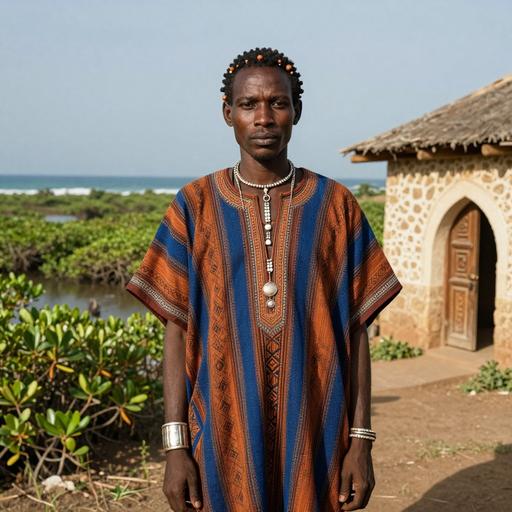
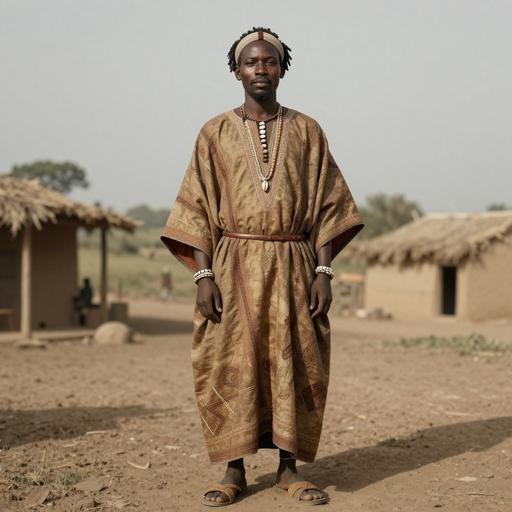
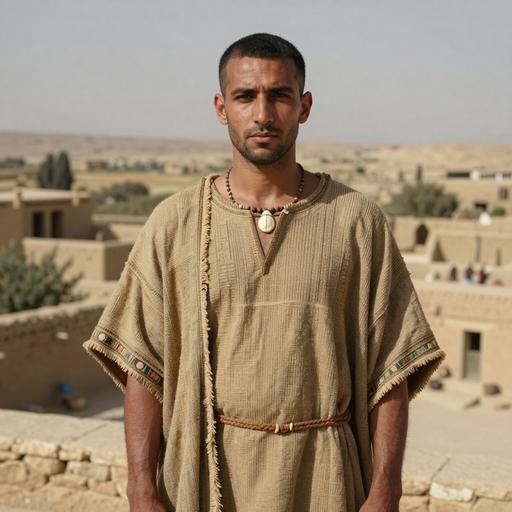
Portraits are AI-generated illustrations. Sample labels and accession IDs identify the reference records.

Portrait Sample Country Era Date Culture Y-DNA Match
AI-generated illustrative portrait of Umayyad individual, TellQarassa, Syria (666-768 CE)
Sample ID: syr005
Syria The Umayyad Caliphate 666-768 calCE (1294±18cal BP, Wk-46474) Umayyad J Direct
AI-generated illustrative portrait of Medieval Swahili individual, Mtwapa (Kilifi), Kenya (1,250-1,650 CE)
Sample ID: I23551
Kenya Swahili Culture of Mtwapa 1250-1650 CE Mtwapa J Direct
AI-generated illustrative portrait of Canaanite/Phoenician individual, Ashkelon, Israel (1,376-1,127 BCE)
Sample ID: ASH066
Israel Iron Age I Ashkelon, Israel 1376 BCE - 1127 BCE Philistine Ashkelon J Direct
AI-generated illustrative portrait of Medieval Swahili individual, Mtwapa (Kilifi), Kenya (1,435-1,469 CE)
Sample ID: I23660
Kenya Swahili Culture of Mtwapa 1435-1469 calCE (435±15 BP, PSUAMS-12281) Mtwapa J Direct
AI-generated illustrative portrait of Krasnodar Krai LBA Dolmen individual, North Caucasus. Marchenkova Gora, Russia (1,450-1,200 BCE)
Sample ID: I2051
Russia Late Bronze Age Dolmen Culture, Caucasus, Russia 1450-1200 BCE Dolmen J Direct
AI-generated illustrative portrait of Contemporary individual, Chinese. Sino-Tibetan. Henan. Y.haplogroup=J, China (c. 2,000 CE)
Sample ID: Han1243
China Modern China 2000 CE Chinese J Direct
AI-generated illustrative portrait of Contemporary individual, Tibetic. Bodish. Sino-Tibetan. Chamdo. Tibet. Y.haplogroup=J, China (c. 2,000 CE)
Sample ID: T363
China Modern China 2000 CE Chinese J Direct
AI-generated illustrative portrait of Contemporary individual, Mongolic. Linxia. Gansu. Y.haplogroup=J, China (c. 2,000 CE)
Sample ID: DX1175
China Modern China 2000 CE Chinese J Direct
AI-generated illustrative portrait of Ancient Near Eastern Civilization individual, 'Ain Ghazal, Jordan (2,557-2,296 BCE)
Sample ID: I1730
Jordan Jordan EBA 2557 BCE - 2296 BCE Jordanian Bronze J Direct
AI-generated illustrative portrait of Adygea Eneolithic individual, Unakozovskaya, Russia (4,676-4,458 BCE)
Sample ID: I2055
Russia Eneolithic Caucasus, Russia 4676-4458 calBCE (5718±29 BP, OxA-43740) Caucasus Chalcolithic J Direct
PATERNAL LINEAGE · ANCIENT DNA

Ancient lineage evidence map

Follow parent clades toward this branch and explore where ancient carriers were found.

Loading ancient observations…

Markers are archaeological find locations. A dashed connector is an uncertain, proposed geographic transition between consecutive branches supported by multiple dated observations; it is not an exact travel route, birthplace or proof of direct descent. Parent-clade samples may belong to other descendant branches. Gaps remain where evidence is insufficient. Sample dates differ from haplogroup formation dates.

Reference profile

Carrier Distribution Map

Geographic distribution of 16 ancient DNA samples (direct and subclade carriers of J)

Direct carrier Subclade carrier
Time Period Filter
All Time Periods
Showing all samples
Reference profile

Temporal Distribution

Distribution of carriers across archaeological periods

Reference profile

Geographic Distribution

Counts by recorded sample country. These reflect the available reference selection, not population frequencies.

Reference profile

Country × Era Distribution

Compare recorded sample counts across countries and archaeological periods. Select a populated cell to inspect a sample.

Data

Data & Provenance

Source information and data quality

Last Updated 2026-06-17

Data Source

Classification, estimated dates and geographic context reflect the recorded reference data and may change as evidence is revised. Sample coverage is uneven; recorded locations and archaeological associations do not establish personal origin or cultural identity.

A haplogroup follows one maternal or paternal line. The branch prediction depends on which markers the DNA file contains. How our analysis works