Y-DNA · Paternal lineage

O1B

Y-DNA Haplogroup O1B

A reference profile for one lineage branch. Shared haplogroups do not establish a family relationship or cultural identity.

Reference profile

Branch background

Historical context for Y-DNA lineage branch O1B

Origins and Evolution

Y-DNA haplogroup O1B is an intermediate paternal lineage within haplogroup O1, which belongs to the major East Asian macro-haplogroup O. As a subclade of O1, O1B likely emerged in East Asia, probably in a context of post-Late Pleistocene demographic expansion, with its diversification shaped by early Holocene population growth and later regional dispersals.

While the exact phylogeographic origin of O1B depends on the specific downstream branches included in different classification schemes, the lineage is generally interpreted as part of the broader radiation of East Asian Y-chromosome diversity that accompanied the spread of farming, linguistic expansion, and population movements across southern China and Southeast Asia. Its time depth is substantially younger than the parent clade O1, and a reasonable estimate for the emergence of O1B is around the early Holocene to mid-Holocene, roughly 35 kya in phylogenetic origin depth, though many present-day sublineages likely expanded much later.

Subclades

As an intermediate clade, O1B serves as a bridge between the broader O1 branch and its descendant lineages. Depending on the reference tree, downstream lineages may include geographically and ethnolinguistically diverse subclades associated with populations in southern China, mainland Southeast Asia, and Island Southeast Asia.

Key features of intermediate clades like O1B include:

  • Regional diversification into multiple descendant branches
  • Founder effects in expanding agricultural or maritime populations
  • Strong geographic structure across East and Southeast Asia

Geographical Distribution

O1B is most commonly found across East and Southeast Asia, with the highest relevance in populations from southern China and neighboring mainland regions. It also appears in varying frequencies among Tai-Kadai, Austroasiatic, Austronesian, and some Sino-Tibetan speaking groups, reflecting repeated episodes of demographic expansion and admixture.

Typical population contexts where O1B is found include:

  • Han Chinese and related southern Chinese groups
  • Vietnamese and other mainland Southeast Asian populations
  • Thai and Tai-Kadai-speaking groups
  • Austroasiatic-speaking populations
  • Austronesian-speaking populations in Taiwan and Island Southeast Asia
  • Some Korean, Japanese, and broader East Asian populations at lower or variable frequencies

Historical and Cultural Significance

The distribution of O1B fits well with major prehistoric transformations in East and Southeast Asia, especially the spread of Neolithic agriculture, population consolidation in river valley and coastal zones, and later expansions associated with regional states and trade networks. Its presence in multiple language families suggests that it is not tied to a single ethnolinguistic group, but instead reflects shared prehistoric ancestry and subsequent local demographic history.

In population genetics, haplogroups within the O1 branch are often discussed in relation to:

  • The spread of rice agriculture in southern China and Southeast Asia
  • Population growth during the Neolithic and Bronze Age
  • Coastal and insular dispersals linked to Austronesian expansion
  • Complex admixture among mainland Southeast Asian populations

Conclusion

Y-DNA haplogroup O1B is an important East Asian paternal lineage that illustrates the deep population history of southern China and Southeast Asia. As an intermediate clade within O1, it reflects both ancient diversification and more recent expansions driven by agriculture, migration, and linguistic spread across one of the most genetically and culturally diverse regions of the world.

Key Points

  • Origins and Evolution
  • Subclades
  • Geographical Distribution
  • Historical and Cultural Significance
  • Conclusion
Reference profile

Tree & Relationships

Phylogenetic context and subclades

Evolution Path

Follow the recorded parent branches toward O1B. Dates are estimates and can change as reference data is revised.

Steps Haplogroup Age Estimate Archaeology Era Time Passed Immediate Descendants Tested Modern Descendants Ancient Connections
1 O1B Current ~35,000 years ago Paleolithic 35,000 years 2 75 0
2 O1 ~45,000 years ago Paleolithic 45,000 years 2 132 8
3 O ~45,000 years ago Paleolithic 45,000 years 2 553 6
4 NO ~45,000 years ago Paleolithic 45,000 years 4 801 12

Siblings (1)

Other branches from the same parent haplogroup

Reference profile

Where in the World

Geographic distribution and modern presence

Recorded origin

East Asia

Modern Distribution

The populations where Y-DNA haplogroup O1B is found include:

  1. Southern Han Chinese and other East Asian populations
  2. Vietnamese and other mainland Southeast Asian populations
  3. Thai and Tai-Kadai-speaking populations
  4. Austroasiatic-speaking populations
  5. Austronesian-speaking populations in Taiwan and Island Southeast Asia
  6. Some Korean and Japanese populations
  7. Tibeto-Burman-speaking populations in parts of East Asia and the Himalayas

Regional Presence

Southeast Asia High
East Asia Moderate
Oceania (Island Southeast Asia & Pacific fringes) Moderate
South Asia (coastal occurrences) Low
Central Asia Low
Southeast Asia High
Southern China High
Korea and Japan Moderate
Austronesia Moderate
Historical context

A branch through time

Estimated formation in a broad historical timeline. Period markers provide context and do not imply a connection with particular cultures.

  1. ~50k years ago

    Upper Paleolithic

    Advanced tool-making, art, and cultural explosion

  2. ~35k years ago

    Haplogroup O1B

    Estimated formation of this Y-DNA branch; dates and locations are reference estimates.

    This branch
  3. ~20k years ago

    Last Glacial Maximum

    Peak of the last ice age, populations isolated

  4. ~10k years ago

    Neolithic Revolution

    Agriculture begins, settled communities form

  5. ~5k years ago

    Bronze Age

    Metalworking, writing, and early civilizations

  6. ~3k years ago

    Iron Age

    Iron tools, expanded trade networks

  7. ~2.5k years ago

    Classical Antiquity

    Greek and Roman civilizations flourish

  8. Present

    Present Day

    Modern era

Reference profile

Archaeological context

Recorded archaeological associations for Y-DNA branch O1B

Recorded associations

These labels describe archaeological contexts recorded for reference samples linked to O1B. An association does not establish that all carriers belonged to a culture or followed a particular migration route.

Chinese Island Southeast Asian Culture Late Neolithic Chinese Upper Yellow River Culture Yellow River Culture
Culture assignments are based on archaeological context of ancient DNA samples and may represent regional associations during specific time periods.
Reference profile

Sample Catalog

2 subclade carriers of haplogroup O1B (no direct carriers in the current reference selection)

2 shown · 2 matching samples

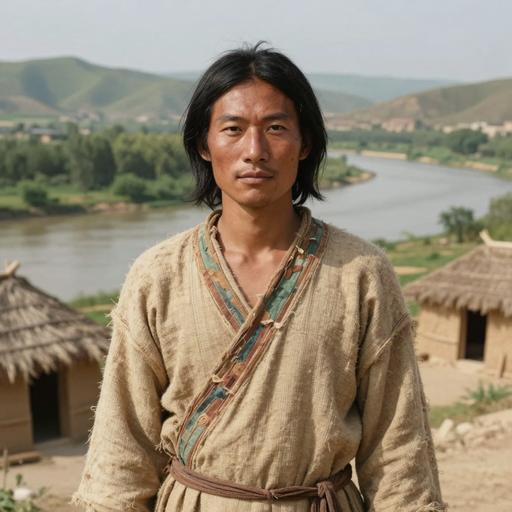
Portraits are AI-generated illustrations. Sample labels and accession IDs identify the reference records.

Portrait Sample Country Era Date Culture Y-DNA Match
AI-generated illustrative portrait of Present individual, Ho Chi Minh City, Vietnam (c. 2,000 CE)
Sample ID: HG01846
Vietnam present 2000 CE O1b1a1a1a1a1a1a1a1 Subclade
AI-generated illustrative portrait of Ancient Chinese Civilization individual, Henan province. Yingyang county. Wanggou village. Wanggou site, China (3,550-3,050 BCE)
Sample ID: WGM94
China Middle Neolithic Yellow River, China 3550 BCE - 3050 BCE Yellow River Culture O1b1a2 Subclade
PATERNAL LINEAGE · ANCIENT DNA

Ancient lineage evidence map

Follow parent clades toward this branch and explore where ancient carriers were found.

Loading ancient observations…

Markers are archaeological find locations. A dashed connector is an uncertain, proposed geographic transition between consecutive branches supported by multiple dated observations; it is not an exact travel route, birthplace or proof of direct descent. Parent-clade samples may belong to other descendant branches. Gaps remain where evidence is insufficient. Sample dates differ from haplogroup formation dates.

Reference profile

Carrier Distribution Map

Geographic distribution of 2 ancient DNA samples (direct and subclade carriers of O1B)

Subclade carrier
Time Period Filter
All Time Periods
Showing all samples
Reference profile

Temporal Distribution

Distribution of carriers across archaeological periods

Reference profile

Geographic Distribution

Counts by recorded sample country. These reflect the available reference selection, not population frequencies.

Reference profile

Country × Era Distribution

Compare recorded sample counts across countries and archaeological periods. Select a populated cell to inspect a sample.

Data

Data & Provenance

Source information and data quality

Last Updated 2026-06-17
Confidence Score 50/100
Coverage Low

Data Source

Classification, estimated dates and geographic context reflect the recorded reference data and may change as evidence is revised. Sample coverage is uneven; recorded locations and archaeological associations do not establish personal origin or cultural identity.

A haplogroup follows one maternal or paternal line. The branch prediction depends on which markers the DNA file contains. How our analysis works