Menu
Y-DNA Haplogroup • Paternal Lineage

Q1A

Y-DNA Haplogroup Q1A

~18,000 years ago
Central Asia / Siberia
2 subclades
10 ancient samples
Scroll to explore
Chapter I

The Story

The journey of Y-DNA haplogroup Q1A

Origins and Evolution

Y-DNA haplogroup Q1A is an early split within haplogroup Q that likely formed in Central Asian or Siberian populations during the terminal Pleistocene (roughly the last ~20 thousand years). It is nested under the broader Q1 clade and represents a set of downstream lineages that diversified as human groups adapted to high-latitude Eurasian environments. Genetic and ancient-DNA evidence indicates that some branches derived from Q1A remained in northern Eurasia (Central Asia, Siberia) while others contributed directly to the male founding lineages of the Americas during the Late Pleistocene / Early Holocene migrations across Beringia.

Subclades (if applicable)

Q1A comprises multiple downstream branches whose precise SNP names and nomenclature have varied across studies and testing providers; collectively these include lineages that are characteristic of Central Asian and Siberian populations as well as branches ancestral or equivalent to the Native American Q lineages. Among its notable downstream outcomes are the lineages that lead to the high-frequency Native American paternal clades observed in many Indigenous populations of North, Central and South America. Other subclades remained or expanded within Eurasia, producing the low-to-moderate frequencies of Q observed across parts of Central Asia, Siberia and at marginal levels in parts of Europe and West Asia.

Geographical Distribution

The modern distribution of Q1A is centered on Central Asia and Siberia, where several sublineages occur at moderate to high frequencies in some ethnic groups. Descendants of Q1A are also dominant or frequent among many Indigenous populations of the Americas (reflecting the Q-derived founding lineages that entered the continents). Low-frequency occurrences of Q1A or closely related Q branches are reported across parts of Eastern Europe, Scandinavia, the Middle East, South Asia and East Asia — typically reflecting historical gene flow, small founder effects, or later migrations.

Ancient DNA studies have recovered Q-related lineages in Upper Paleolithic and Holocene contexts across northern Eurasia and in early American archaeological contexts, supporting the deep time depth and role of Q1A-related lineages in peopling events.

Historical and Cultural Significance

Q1A and its descendant lineages are significant for reconstructing the peopling of northern Eurasia and the peopling of the Americas. The presence of Q-derived paternal haplotypes among many Indigenous American groups identifies Q as one of the primary founding Y-chromosome lineages of the Americas. In Eurasia, Q1A-descended lineages illuminate population structure in Siberia and Central Asia over the Late Pleistocene and Holocene and can be used to trace contacts between steppe, Siberian, and eastern Asian groups during prehistoric and historic periods. Where Q1A shows up at low frequency in Europe or West Asia, it often reflects long-distance movement, minor admixture, or rare founder events rather than major demographic replacement.

Conclusion

Haplogroup Q1A is an evolutionarily important subclade of Q with a Late Pleistocene origin in Central Asia/Siberia and a biogeographic legacy that connects northern Eurasian hunter-gatherer populations with the founding paternal lineages of Indigenous peoples of the Americas. Its modern and ancient distributions make it a valuable marker for studying migrations across Beringia, population continuity in Siberia and Central Asia, and episodic long-range gene flow into neighboring regions.

Key Points

  • Origins and Evolution
  • Subclades (if applicable)
  • Geographical Distribution
  • Historical and Cultural Significance
  • Conclusion
Chapter II

Tree & Relationships

Phylogenetic context and subclades

Evolution Path

This haplogroup's evolutionary journey from its earliest ancestor to the present.

Steps Haplogroup Age Estimate Archaeology Era Time Passed Immediate Descendants Tested Modern Descendants Ancient Connections
1 Q1A Current ~18,000 years ago 🏹 Mesolithic 18,000 years 2 54 10
2 Q1 ~20,000 years ago 🏹 Mesolithic 20,000 years 2 69 33
3 Q ~24,000 years ago 🦴 Paleolithic 24,000 years 2 153 4

Siblings (1)

Other branches from the same parent haplogroup

Chapter III

Where in the World

Geographic distribution and modern presence

Place of Origin

Central Asia / Siberia

Modern Distribution

The populations where Y-DNA haplogroup Q1A is found include:

  1. Indigenous peoples of the Americas
  2. Central Asian populations (e.g., Kazakhstan, Mongolia and neighboring groups)
  3. Siberian ethnic groups (including Arctic and sub-Arctic peoples)
  4. Some populations in Eastern Europe (low frequencies)
  5. Some populations in Scandinavia (low frequencies)
  6. Some populations in the Middle East (low frequencies)
  7. Parts of South Asia (low frequencies)
  8. Parts of East Asia (low to moderate frequencies)

Regional Presence

Central Asia High
Siberia & Northeast Asia High
North America (Indigenous) High
South & Central America (Indigenous) High
East Asia Low
Eastern Europe Low
Northern Europe / Scandinavia Low
Middle East Low
South Asia Low
CHAPTER IV

When in Time

Your haplogroup in the context of human history

~20k years ago

Last Glacial Maximum

Peak of the last ice age, populations isolated

~18k years ago

Haplogroup Q1A

Your Y-DNA haplogroup emerged in Central Asia / Siberia

Central Asia / Siberia
~10k years ago

Neolithic Revolution

Agriculture begins, settled communities form

~5k years ago

Bronze Age

Metalworking, writing, and early civilizations

~3k years ago

Iron Age

Iron tools, expanded trade networks

~2k years ago

Classical Antiquity

Greek and Roman civilizations flourish

Present

Present Day

Modern era

Your Haplogroup
Historical Era
Chapter IV-B

Linked Cultures

Ancient cultures associated with Y-DNA haplogroup Q1A

Cultural Heritage

These ancient cultures have been linked to haplogroup Q1A based on matching ancient DNA samples from archaeological excavations. The presence of this haplogroup in these cultures provides insights into the migrations and population movements of populations carrying this haplogroup.

Andronovo Culture Angara River Culture Avar Culture Caishichang Culture Lena River Culture Liushui Culture Murzikha Ragged Island Sidelkino Ust-Belaya Culture Ust-Ida Culture Yuzhny Oleny Ostrov
Culture assignments are based on archaeological context of ancient DNA samples and may represent regional associations during specific time periods.
Chapter V

Sample Catalog

4 direct carriers and 6 subclade carriers of haplogroup Q1A

10 / 10 samples
Portrait Sample Country Era Date Culture Y-DNA Match
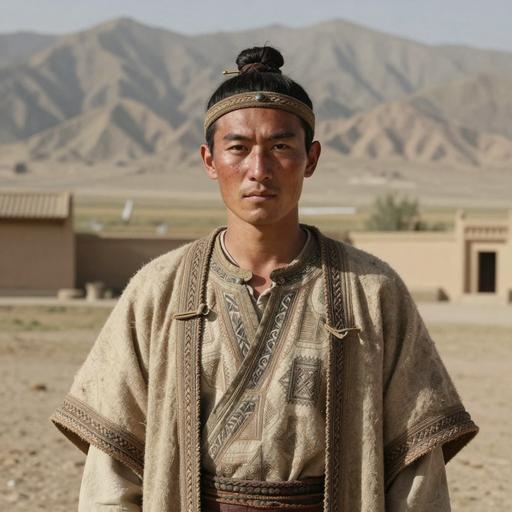
Portrait of ancient individual C3313 from China, dated 395 BCE - 209 BCE
C3313
China Iron Age Caishichang, Xinjiang, China 395 BCE - 209 BCE Caishichang Culture Q1a Direct
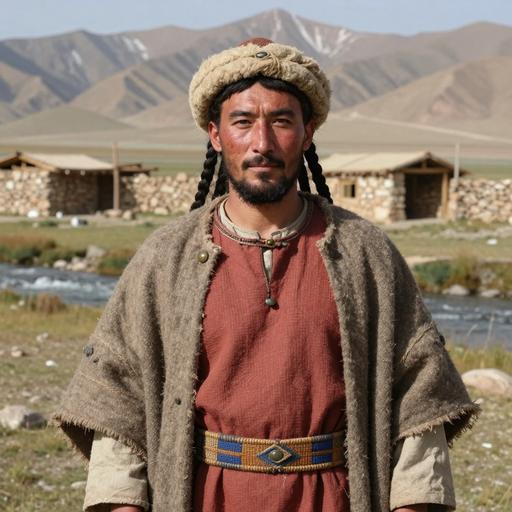
Portrait of ancient individual C1258 from China, dated 1042 BCE - 848 BCE
C1258
China Iron Age Liushui, Xinjiang, China 1042 BCE - 848 BCE Liushui Culture Q1a Direct
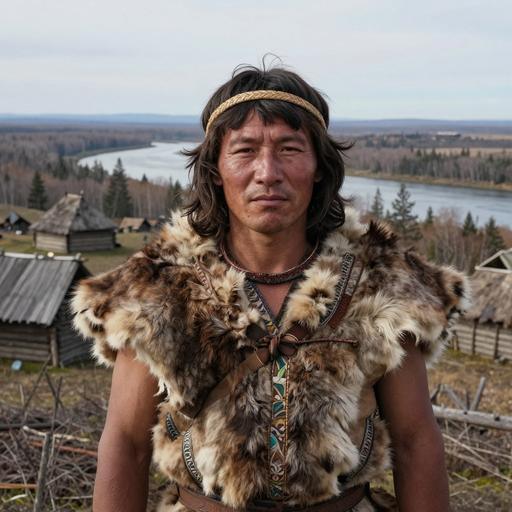
Portrait of ancient individual KPT004 from Russia, dated 1891 BCE - 1757 BCE
KPT004
Russia Early Bronze Age Lena River, Siberia, Russia 1891 BCE - 1757 BCE Lena River Culture Q1a Direct
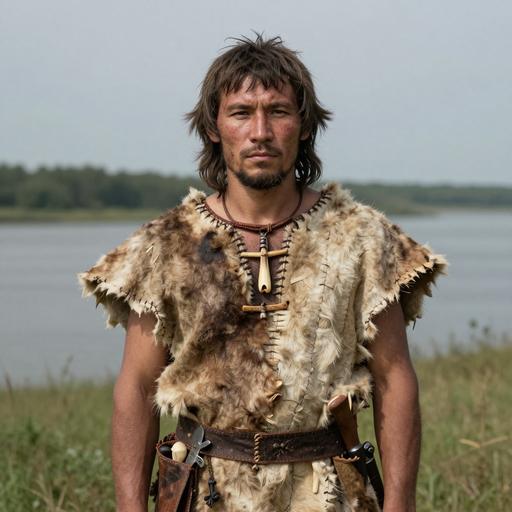
Portrait of ancient individual irk033 from Russia, dated 3011 BCE - 2876 BCE
irk033
Russia Neolithic Angara River, Russia 3011 BCE - 2876 BCE Angara River Culture Q1a Direct
Portrait of ancient individual C1192 from China, dated 733 BCE - 397 BCE
C1192
China Iron Age Jierzankale, Xinjiang, China 733 BCE - 397 BCE Jierzankale Culture Q1a2 Downstream
Portrait of ancient individual C1246 from China, dated 893 BCE - 795 BCE
C1246
China Iron Age Liushui, Xinjiang, China 893 BCE - 795 BCE Liushui Culture Q1a2 Downstream
Portrait of ancient individual C1639 from China, dated 1620 BCE - 1462 BCE
C1639
China Late Bronze Age Andronovo Culture Wutulan, Xinjiang, China 1620 BCE - 1462 BCE Andronovo Culture Q1a2 Downstream
Portrait of ancient individual KAG002 from Russia, dated 1878 BCE - 1697 BCE
KAG002
Russia Early Bronze Age Lena River, Siberia, Russia 1878 BCE - 1697 BCE Lena River Culture Q1a2 Downstream
Portrait of ancient individual irk057 from Russia, dated 2566 BCE - 2305 BCE
irk057
Russia The Angara River Broze Age Culture of Russia 2566 BCE - 2305 BCE Angara River Culture Q1a2 Downstream
Portrait of ancient individual DA355 from Russia, dated 3644 BCE - 3372 BCE
DA355
Russia Late Neolithic Ust-Ida, Russia 3644 BCE - 3372 BCE Ust-Ida Culture Q1a2 Downstream
Chapter VI

Carrier Distribution Map

Geographic distribution of 10 ancient DNA samples (direct and subclade carriers of Q1A)

Direct carrier Subclade carrier
Time Period Filter
All Time Periods
Showing all samples
Chapter VII

Temporal Distribution

Distribution of carriers across archaeological periods

Chapter VIII

Geographic Distribution

Distribution by country of origin (direct and subclade carriers shown by default)

Chapter IX

Country × Era Distribution

Cross-tabulation of carrier countries and archaeological periods (direct and subclade carriers shown by default)

Data

Data & Provenance

Source information and data quality

Last Updated 2026-02-16
Confidence Score 50/100
Coverage Low
Data Source

We use the latest phylotree for YDNA haplogroup classification and data.