Menu
Currency
Y-DNA Haplogroup • Paternal Lineage

R1a

Y-DNA Haplogroup R1a

~22,000 years ago
Eurasian Steppe
2 subclades
37 ancient samples
Scroll to explore
Chapter I

The Story

The journey of Y-DNA haplogroup R1a

Origins and Evolution

Y-DNA haplogroup R1a is a prominent subclade of R1, itself a descendant of the broader R branch of the Y-chromosome phylogeny. It likely emerged in Eurasia during the late Upper Paleolithic or early Mesolithic, with most phylogenetic and ancient-DNA studies placing its diversification around the Last Glacial Maximum/post-glacial period. While the exact geographic cradle remains debated, the strongest evidence points to the Eurasian steppe and adjacent forest-steppe zones as a major center of early R1a expansion.

R1a is especially notable for its deep internal structure, with major descendant branches that expanded in different historical contexts. Its present-day distribution reflects both ancient demographic expansions and more recent founder effects, making it one of the most informative paternal lineages for tracing population history across northern and central Eurasia.

Subclades

R1a includes several important downstream branches, with R1a-Z282 and R1a-Z93 being the most widely discussed major lineages. These two branches are often associated with different broad geographic histories:

  • R1a-Z282 is most frequent in Eastern Europe and parts of Northern/Central Europe.
  • R1a-Z93 is more common in Central Asia, South Asia, and parts of West and South Asia.

Other notable sublineages contribute to regional patterns in populations such as Slavs, Balts, Iranians, Indo-Aryan speakers, and some Uralic- and Turkic-speaking groups, though linguistic affiliation and haplogroup are not identical and should not be conflated.

Geographical Distribution

Today, R1a reaches high frequencies in many populations across Eastern Europe, including Poles, Ukrainians, Belarusians, Russians, and some Baltic and Balkan groups. It is also widespread in South Asia, where it is particularly common in some Indo-Aryan-speaking populations, and in Central Asia, where it appears among several populations with complex steppe-related ancestry.

R1a is also found at lower frequencies in Scandinavia, Western Europe, West Asia, and Siberia. Its distribution is best understood as the result of repeated expansions from a Eurasian source region, followed by regional founder effects, elite dominance in some historical settings, and later admixture.

Historical and Cultural Significance

Ancient DNA studies have linked R1a to populations associated with the Pontic-Caspian steppe and the spread of Corded Ware-related ancestry into much of northern and eastern Europe. Later expansions of R1a are also relevant to the history of Andronovo, Sintashta, and related Bronze Age steppe cultures, which are frequently discussed in relation to Indo-Iranian language dispersals.

In Europe, especially in the east, R1a became common through prehistoric and early historic population processes that shaped Slavic and Baltic regional histories. In South Asia, R1a-Z93 lineages are often studied in the context of Bronze Age steppe ancestry and later demographic movements, though the haplogroup does not by itself determine language, ethnicity, or culture.

Population Genetics Perspective

From a population genetics standpoint, R1a is a classic example of a lineage that experienced rapid expansions from a relatively small ancestral pool. This pattern is visible in its high regional frequency, star-like substructure in some branches, and strong founder effects in certain populations. The haplogroup's broad spread across Eurasia makes it one of the most important paternal markers for reconstructing prehistoric mobility, while its internal diversity helps distinguish between ancient dispersals and more recent demographic events.

Conclusion

Y-DNA haplogroup R1a is a major Eurasian paternal lineage with deep roots in prehistoric population history and major expansions during the Bronze Age and later periods. Its widespread distribution across Eastern Europe, Central Asia, and South Asia, together with its rich subclade structure, makes it one of the most studied and historically significant Y-chromosome haplogroups.

Key Points

  • Origins and Evolution
  • Subclades
  • Geographical Distribution
  • Historical and Cultural Significance
  • Population Genetics Perspective

Chapter II

Tree & Relationships

Phylogenetic context and subclades

Evolution Path

This haplogroup's evolutionary journey from its earliest ancestor to the present.

Steps Haplogroup Age Estimate Archaeology Era Time Passed Immediate Descendants Tested Modern Descendants Ancient Connections
1 R1a Current ~22,000 years ago 🏹 Mesolithic 22,000 years 2 2,286 37
Chapter III

Where in the World

Geographic distribution and modern presence

Place of Origin

Eurasian Steppe

Modern Distribution

The populations where Y-DNA haplogroup R1a is found include:

  1. Poles, Ukrainians, Belarusians, and Russians
  2. Baltic populations such as Lithuanians and Latvians
  3. Scandinavians, especially in Sweden and Norway
  4. Some Central Asian populations, including Kazakhs and Kyrgyz
  5. Many Indo-Aryan-speaking populations in South Asia
  6. Some Iranian-speaking groups and other West Eurasian populations
  7. Selected Siberian and Uralic-speaking populations

Regional Presence

Eastern Europe High
South Asia High
Central Asia High
Northern Europe Moderate
West Asia Low
Siberia Low
CHAPTER IV

When in Time

Your haplogroup in the context of human history

~22k years ago

Haplogroup R1a

Your Y-DNA haplogroup emerged in Eurasian Steppe

Eurasian Steppe
~20k years ago

Last Glacial Maximum

Peak of the last ice age, populations isolated

~10k years ago

Neolithic Revolution

Agriculture begins, settled communities form

~5k years ago

Bronze Age

Metalworking, writing, and early civilizations

~3k years ago

Iron Age

Iron tools, expanded trade networks

~2k years ago

Classical Antiquity

Greek and Roman civilizations flourish

Present

Present Day

Modern era

Your Haplogroup
Historical Era
Chapter IV-B

Linked Cultures

Ancient cultures associated with Y-DNA haplogroup R1a

Cultural Heritage

These ancient cultures have been linked to haplogroup R1a based on matching ancient DNA samples from archaeological excavations. The presence of this haplogroup in these cultures provides insights into the migrations and population movements of populations carrying this haplogroup.

Corded Ware Don-Mariupol Culture Estonian Bronze Age Maikop Culture Mesolithic Ukrainian Minino Northern Ural Culture Roman Provincial Saxon Schortens Veretye Viking
Culture assignments are based on archaeological context of ancient DNA samples and may represent regional associations during specific time periods.
Chapter V

Sample Catalog

8 direct carriers and 29 subclade carriers of haplogroup R1a

37 / 37 samples
Portrait Sample Country Era Date Culture Y-DNA Match
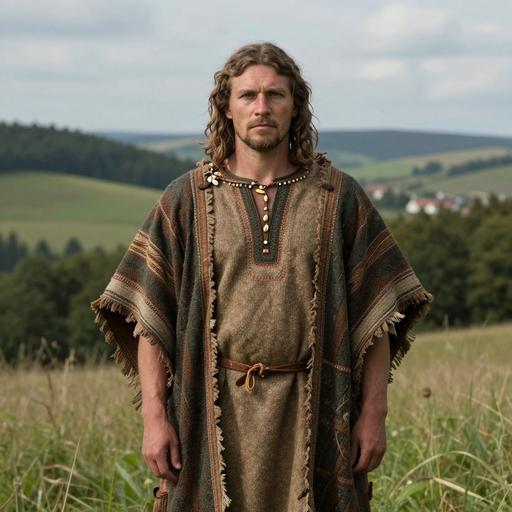
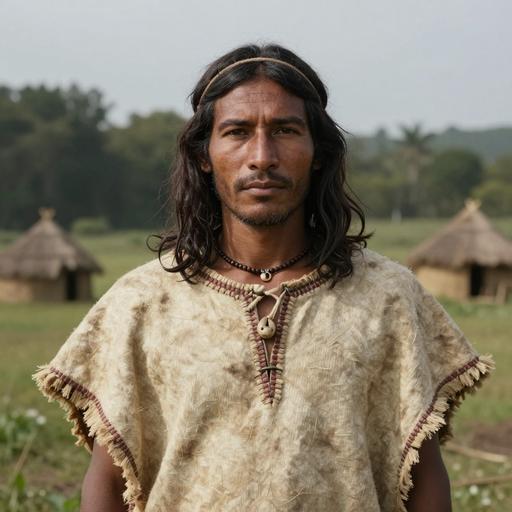
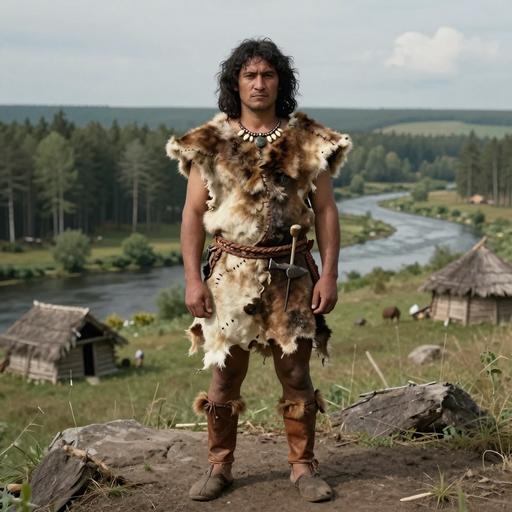
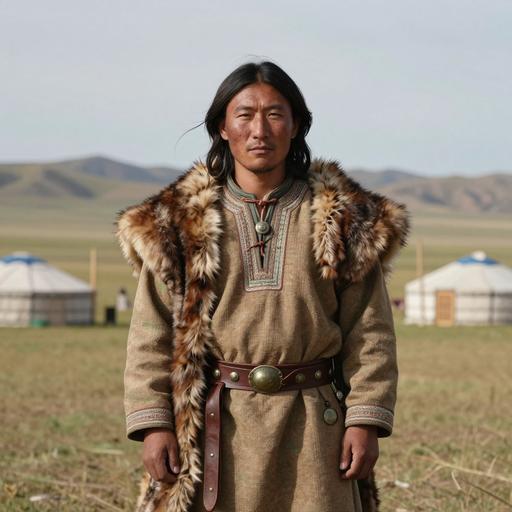
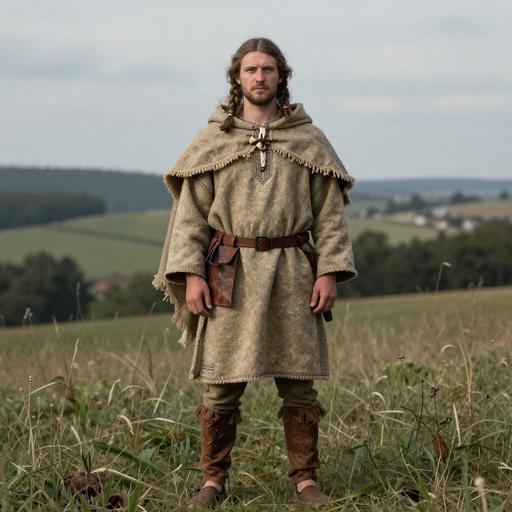
Portrait of ancient individual I15498 from Serbia, dated 1 CE - 400 CE
I15498
Serbia Roman Serbia 1 CE - 400 CE Roman Provincial R1a Direct
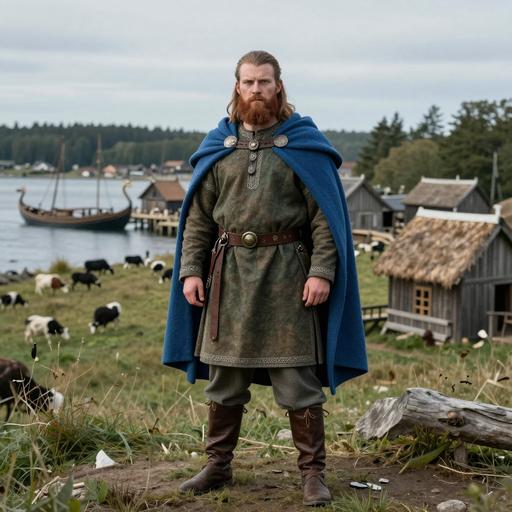
Portrait of ancient individual SRS003 from Germany, dated 700 CE - 900 CE
SRS003
Germany Saxon Early Medieval Schortens, Germany 700 CE - 900 CE Saxon Schortens R1a Direct
Portrait of ancient individual TRM001 from Czech Republic, dated 2900 BCE - 2500 BCE
TRM001
Czech Republic Corded Ware Culture, Bohemia, Czech Republic 2900 BCE - 2500 BCE Corded Ware R1a Direct
Portrait of ancient individual NEO210 from Russia, dated 5664 BCE - 5540 BCE
NEO210
Russia Don Culture of Northern Mariupol 5664 BCE - 5540 BCE Don-Mariupol Culture R1a Direct
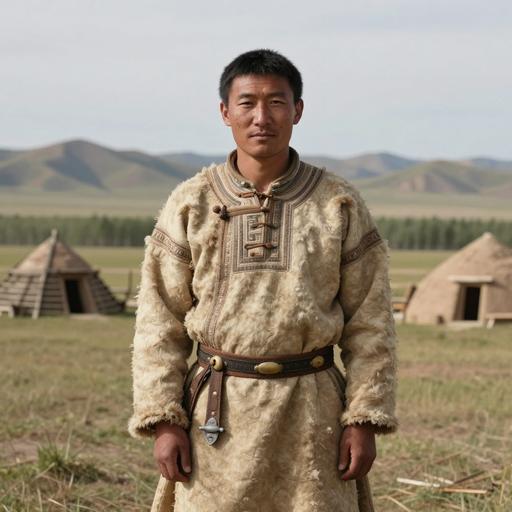
Portrait of ancient individual ukr102 from Ukraine, dated 6471 BCE - 6397 BCE
ukr102
Ukraine Mesolithic Ukraine 6471 BCE - 6397 BCE Mesolithic Ukrainian R1a Direct
Portrait of ancient individual NEO558 from Russia, dated 6472 BCE - 6246 BCE
NEO558
Russia Veretye culture 6472 BCE - 6246 BCE Veretye R1a Direct
Portrait of ancient individual MN2002 from Russia, dated 8799 BCE - 8626 BCE
MN2002
Russia Minino Culture 8799 BCE - 8626 BCE Minino R1a Direct
Portrait of ancient individual NEO202 from Russia, dated 9858 BCE - 9331 BCE
NEO202
Russia Veretye culture 9858 BCE - 9331 BCE Veretye R1a Direct
Portrait of ancient individual POP23 from Croatia, dated 261 CE - 415 CE
POP23
Croatia Roman Period Popova, Croatia 261 CE - 415 CE Popova Settlement R1a1a1b2a2b1-F1345 Downstream
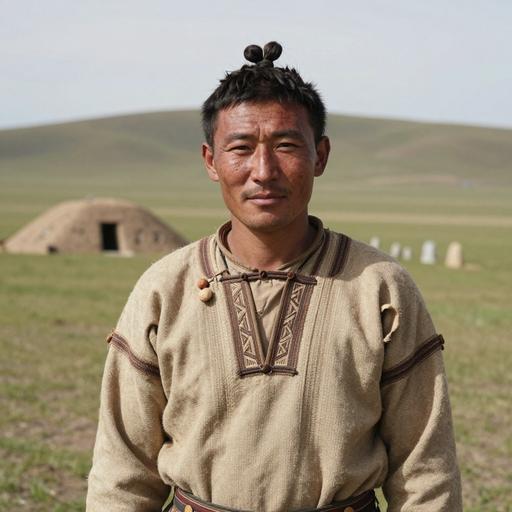
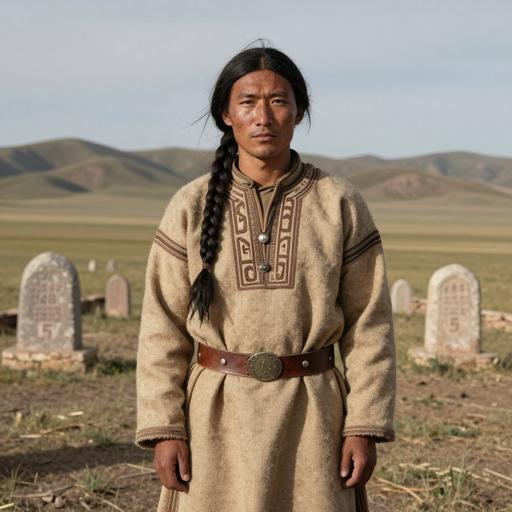
Portrait of ancient individual I6224 from Mongolia, dated 370 BCE - 197 BCE
I6224
Mongolia Early Iron Age Sagly Culture 4, Mongolia 370 BCE - 197 BCE Sagly Culture R1a1a1b2a2-Z2121 Downstream
Chapter VI

Carrier Distribution Map

Geographic distribution of 37 ancient DNA samples (direct and subclade carriers of R1a)

Direct carrier Subclade carrier
Time Period Filter
All Time Periods
Showing all samples
Chapter VII

Temporal Distribution

Distribution of carriers across archaeological periods

Chapter VIII

Geographic Distribution

Distribution by country of origin (direct and subclade carriers shown by default)

Chapter IX

Country × Era Distribution

Cross-tabulation of carrier countries and archaeological periods (direct and subclade carriers shown by default)

Data

Data & Provenance

Source information and data quality

Last Updated 2026-06-17
Data Source

We use the latest phylotree for YDNA haplogroup classification and data.