


The Genetic Landscape of Northeastern Iberian Communities from the Early to Late Iron Age
Daniel R. Cuesta-Aguirre, Xavier Roca-Rada, Beatrice Di Biase et al.
Visual Summary
A visual snapshot of this publication's key findings at a glance
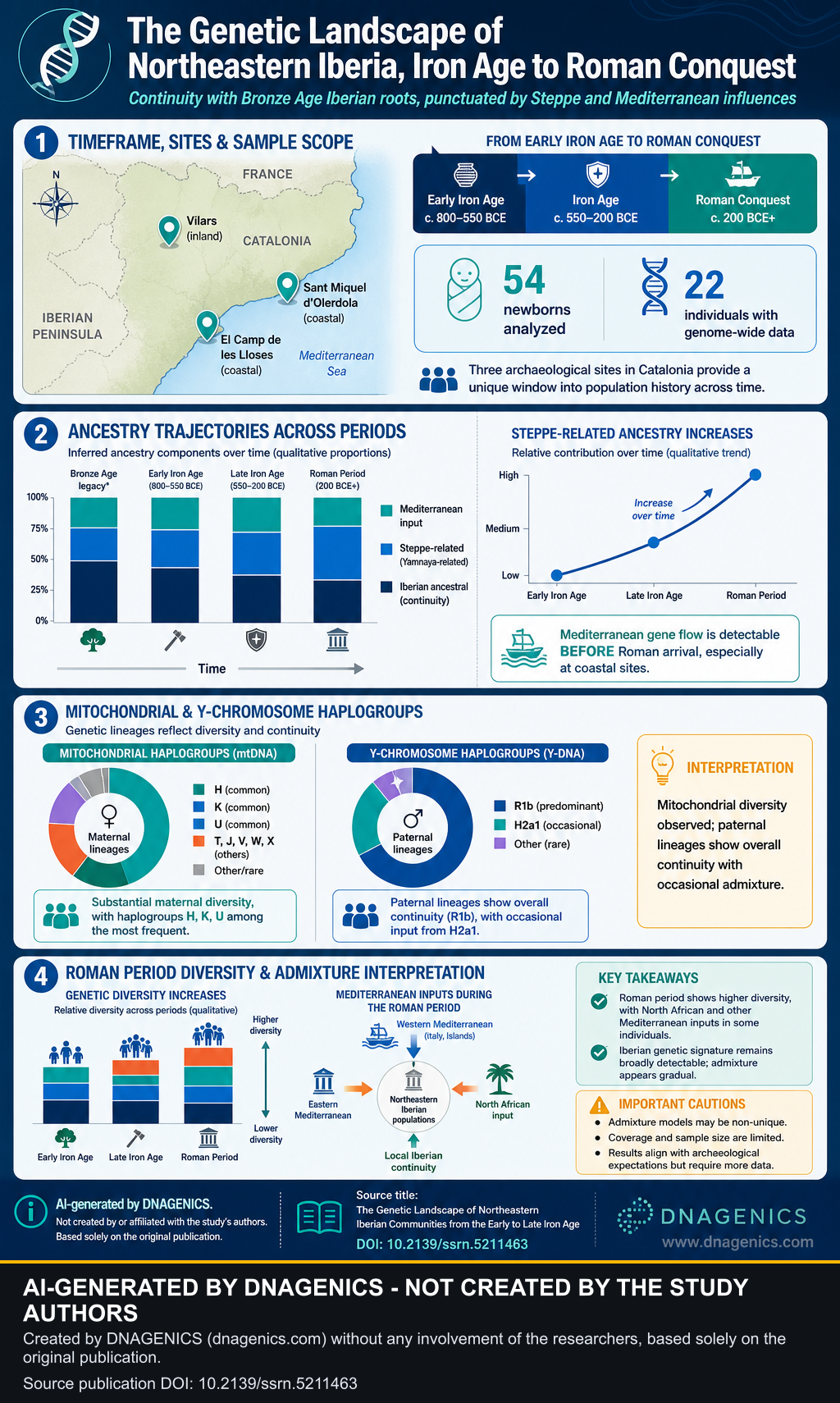
- This infographic was AI-generated.
- It was created by DNAGENICS, without any involvement of the researchers, based solely on the original publication.
- The researchers involved in the study have nothing to do with the creation of this infographic and are not associated with, and do not endorse, it.
Publication Details
Comprehensive information about this research publication
Abstract
Summary of the research findings
During the Iron Age (800-100 BCE), the Iberian Peninsula was home to diverse cultural groups. Indigenous Iberians in the eastern coastal regions and Celtic-speaking populations in central and western regions interacted with Mediterranean civilizations, including the Phoenicians and Greeks during the Early Iron Age, and later Punics/Carthaginians and Romans. Iberian culture developed along the Mediterranean coast around the 6th century BCE, flourishing between 450-200 BCE. While archaeological evidence is abundant, genetic studies remain scarce due to predominant cremation practices. However, the tradition of burying newborns beneath houses provides a unique opportunity for paleogenomic analysis. This study investigates the genetic profile of northeastern Iberians from the Early to Late Iron Age by analyzing 54 newborns from three sites: the fortress of Vilars (775–325 BCE), Sant Miquel d’Olèrdola (350–200 BCE), and El Camp de les Lloses (125 BCE–50 CE). More than 20k SNPs from the 1240k panel are reported for 22 individuals, and mitochondrial data for a further 9 individuals. Our findings support the archaeological hypothesis that Iberians emerged from local Bronze Age groups, evolving gradually through the Iron Age, with increased Mediterranean ancestry. This genetic continuity persisted until the Late Iron Age and the arrival of the Romans. From then on, the new genetic influences led to a more diverse Iberian-Roman population alongside significant social and political transformations. This study provides the first paleogenomic insights into the enduring genetic legacy of Iberian communities, highlighting the complex interplay between cultural and genetic continuity in the northeastern Iberian Peninsula.
Listen to This Research
A two-host conversation exploring the key findings of this publication
The Genetic Landscape of Northeastern Iberian Communities from the Early to Late Iron Age
Two-Host ConversationAI-Generated Summary
AI-generated by DNAGENICSIndependent AI summary of ancestry and genetic findings from the published study
Important: This summary is AI-generated by DNAGENICS for informational purposes only. It was not created by, affiliated with, or endorsed by the researchers behind the original publication, and is based solely on that published research. It may contain errors or omissions. DNAGENICS disclaims all liability for any inaccuracies or consequences arising from use of this information. Verify all information against the original publication. This is not professional scientific review or medical advice.