Ancient Central Europe Index
- Shared DNA segments50%
- Ancestry-composition distance31.3%
- Best-fit population model18.8%
One similarity score built from three kinds of evidence, with every component shown in the report.
From early farmers to medieval Central Europe
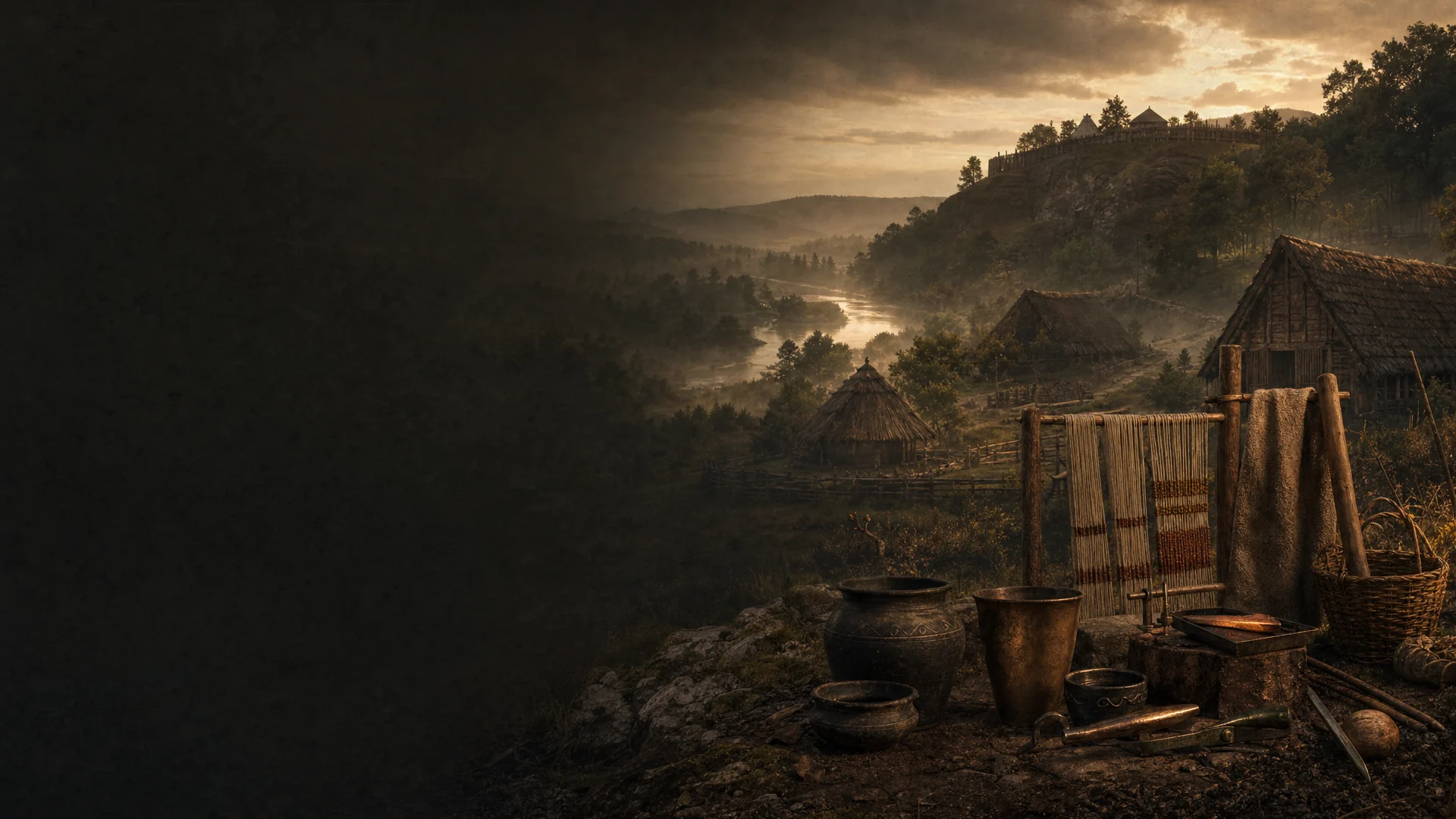
Compare your DNA with ancient reference individuals from Germany, Austria, Switzerland, Czechia, Slovakia, Hungary, and Slovenia. Explore genetic similarity across farming, Bronze Age, Iron Age, Roman-era, and early medieval contexts without treating a statistical match as proof of direct descent.
Around 5,500 BCE, the first Linear Pottery farmers pushed east along the Danube and its tributaries, bringing cereal cultivation and permanent villages to a landscape long held by post-glacial foraging communities.
By the late third millennium BCE, Corded Ware herders and then Bell Beaker groups reshaped much of the region's gene pool, a transition detected in ancient DNA as one of the largest population turnovers ever documented in Europe. Their descendants built the Unetice bronze workshops of Bohemia and Saxony-Anhalt, whose princely burials, like the Leubingen tumulus, reveal Bronze Age Central Europe's earliest social hierarchies.
Iron Age communities at the crossroads of the Hallstatt, Vekerzug, and La Tene traditions left cemeteries across Slovakia and Bohemia that mix inhumation and cremation practice. When Rome extended its frontier to the Danube, provincial communities settled along the limes, leaving material culture that blended local and imperial traditions.
In the centuries after Rome's frontier receded, Avar-period cemeteries in the Vienna basin and Lombard-period burials near Lake Balaton document a landscape in motion, while towns like Nitra grew into early centers of Slavic-speaking power in the middle Danube. From Linear Pottery farmsteads to early medieval river valleys, these groups remain reference populations for genetic similarity, not a personal record of descent.
River valleys, bronze workshops, and the Roman frontier are reference contexts. A match shows genetic similarity, not descent.
Post-glacial hunter-gatherer communities who occupied Central Europe's rivers and forests before farming arrived.
Central Europe's first farming communities, spreading the Linear Pottery tradition along the Danube corridor.
Copper Age communities whose herding lifeways drove one of the largest population turnovers detected in ancient DNA.
Bronze Age societies whose workshops and princely burials, like the Leubingen tumulus, reveal early social hierarchy.
Iron Age communities at the crossroads of the Hallstatt, Vekerzug, and La Tene cultural traditions.
Provincial communities who lived along the Danube limes, where Rome's frontier met Central Europe's interior.
Early medieval communities, from Avar-period cemeteries near Vienna to the rise of Slavic centers like Nitra.
Not just percentages. A journey into your genetic similarity to the peoples of ancient Central Europe.
We scan your autosomal DNA in short segments and compare each one against every ancient Central European genome using identical-by-state (IBS) segment matching, weighting longer, rarer shared segments more heavily.
A panel-specific 0-100 statistical similarity score weighting shared-segment evidence at 50%, ADMIXTURE distance at 31.25%, and Monte Carlo fit at 18.75%. It is not an ancestry percentage or proof of direct descent.
The fixed regional ADMIXTURE reference panel defines stable PCA axes; your kit is projected afterward without moving the reference samples.
See the real archaeological sites where your genetic matches were discovered, from Danube valley farmsteads to Bronze Age burial mounds and Iron Age cemeteries.
Your genetic affinity to each era: Mesolithic, Neolithic, Copper Age, Bronze Age, Iron Age, Roman Period, and Medieval, all quantified.
Meet the ancient individual whose DNA is most similar to yours. Learn their era and their place in the history of Central Europe.
Our AI assistant provides personalized explanations of your results, placing your genetic connections in historical and archaeological context.
Discover connections to specific areas: the Danube corridor, the Bohemian basin, the Carpathian Basin, the Alpine foreland, and the wider Central European landscape.
Find ancient Central European individuals who share your mtDNA maternal or Y-DNA paternal lineage, a shared lineage branch traced through hundreds of generations.
Understand whether your strongest signal traces to the earliest Mesolithic foragers, the Linear Pottery farmers, the Corded Ware herders, or later Iron Age and medieval populations.
Connect with real excavated sites like Asparn-Schletz, the Leubingen tumulus, the Chotin Iron Age cemetery, and the early Slavic center of Nitra.
Your report includes an interactive map showing the exact archaeological sites across Central Europe where your genetic matches were discovered.
Explore the map preview below, or search the complete reference panel in the table. Genetic similarity to these individuals does not mean they are your real ancestors.
Map preview This map shows a preview of 150 of 3498 reference individuals used in this report. Search the complete list in the table below.
| Sample ID | Name | Location | Era | mtDNA | Y-DNA |
|---|
Loading reference individuals…
No reference individuals match your search.
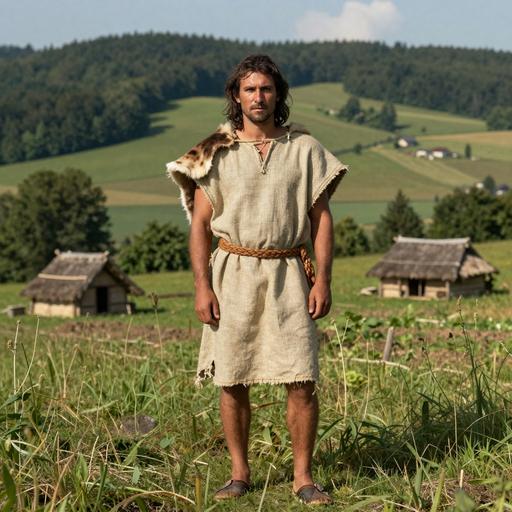
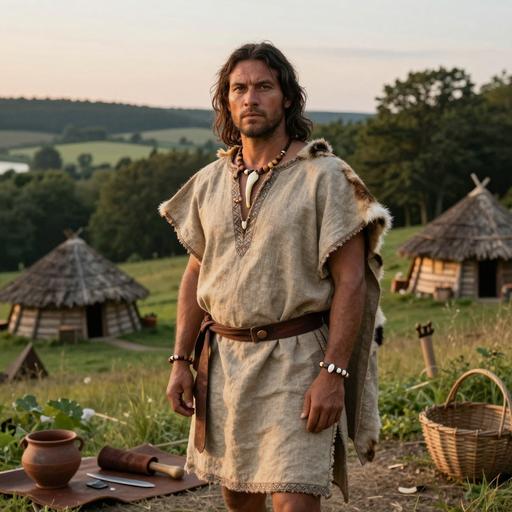
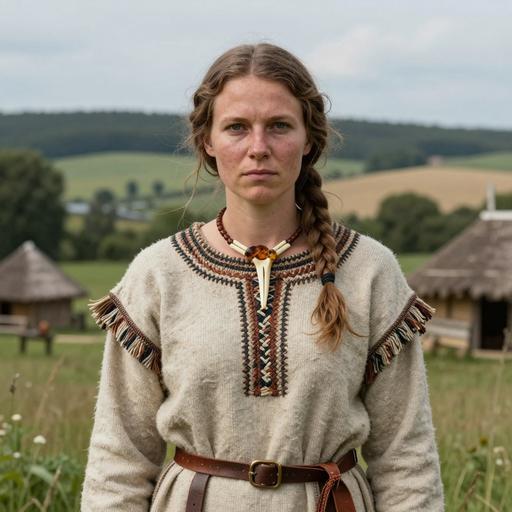
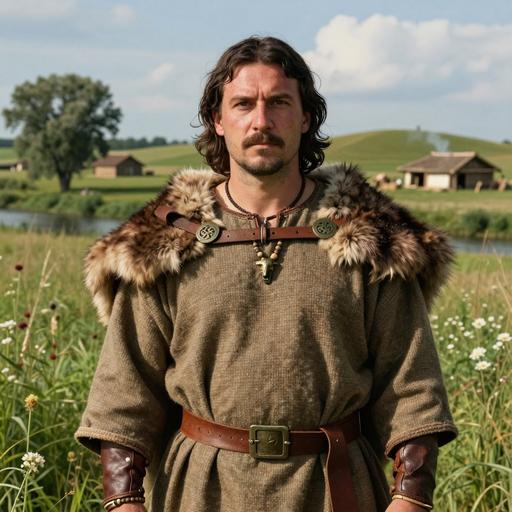
This portrait is an AI-generated speculative reconstruction and may be historically or biologically inaccurate. It is not a photograph of the individual.
AI-generated reconstructions of ancient reference individuals from burial sites across Central Europe. Genetic similarity to them is not proof of descent.
5209 BCE - 4998 BCE
3363 BCE - 3029 BCE
2617 BCE - 2461 BCE
1423 BCE - 1268 BCE
401 BCE - 208 BCE
412 CE - 604 CE
630 CE - 670 CE
350 CE - 450 CE
Ancient DNA, modern analysis. Advanced algorithms, transparent results.
We scan your autosomal DNA in short segments and compare each one against every ancient Central European genome using identical-by-state (IBS) segment matching, weighting longer, rarer shared segments more heavily.
Advanced ADMIXTURE algorithms compare your genetic profile against reference populations across ancestral components, providing exceptional resolution for Ancient Central European genetic similarity analysis.
The fixed regional ADMIXTURE reference panel defines stable PCA axes; your kit is projected afterward without moving the reference samples.
Monte Carlo simulation methods provide robust statistical estimates of your genetic similarity to Central Europe with confidence intervals.
Our reference panel includes samples from Germany, Austria, Switzerland, Czechia, Slovakia, Hungary, and Slovenia, spanning roughly 8,000 years of Central European history.
All ancient DNA samples come from peer-reviewed academic publications, with full citations and links provided in your report. Science you can trust.


Full compliance with European data protection regulations
Bank-level security for all your genetic data
Delete your data anytime. No questions asked.
See what awaits you in your personalized Ancient Central Europe report.
Sample figures shown below are illustrative examples, not a real user's results.
Preview a Live Demo ReportOne similarity score built from three kinds of evidence, with every component shown in the report.
Similarity to reference individuals from each era, from earliest to latest.
Cultures
Regions
Which archaeological cultures and present-day regions your closest reference individuals come from.
Ancient individuals on the same maternal or paternal lineage branch, each labelled by the kind of evidence linking them to you.
Notable sites where reference samples were excavated, with historical context and periods of use.
Reference-fixed PCA chart: the Ancient Central Europe reference panel defines the axes, and your sample is projected onto them.
All figures above are illustrative example values, not your results. Every report also includes print, CSV export and a shareable summary card.
Compare your DNA with ancient reference individuals from the river valleys of Central Europe.
River valleys, bronze workshops, and the Roman frontier frame the reference record.
Secure payment · GDPR compliant · Your data stays yours
DNA Genics has been building ancestry and DNA analysis reports since 2018. Our reports come from years of work with our own reference panels, calculators and ancient-genome comparisons, developed and reviewed by our team. They are not generated on the fly or assembled as a side project. We use AI only in clearly labelled optional features.
Trusted by 200,000+ DNA Explorers
Real, verified reviews from people who have explored their genetic similarity with DNAGENICS
Great reports like the "Human Leukocyte Antigen" Report. The Deep Ancient Reports with Samples are very helpful to understand the Results and own Heritage. I like the Admixture Studio and the powerful G25 Studio.
DNAGenics is an excellent company. It provides necessary services for those of us who need help understanding and working with complex genetic information. They are efficient in their communications. I recommend them without hesitation.
Excellent company with helpful customer support that always respond very quickly. There are always new features and the purchase packs include a lot of admixture reports and G25 coordinates. Highly recommend.