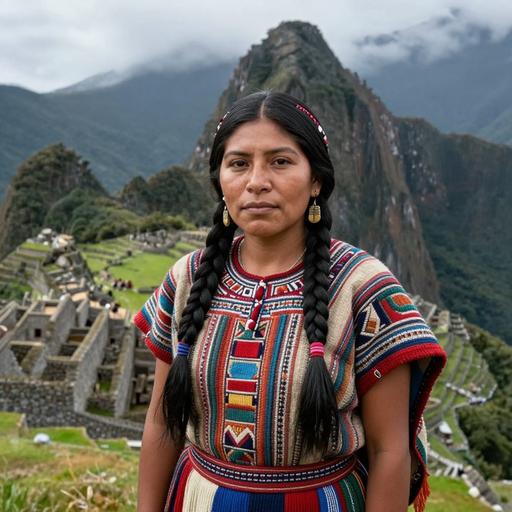
The Story
The journey of mtDNA haplogroup B2Y
Origins and Evolution
mtDNA haplogroup B2Y is a derived branch of the Native American lineage B2, itself ultimately derived from East/Southeast Asian haplogroup B. Based on its phylogenetic position within B2 and the known timing of B2 diversification, B2Y most likely arose in the Early Holocene after initial Beringian-derived founder populations entered the Americas. Molecular-clock estimates and the geographic concentration of related lineages suggest an origin around ~12 kya, consistent with rapid post-glacial expansions and local differentiation in Central or northern South America rather than at the Beringian source.
B2Y is best interpreted as a regional subclade that formed as populations moved southward and became isolated by geography, ecological zones, or cultural boundaries. Its limited differentiation relative to deeper B2 diversity implies a post‑founder expansion rather than an independent pre‑Beringian origin.
Subclades (if applicable)
At present B2Y is described as a named subclade within B2; internal substructure (further named subclades) depends on high-resolution complete mtDNA sequencing and published phylogenies. Where further sublineages exist, they are expected to show fine-grained geographic patterning (for example, Andean versus Amazonian branches) consistent with micro‑regional isolation and demographic events in the Holocene. Ancient DNA sampling remains sparse, so some subclades may be identified first in modern populations and later confirmed in archaeological contexts.
Geographical Distribution
B2Y shows its highest frequency and diversity in Central America and northern to central South America, particularly among indigenous groups with deep continuity in those regions. Frequencies decline to the north, where B2 in general occurs at lower and more localized frequencies in parts of North America. B2Y is also detected regionally in coastal and island populations of the Caribbean and eastern Pacific where pre‑Columbian maritime networks connected communities, though at lower frequencies. True occurrences of B2Y outside the Americas are rare and, when observed, are usually attributable to recent historic admixture rather than ancient trans-Pacific connections.
The lineage has been identified in at least one published ancient DNA sample in archaeological contexts, supporting its presence in pre‑contact populations and providing direct temporal depth to its regional history.
Historical and Cultural Significance
As a regional offshoot of the B2 founder lineage, B2Y is informative for reconstructing post‑glacial demographic processes in the Americas: localized population expansions, founder effects during southward dispersal, and persistence of maternal lineages through diverse cultural trajectories. Its distribution can help distinguish coastal versus interior migration routes and can mark continuity or replacement events in archaeological sequences (for example, preceramic coastal foragers versus later sedentary agricultural groups).
In modern population genetics and forensic contexts, B2Y contributes to the maternal genetic signature of many indigenous and admixed communities across Central and South America. However, care is required in interpretation because maternal lineages represent a single genealogical line and can be affected strongly by drift, founder events, and historic admixture.
Conclusion
B2Y is a geographically informative subclade of the Native American mtDNA haplogroup B2 that likely originated in the Early Holocene within Central to northern South America. It reflects local differentiation after the initial peopling of the Americas and is most useful for studying regional demographic history, migration routes, and continuity of maternal lineages in pre‑ and post‑contact times. Ongoing complete mitogenome sequencing and expanded ancient DNA sampling will refine the internal branching, age estimates, and precise archaeological correlations for B2Y.
Key Points
- Origins and Evolution
- Subclades (if applicable)
- Geographical Distribution
- Historical and Cultural Significance
- Conclusion