Menu
mtDNA Haplogroup • Maternal Lineage

B4B1A2

mtDNA Haplogroup B4B1A2

~9,000 years ago
Coastal East / Southeast Asia
2 subclades
Scroll to explore
Chapter I

The Story

The journey of mtDNA haplogroup B4B1A2

Origins and Evolution

mtDNA haplogroup B4B1A2 is a downstream branch of B4B1A, itself derived from the broader B4 lineage that has deep roots in East and Southeast Asia. Based on phylogenetic position and coalescent estimates for B4B1A, B4B1A2 likely arose in coastal or island contexts of East/Southeast Asia during the early Holocene (around ~9 kya). Its emergence fits a pattern seen across maternal lineages that became associated with maritime-adapted populations in the Holocene, when coastal resource exploitation and later seafaring expanded in the region.

Mitochondrial lineages such as B4B1A2 reflect female-mediated demographic processes — notably, local continuity of coastal groups and subsequent incorporation into wider dispersals linked to Austronesian expansion. The phylogenetic placement as a B4 subclade connects it to a set of haplotypes that radiated both within Island Southeast Asia (ISEA) and into Near Oceania at varying intensities.

Subclades

B4B1A2 sits beneath B4B1A in the mtDNA tree and may contain further downstream sublineages detectable in high-resolution datasets. Published population surveys and population-scale mitogenomes identify small, geographically structured subbranches of B4-derived lineages across Taiwan, the Philippines, eastern Indonesia, and parts of Near Oceania. These downstream branches are typically of low frequency and show localized distributions, consistent with founder effects, drift in island populations, and sex-biased migration associated with maritime colonization.

Geographical Distribution

B4B1A2 is patchily distributed with a coastal/island focus rather than being widespread on the continental interior. Modern occurrences are concentrated in:

  • Island Southeast Asia (Philippines, eastern Indonesia, Borneo, Sulawesi)
  • Indigenous Taiwanese Austronesian-speaking groups
  • Coastal communities in mainland Southeast Asia and coastal China at low to moderate frequencies
  • Peripheral Pacific island populations and Near Oceania contact zones (including some Lapita-influenced areas) at low frequencies

The haplogroup is uncommon in inland continental populations but has been detected at low levels in some Han Chinese, Korean, and Japanese samples, consistent with long-distance coastal contacts and later historical movement. Ancient DNA databases include a small number of archaeological individuals (two samples in the referenced database) where B4B1A2-type mitogenomes were recovered, supporting the haplogroup's presence in archaeological coastal and island contexts.

Historical and Cultural Significance

B4B1A2 is best interpreted in the context of maritime Neolithic processes and the Austronesian dispersal. While not the defining "Polynesian motif" (that role is attributed mainly to B4a1a1 and its derivatives), B4B1A2 tracks with coastal communities that participated in early phases of seafaring expansion and later Austronesian movements out of Taiwan and through Island Southeast Asia.

  • Austronesian expansion: B4B1A2 appears among indigenous Taiwanese and downstream Island Southeast Asian populations, consistent with female lineages moving with or being incorporated into Austronesian-speaking groups during the mid-to-late Holocene.
  • Lapita / Near Oceanic contacts: Low-frequency occurrences in Near Oceania and Lapita-associated regions indicate that B4B1A2 could have been part of complex admixture zones at the western edge of the Pacific settlement sphere.

Genetically, B4B1A2 often co-occurs in populations that carry other East/Southeast Asian mtDNA lineages (e.g., F1a, other B4 subclades) and shows complementary patterns to paternal Y-DNA lineages commonly associated with Austronesian speakers (notably O1a-M119 and related O clades), reflecting sex-biased demographic processes during maritime expansions.

Conclusion

B4B1A2 is a regional, maritime-associated maternal subclade whose distribution and phylogenetic placement tie it to coastal East and Island Southeast Asia and to the broader Austronesian and Near Oceanic interaction sphere. It is relatively low frequency and geographically patchy, with evidence from both modern population surveys and a small number of ancient samples supporting a Holocene coastal origin and later involvement in seafaring dispersals and localized island histories.

Key Points

  • Origins and Evolution
  • Subclades
  • Geographical Distribution
  • Historical and Cultural Significance
  • Conclusion
Chapter II

Tree & Relationships

Phylogenetic context and subclades

Evolution Path

This haplogroup's evolutionary journey from its earliest ancestor to the present.

Steps Haplogroup Age Estimate Archaeology Era Time Passed Immediate Descendants Tested Modern Descendants Ancient Connections
1 B4B1A2 Current ~9,000 years ago 🌾 Neolithic 9,000 years 2 11 0
2 B4B1A ~9,000 years ago 🌾 Neolithic 9,000 years 2 14 2
3 B4B1 ~18,000 years ago 🏹 Mesolithic 18,000 years 2 18 0
4 B4B ~18,000 years ago 🏹 Mesolithic 18,000 years 1 19 0
5 B4 ~28,000 years ago 🦴 Paleolithic 28,000 years 6 334 7
6 B ~50,000 years ago 🦴 Paleolithic 50,000 years 4 1,196 75

Siblings (1)

Other branches from the same parent haplogroup

Chapter III

Where in the World

Geographic distribution and modern presence

Place of Origin

Coastal East / Southeast Asia

Modern Distribution

The populations where mtDNA haplogroup B4B1A2 is found include:

  1. Han Chinese and other East Asian groups (coastal China, Korea, Japan) at low to moderate frequencies
  2. Southeast Asian populations (Vietnamese, Thai, Malay peoples) especially coastal groups
  3. Indigenous Taiwanese (Austronesian-speaking groups)
  4. Austronesian-speaking Pacific Islanders (Micronesians and some peripheral Polynesian-adjacent islands) at low frequencies
  5. Island Southeast Asian communities (Philippines, eastern Indonesia, Borneo, Sulawesi)
  6. Coastal and Near Oceanic populations influenced by Lapita/Austronesian movements
  7. Insular Melanesian groups in contact zones at low to moderate frequencies
  8. Coastal fishing and islander communities across ISEA and the northwest Pacific
CHAPTER IV

When in Time

Your haplogroup in the context of human history

~10k years ago

Neolithic Revolution

Agriculture begins, settled communities form

~9k years ago

Haplogroup B4B1A2

Your mtDNA haplogroup emerged in Coastal East / Southeast Asia

Coastal East / Southeast Asia
~5k years ago

Bronze Age

Metalworking, writing, and early civilizations

~3k years ago

Iron Age

Iron tools, expanded trade networks

~2k years ago

Classical Antiquity

Greek and Roman civilizations flourish

Present

Present Day

Modern era

Your Haplogroup
Historical Era
Chapter IV-B

Linked Cultures

Ancient cultures associated with mtDNA haplogroup B4B1A2

Cultural Heritage

These ancient cultures have been linked to haplogroup B4B1A2 based on matching ancient DNA samples from archaeological excavations. The presence of this haplogroup in these cultures provides insights into the migrations and population movements of populations carrying this haplogroup.

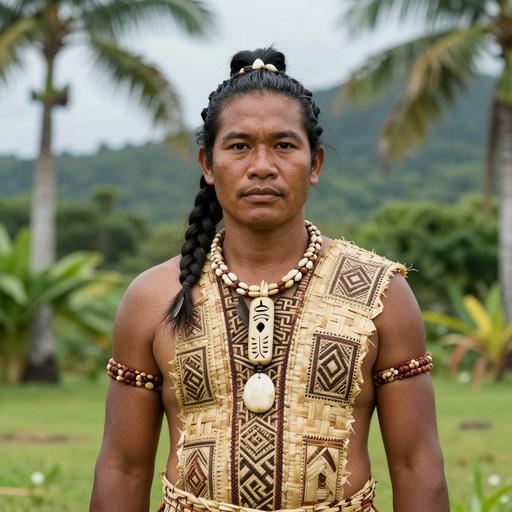
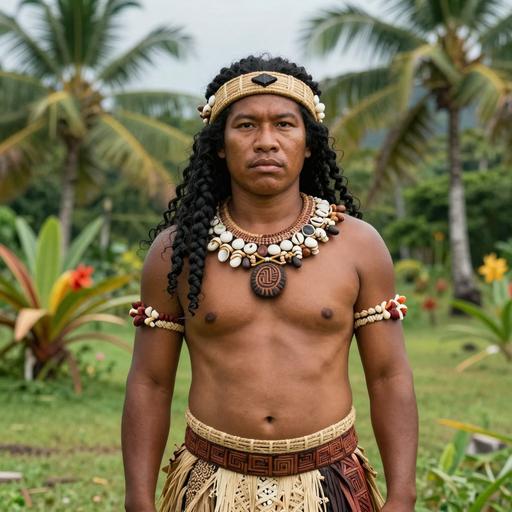
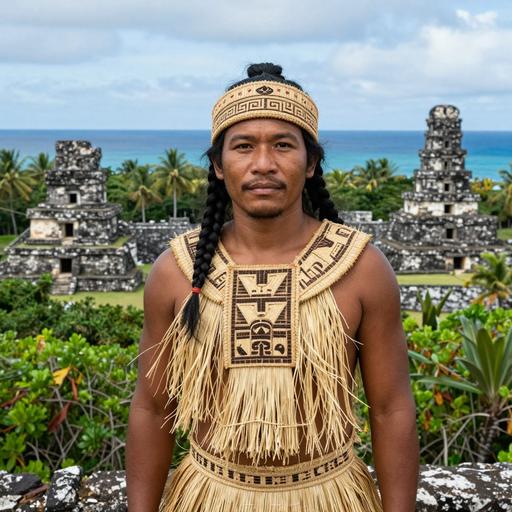
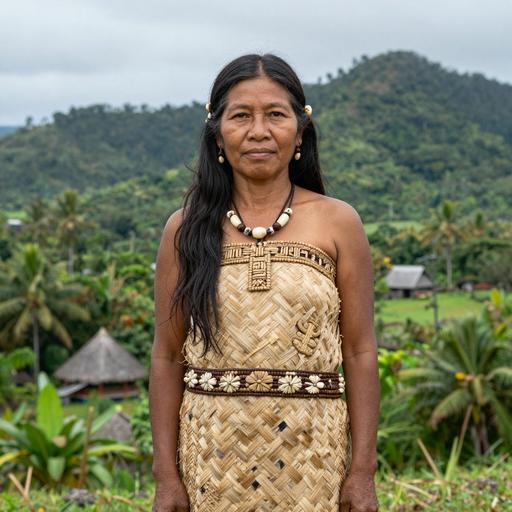
Avar Culture Early Avar Historical Malaysian Mongol Period Pohnpei Culture Saudeleur Culture Taiwanese Iron
Culture assignments are based on archaeological context of ancient DNA samples and may represent regional associations during specific time periods.
Chapter V

Sample Catalog

2 direct carriers and 7 subclade carriers of haplogroup B4B1A2

9 / 9 samples
Portrait Sample Country Era Date Culture mtDNA Match
Portrait of ancient individual I3616 from Taiwan, dated 245 CE - 378 CE
I3616
Taiwan Iron Age Taiwan 245 CE - 378 CE Taiwanese Iron B4b1a2 Direct
Portrait of ancient individual Ma555 from Malaysia, dated 1505 CE - 1653 CE
Ma555
Malaysia Historical Malaysia 1505 CE - 1653 CE Historical Malaysian B4b1a2 Direct
Portrait of ancient individual I15158 from Taiwan, dated 1 CE - 800 CE
I15158
Taiwan Iron Age Taiwan 1 CE - 800 CE Taiwanese Iron B4b1a2f Downstream
Portrait of ancient individual I30482 from Federated States of Micronesia, dated 1400 CE - 1500 CE
I30482
Federated States of Micronesia The Saudeleur Dynasty in Micronesia 1400 CE - 1500 CE Saudeleur Culture B4b1a2i Downstream
Portrait of ancient individual I30481 from Federated States of Micronesia, dated 1400 CE - 1500 CE
I30481
Federated States of Micronesia The Saudeleur Dynasty in Micronesia 1400 CE - 1500 CE Saudeleur Culture B4b1a2i Downstream
Portrait of ancient individual I30480 from Federated States of Micronesia, dated 1409 CE - 1444 CE
I30480
Federated States of Micronesia The Saudeleur Dynasty in Micronesia 1409 CE - 1444 CE Saudeleur Culture B4b1a2i Downstream
Portrait of ancient individual I30476 from Federated States of Micronesia, dated 1420 CE - 1454 CE
I30476
Federated States of Micronesia The Saudeleur Dynasty in Micronesia 1420 CE - 1454 CE Saudeleur Culture B4b1a2i Downstream
Portrait of ancient individual I30483 from Federated States of Micronesia, dated 1426 CE - 1467 CE
I30483
Federated States of Micronesia The Saudeleur Dynasty in Micronesia 1426 CE - 1467 CE Saudeleur Culture B4b1a2i Downstream
Portrait of ancient individual I7112 from Federated States of Micronesia, dated 1472 CE - 1632 CE
I7112
Federated States of Micronesia Pohnpei 400BP in Micronesia 1472 CE - 1632 CE Pohnpei Culture B4b1a2i Downstream
Chapter VI

Carrier Distribution Map

Geographic distribution of 9 ancient DNA samples (direct and subclade carriers of B4B1A2)

Direct carrier Subclade carrier
Time Period Filter
All Time Periods
Showing all samples
Chapter VII

Temporal Distribution

Distribution of carriers across archaeological periods

Chapter VIII

Geographic Distribution

Distribution by country of origin (direct and subclade carriers shown by default)

Chapter IX

Country × Era Distribution

Cross-tabulation of carrier countries and archaeological periods (direct and subclade carriers shown by default)

Data

Data & Provenance

Source information and data quality

Last Updated 2026-02-16
Confidence Score 50/100
Coverage Low
Data Source

We use the latest phylotree for MTDNA haplogroup classification and data.