Menu
mtDNA Haplogroup • Maternal Lineage

B4B1A2F

mtDNA Haplogroup B4B1A2F

~5,000 years ago
Coastal East/Southeast Asia
0 subclades
1 ancient samples
Scroll to explore
Chapter I

The Story

The journey of mtDNA haplogroup B4B1A2F

Origins and Evolution

Haplogroup B4B1A2F is a downstream subclade of B4B1A2, itself a branch of the broader B4 lineage that has deep roots in East and Southeast Asia. Based on the phylogenetic position beneath B4B1A2 (estimated to have arisen in the early Holocene, ~9 kya) and the distribution of closely related subclades, B4B1A2F most plausibly originated in coastal or island regions of East/Southeast Asia during the mid-Holocene (~5 kya). Its emergence fits the time frame of increasing maritime adaptation and demographic movements along coastal zones that ultimately fed into Austronesian dispersals.

Genetically, B4B1A2F carries the defining mutations of the B4 clade plus additional private mutations that distinguish it from sibling subclades. Like other B4-derived maternal lineages, it reflects a strand of maternal ancestry that spread primarily by sea and along littoral corridors rather than by inland continental expansion.

Subclades (if applicable)

At present, B4B1A2F is treated as a terminal or near-terminal branch in many phylogenies; few well-differentiated downstream subclades have been widely reported in the literature or public databases. Where further internal diversification exists, it appears localized and of relatively recent origin, consistent with population structure in island settings (founder effects and local drift). Ongoing sampling and full mitogenome sequencing in island Southeast Asia and Near Oceania may reveal additional internal branches.

Geographical Distribution

The modern distribution of B4B1A2F is concentrated in coastal and island populations of East and Southeast Asia with reach into peripheral Pacific contact zones. Higher relative frequencies are seen among maritime-adapted and Austronesian-speaking groups (including some indigenous Taiwanese communities and Island Southeast Asian populations), while low-frequency occurrences appear in mainland coastal East Asian groups (e.g., Han Chinese coastlines) and in Near Oceania where Austronesian and Papuan groups have interacted.

The lineage is rare in continental interior populations and is most characteristic of populations with histories of seafaring, island settlement, and coastal subsistence. It has been observed in at least one ancient DNA sample, indicating that the haplogroup has been present in archaeological contexts consistent with Holocene coastal settlement and movement.

Historical and Cultural Significance

B4B1A2F is informative for studies of Holocene coastal population dynamics and the Austronesian-associated maritime expansions. Its geographic pattern supports models in which maternal lineages were carried by small-scale seafaring communities that colonized islands and coastal zones across Island Southeast Asia and beyond. Because mitochondrial DNA traces direct maternal lines, the presence of B4B1A2F in indigenous Taiwanese and various island Southeast Asian groups aligns with scenarios of female-mediated gene flow during the spread of Austronesian languages and cultural practices.

In contact zones of Near Oceania, B4B1A2F occurrences reflect admixture and back-and-forth gene flow between incoming Austronesian groups and resident Melanesian populations, producing low-to-moderate local frequencies in some insular Melanesian communities.

Conclusion

B4B1A2F is a geographically focused mtDNA lineage that documents coastal and island maternal ancestry in East and Southeast Asia and adjacent Pacific margins. It is most useful in reconstructing maritime dispersals, founder events on islands, and local demographic histories connected to Austronesian expansions. Continued mitogenome sequencing and targeted sampling of understudied island communities will refine its internal structure, age estimates, and precise role in Holocene population movements.

Key Points

  • Origins and Evolution
  • Subclades (if applicable)
  • Geographical Distribution
  • Historical and Cultural Significance
  • Conclusion
Chapter II

Tree & Relationships

Phylogenetic context and subclades

Evolution Path

This haplogroup's evolutionary journey from its earliest ancestor to the present.

Steps Haplogroup Age Estimate Archaeology Era Time Passed Immediate Descendants Tested Modern Descendants Ancient Connections
1 B4B1A2F Current ~5,000 years ago 🔶 Bronze Age 5,000 years 0 0 1
2 B4B1A2 ~9,000 years ago 🌾 Neolithic 9,000 years 2 11 0
3 B4B1A ~9,000 years ago 🌾 Neolithic 9,000 years 2 14 2
4 B4B1 ~18,000 years ago 🏹 Mesolithic 18,000 years 2 18 0
5 B4B ~18,000 years ago 🏹 Mesolithic 18,000 years 1 19 0
6 B4 ~28,000 years ago 🦴 Paleolithic 28,000 years 6 334 7
7 B ~50,000 years ago 🦴 Paleolithic 50,000 years 4 1,196 75

Subclades (0)

Terminal branch - no known subclades

Siblings (1)

Other branches from the same parent haplogroup

Chapter III

Where in the World

Geographic distribution and modern presence

Place of Origin

Coastal East/Southeast Asia

Modern Distribution

The populations where mtDNA haplogroup B4B1A2F is found include:

  1. Han Chinese and other East Asian coastal groups (China, Korea, Japan) at low frequencies
  2. Southeast Asian coastal populations (Vietnamese, Thai, Malay peoples) at low-to-moderate frequencies
  3. Indigenous Taiwanese (Austronesian-speaking groups)
  4. Island Southeast Asian communities (Philippines, eastern Indonesia, Borneo, Sulawesi)
  5. Austronesian-speaking Pacific Islanders and peripheral Polynesian-adjacent islands at low frequencies
  6. Coastal and Near Oceanic populations influenced by Lapita/Austronesian contact zones
  7. Insular Melanesian groups in contact zones at low-to-moderate frequencies
  8. Coastal fishing and islander communities across ISEA and the northwest Pacific
CHAPTER IV

When in Time

Your haplogroup in the context of human history

~10k years ago

Neolithic Revolution

Agriculture begins, settled communities form

~5k years ago

Bronze Age

Metalworking, writing, and early civilizations

~5k years ago

Haplogroup B4B1A2F

Your mtDNA haplogroup emerged in Coastal East/Southeast Asia

Coastal East/Southeast Asia
~3k years ago

Iron Age

Iron tools, expanded trade networks

~2k years ago

Classical Antiquity

Greek and Roman civilizations flourish

Present

Present Day

Modern era

Your Haplogroup
Historical Era
Chapter IV-B

Linked Cultures

Ancient cultures associated with mtDNA haplogroup B4B1A2F

Cultural Heritage

These ancient cultures have been linked to haplogroup B4B1A2F based on matching ancient DNA samples from archaeological excavations. The presence of this haplogroup in these cultures provides insights into the migrations and population movements of populations carrying this haplogroup.

Avar Culture Early Avar Historical Malaysian Mongol Period Pohnpei Culture Saudeleur Culture Taiwanese Iron
Culture assignments are based on archaeological context of ancient DNA samples and may represent regional associations during specific time periods.
Chapter V

Sample Catalog

1 direct carrier of haplogroup B4B1A2F

1 / 1 samples
Portrait Sample Country Era Date Culture mtDNA Match
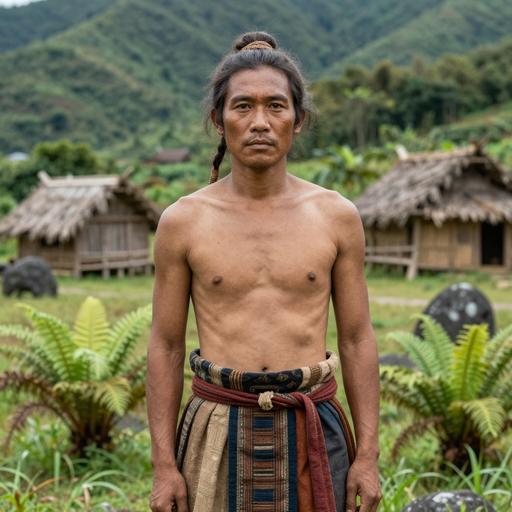
Portrait of ancient individual I15158 from Taiwan, dated 1 CE - 800 CE
I15158
Taiwan Iron Age Taiwan 1 CE - 800 CE Taiwanese Iron B4b1a2f Direct
Chapter VI

Carrier Distribution Map

Geographic distribution of 1 ancient DNA sample (direct and subclade carriers of B4B1A2F)

Direct carrier
Time Period Filter
All Time Periods
Showing all samples
Chapter VII

Temporal Distribution

Distribution of carriers across archaeological periods

Chapter VIII

Geographic Distribution

Distribution by country of origin (direct and subclade carriers shown by default)

Chapter IX

Country × Era Distribution

Cross-tabulation of carrier countries and archaeological periods (direct and subclade carriers shown by default)

Data

Data & Provenance

Source information and data quality

Last Updated 2026-02-16
Confidence Score 50/100
Coverage Low
Data Source

We use the latest phylotree for MTDNA haplogroup classification and data.