The Story
The journey of mtDNA haplogroup B4B1A2I
Origins and Evolution
B4B1A2I is a downstream branch of the broader B4B1A2 lineage, itself nested within macro-haplogroup B4, a clade characteristic of East and Island Southeast Asia and important in Austronesian-associated maternal ancestries. Based on its phylogenetic position beneath B4B1A2 (which likely arose in coastal East/Southeast Asia ~9 kya) and its geographic associations, B4B1A2I most plausibly originated in the later Holocene (on the order of ~3–6 kya), contemporaneous with or shortly before phases of Austronesian maritime expansion. Its relative rarity and localised occurrence suggest it is a derived, regionally restricted lineage that spread primarily along coastal and island routes.
Subclades
As a named terminal subclade (B4B1A2I) this lineage appears to be relatively limited in downstream branching in current databases; it is represented by only a small number of modern samples and a handful of ancient DNA occurrences (6 archaeological samples reported in the provided database). Where further internal diversity exists, it has not yet been documented at high resolution in published literature, which is consistent with a recent, low-frequency expansion or long-term persistence at low frequency in island and coastal populations.
Geographical Distribution
This haplogroup is found primarily in coastal East Asia, island Southeast Asia (ISEA), indigenous Taiwanese groups, and contact zones of Near Oceania. Modern and ancient occurrences point to a concentration among maritime-adapted communities: coastal Han and other East Asian groups at low frequencies, multiple Southeast Asian coastal populations (Vietnamese, Thai, Malay), indigenous Austronesian-speaking Taiwanese, island populations across the Philippines, eastern Indonesia (Sulawesi, Maluku), Borneo, and peripheral Pacific groups including Micronesian and some near-Polynesian islands at low levels. The pattern is consistent with dispersal along island and coastal corridors tied to seafaring traditions rather than large inland demographic replacements.
Historical and Cultural Significance
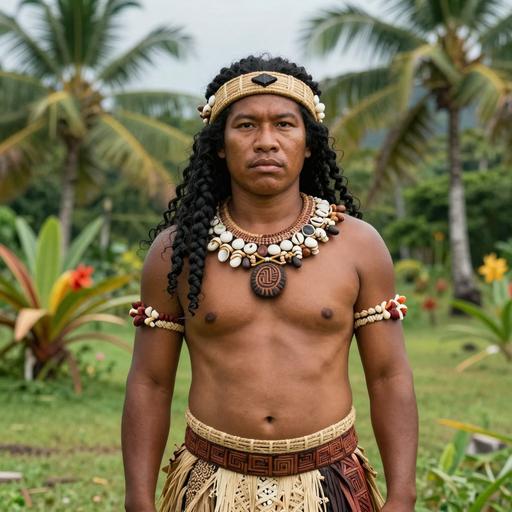
B4B1A2I fits the genetic signature expected for maternal lineages that moved with Austronesian-speaking, maritime-adapted peoples during the Neolithic to later Holocene expansions out of Taiwan and coastal Southeast Asia. It may be associated with the early Neolithic coastal cultures of Taiwan (Dapenkeng) and the later Lapita-associated dispersals that carried Austronesian languages and maritime technologies into Near Oceania. Because the clade is uncommon, its presence in a population can provide fine-scale information about maternal ancestry tied to coastal and island networks, local founder events, and long-distance sea-borne contacts.
Ancient DNA and Evidence
The identification of B4B1A2I in several ancient samples (6 in the referenced database) supports continuity between archaeological coastal/insular contexts and modern populations carrying this lineage. However, the limited ancient sample count and overall low modern frequency mean that temporal and geographic inferences should be made cautiously; increased sampling and full mitogenome sequencing are required to refine divergence dates and migration pathways.
Conclusion
B4B1A2I is best understood as a low-frequency, regionally concentrated maternal lineage arising in coastal East/Southeast Asia during the later Holocene and carried primarily by Austronesian-related, maritime populations across island Southeast Asia and into Near Oceania. It complements broader maternal patterns (e.g., Polynesian motifs and other B4 subclades) and is useful for reconstructing fine-scale island and coastal demographic histories when present in modern or archaeological samples.
Key Points
- Origins and Evolution
- Subclades
- Geographical Distribution
- Historical and Cultural Significance
- Ancient DNA and Evidence