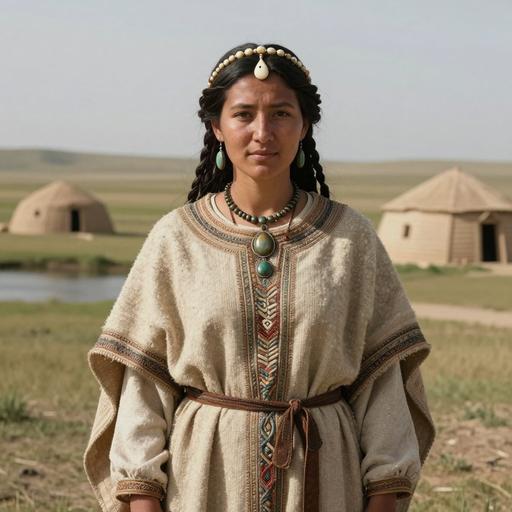
The Story
The journey of mtDNA haplogroup C4A1A4
Origins and Evolution
mtDNA haplogroup C4A1A4 is a downstream subclade of C4A1A, itself a branch of the broader C4 lineage that has deep roots in northern Asia. Based on the phylogenetic position beneath C4A1A (a Holocene northeastern Asian lineage estimated ~9 kya) and the limited internal diversity seen in modern samples, C4A1A4 most likely arose in northeastern Siberia in the late Holocene (on the order of a few thousand years ago). Its emergence is consistent with continued local diversification of northern Asian maternal lineages after the early-to-mid Holocene recolonization and population structuring of Siberia.
Subclades
C4A1A4 is currently recognized as a terminal or near-terminal branch beneath C4A1A in public phylogenies; where additional downstream diversity exists it tends to be represented by a small number of private or regionally restricted lineages. Because the subclade is relatively recent compared with basal C4 diversity, it typically shows limited haplotype diversity in modern sampling, suggesting a localized origin and subsequent modest population spread rather than a continent-wide expansion.
Geographical Distribution
Modern distribution: C4A1A4 is observed primarily in northeastern Eurasia — most commonly among indigenous Siberian groups (Yakut, Evenk, Even, Nenets) and among Mongolic- and Tungusic-speaking peoples (Buryats, Mongolians, Evens). It also occurs at lower frequencies in some Central Asian highland groups (Tuvans, Altaians) and sporadically in northern East Asian populations (northern Han, occasional Korean or Japanese samples). Small numbers of detections have been reported among Arctic/Beringia-adjacent peoples (Koryak, Chukchi, and occasional Aleut or Native Alaskan samples), consistent with population connections along the Arctic and sub-Arctic margins.
Ancient DNA: C4A1A4 and closely related C4A1A lineages have been identified in Holocene archaeological contexts from the Lake Baikal region and other Siberian sites, and the subclade's presence in Bronze Age and later contexts is compatible with continuity and local diversification through the Bronze and Iron Ages in parts of Siberia.
Historical and Cultural Significance
While C4A1A4 is not associated with any single pan-regional demographic replacement event, its distribution reflects long-term maternal continuity in northern Eurasia. The subclade likely tracked regional population processes such as the persistence of local hunter-gatherer groups in the early Holocene, later admixture with pastoralist and agriculturalist expansions across the steppe margins, and the movements of Tungusic- and Mongolic-speaking groups in the first and second millennia CE. Its detection in Bronze Age archaeological contexts (for related C4A1A lineages) ties it to the complex population landscape of Bronze Age Siberia, where local and incoming groups mixed to form the modern genetic mosaic.
Conclusion
C4A1A4 represents a modestly diverged, regionally focused maternal lineage within the broader C4A1A clade. It highlights continued maternal-line diversification in northeastern Eurasia during the late Holocene and serves as a marker of northern Asian ancestry in both modern and ancient Siberian populations. Ongoing sampling and more ancient DNA from Bronze Age and later contexts will clarify its precise timing, internal structure, and the demographic events that shaped its present-day distribution.
Key Points
- Origins and Evolution
- Subclades
- Geographical Distribution
- Historical and Cultural Significance
- Conclusion