Menu
mtDNA Haplogroup • Maternal Lineage

C4A1A3

mtDNA Haplogroup C4A1A3

~4,000 years ago
Northeast Asia / Siberia
1 subclades
Scroll to explore
Chapter I

The Story

The journey of mtDNA haplogroup C4A1A3

Origins and Evolution

mtDNA haplogroup C4A1A3 is a downstream subclade of C4A1A, itself a branch of the broader C4 lineage that has deep roots in northern Eurasia. The parent clade C4A1A is estimated to have arisen in northeastern Asia / Siberia during the early to mid-Holocene (on the order of ~9 kya). C4A1A3 represents a later, more regionally restricted split from that lineage, likely forming in the mid-to-late Holocene (roughly within the last ~3–6 kya) as populations in Siberia and adjacent steppe zones diversified.

As a downstream subclade, C4A1A3 is defined by one or more derived mutations nested within the diagnostic mutations of C4A1A. Its appearance and preservation in modern and ancient samples reflect local demographic histories in northern Asia, including continuity among hunter-gatherer groups, incorporation into Bronze Age steppe-related populations, and later spread with historic-era nomadic movements.

Subclades

C4A1A3 sits under C4A1A; sister subclades within C4A1A include other defined branches (e.g., C4A1A1, C4A1A2) that show similar northern Asian distributions but distinct geographic and temporal patterns. Because C4 lineages are relatively diverse across Siberia and adjacent regions, subclades like C4A1A3 often reflect fine-scale regional differentiation and founder effects in small, mobile populations.

Geographical Distribution

C4A1A3 is principally a northern Asian/Siberian lineage. Contemporary occurrences are concentrated among indigenous Siberian peoples (for example Yakut, Evenk, Even, and related groups) and among some Mongolic- and Tungusic-speaking populations (e.g., Buryat, some Mongolian groups). It is present at lower frequency or sporadically in neighboring Central Asian highland groups (Tuvan, Altaian) and occasionally observed in northeast Asian populations (northern Han, rare Korean or Japanese samples) and in Beringia-adjacent Arctic groups (Koryak, Chukchi). Ancient DNA studies identify C4-lineage continuity in Holocene Lake Baikal and other Siberian contexts, and C4A1A-derived lineages have been retrieved from multiple Holocene and Bronze Age archaeological samples, consistent with long-term regional persistence.

Historical and Cultural Significance

C4A1A3's pattern reflects demographic processes common to northern Eurasia: long-term survival of maternal lineages in small mobile populations, local diversification during the Holocene, and incorporation into broader movements across the Eurasian steppe during the Bronze and Iron Ages. The lineage is informative for studies of Siberian population continuity and for tracing maternal ancestry among Tungusic, Mongolic, Turkic, and some Paleo-Siberian groups. While not a marker of any single large-scale migration (unlike some steppe-associated lineages), its presence in Bronze Age and later contexts links it to the complex admixture and mobility that characterize prehistoric and historic northern Asia.

Conclusion

mtDNA haplogroup C4A1A3 is a regionally important maternal subclade of C4A1A, reflecting mid-to-late Holocene diversification in northeastern Asia and Siberia. Its concentration among Siberian, Mongolic and Tungusic-speaking populations and detection in Holocene archaeological contexts make it a useful marker for reconstructing local maternal demographic history and the continuity of northern Asian maternal lineages through the Holocene and into historical times.

Key Points

  • Origins and Evolution
  • Subclades
  • Geographical Distribution
  • Historical and Cultural Significance
  • Conclusion
Chapter II

Tree & Relationships

Phylogenetic context and subclades

Evolution Path

This haplogroup's evolutionary journey from its earliest ancestor to the present.

Steps Haplogroup Age Estimate Archaeology Era Time Passed Immediate Descendants Tested Modern Descendants Ancient Connections
1 C4A1A3 Current ~4,000 years ago 🔶 Bronze Age 4,500 years 1 0 0
2 C4A1A ~9,000 years ago 🌾 Neolithic 9,000 years 4 3 58
3 C4A1 ~12,000 years ago 🌾 Neolithic 12,000 years 4 4 0
4 C4A ~15,000 years ago 🏹 Mesolithic 15,000 years 2 18 18
5 C4 ~20,000 years ago 🏹 Mesolithic 20,000 years 7 34 48
6 C ~35,000 years ago 🦴 Paleolithic 35,000 years 5 617 75

Siblings (3)

Other branches from the same parent haplogroup

Chapter III

Where in the World

Geographic distribution and modern presence

Place of Origin

Northeast Asia / Siberia

Modern Distribution

The populations where mtDNA haplogroup C4A1A3 is found include:

  1. Yakut (Sakha) and other northeastern Siberian indigenous groups
  2. Evenk, Even and related Tungusic-speaking peoples
  3. Buryat and some Mongolic-speaking populations
  4. Tuvan and Altaian highland groups (Central Asian/Russian Altai)
  5. Northern East Asian populations at low frequency (occasional northern Han, rare Korean/Japanese samples)
  6. Arctic/Beringia-adjacent peoples at low or sporadic frequency (Koryak, Chukchi, some Aleut/Native samples)
  7. Ancient Holocene and Bronze Age archaeological assemblages from the Lake Baikal region and other Siberian sites
CHAPTER IV

When in Time

Your haplogroup in the context of human history

~10k years ago

Neolithic Revolution

Agriculture begins, settled communities form

~5k years ago

Bronze Age

Metalworking, writing, and early civilizations

~4k years ago

Haplogroup C4A1A3

Your mtDNA haplogroup emerged in Northeast Asia / Siberia

Northeast Asia / Siberia
~3k years ago

Iron Age

Iron tools, expanded trade networks

~2k years ago

Classical Antiquity

Greek and Roman civilizations flourish

Present

Present Day

Modern era

Your Haplogroup
Historical Era
Chapter IV-B

Linked Cultures

Ancient cultures associated with mtDNA haplogroup C4A1A3

Cultural Heritage

These ancient cultures have been linked to haplogroup C4A1A3 based on matching ancient DNA samples from archaeological excavations. The presence of this haplogroup in these cultures provides insights into the migrations and population movements of populations carrying this haplogroup.

Angara River Culture Early Buryat Northern Mongolian Culture Shamanka Culture Ust-Belaya Culture Ust-Ida Culture
Culture assignments are based on archaeological context of ancient DNA samples and may represent regional associations during specific time periods.
Chapter V

Sample Catalog

15 direct carriers and 1 subclade carrier of haplogroup C4A1A3

16 / 16 samples
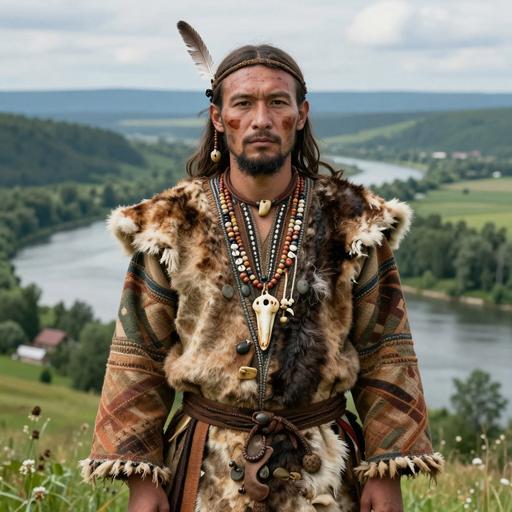
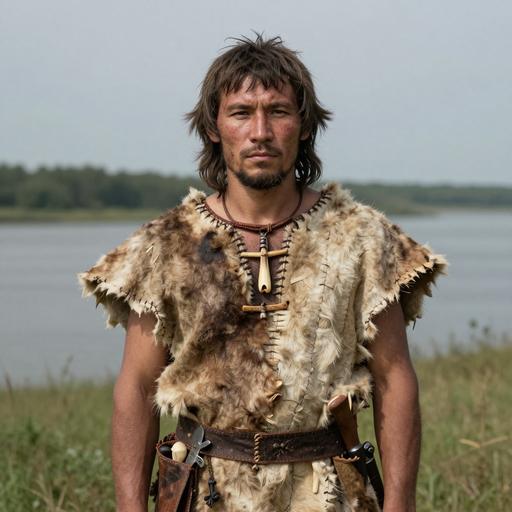
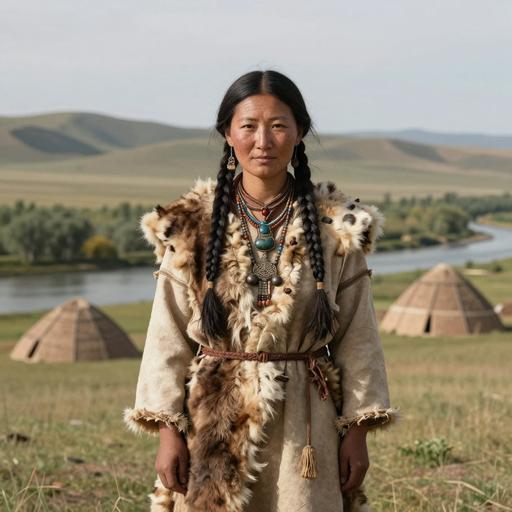
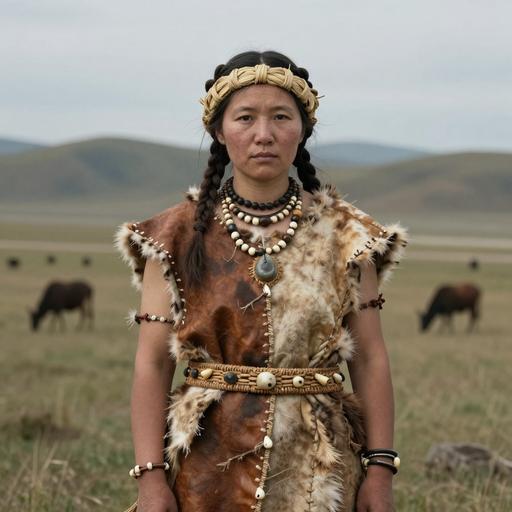
Portrait Sample Country Era Date Culture mtDNA Match
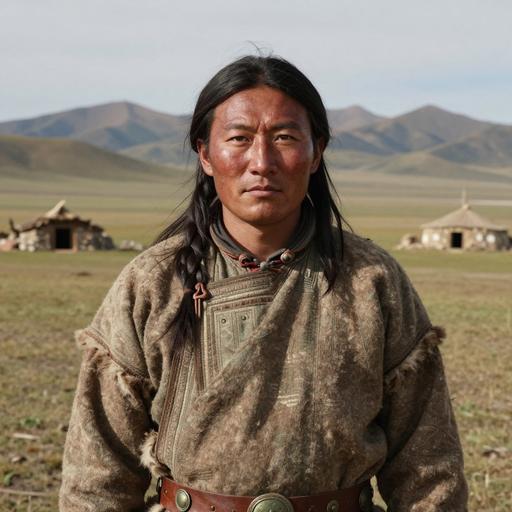
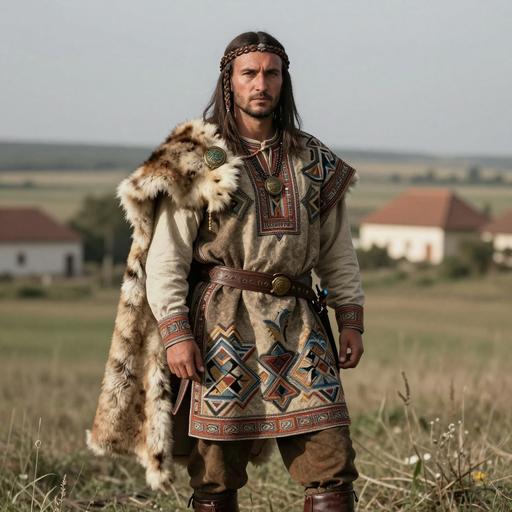
Portrait of ancient individual SP-2 from Hungary, dated 960 CE - 1000 CE
SP-2
Hungary Conqueror Elite Hungary 960 CE - 1000 CE Magyar Elite Culture C4a1a3 Direct
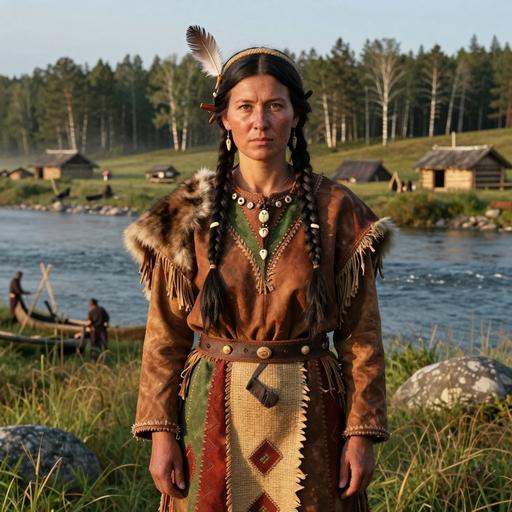
Portrait of ancient individual irk008 from Russia, dated 1931 BCE - 1749 BCE
irk008
Russia Bronze Age Lena River, Russia 1931 BCE - 1749 BCE Lena River Culture C4a1a3 Direct
Portrait of ancient individual irk008 from Russia, dated 1931 BCE - 1749 BCE
irk008
Russia Bronze Age Cis-Baikal, Siberia 1931 BCE - 1749 BCE C4a1a3 Direct
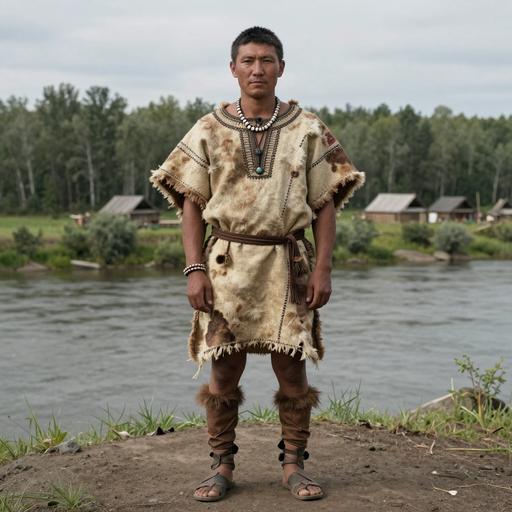
Portrait of ancient individual DA361 from Russia, dated 2445 BCE - 1978 BCE
DA361
Russia Early Bronze Age Ust-Ida, Russia 2445 BCE - 1978 BCE Ust-Ida Culture C4a1a3 Direct
Portrait of ancient individual DA361 from Russia, dated 2445 BCE - 1978 BCE
DA361
Russia Early Bronze Age Cis-Baikal, Siberia 2445 BCE - 1978 BCE C4a1a3 Direct
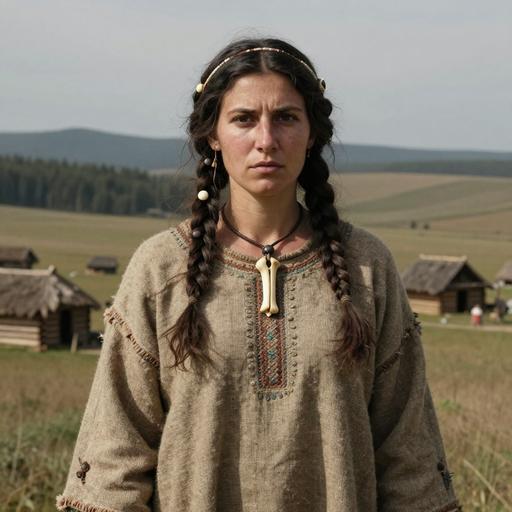
Portrait of ancient individual DA356 from Russia, dated 2456 BCE - 2206 BCE
DA356
Russia Early Bronze Age Ust-Ida, Russia 2456 BCE - 2206 BCE Ust-Ida Culture C4a1a3 Direct
Portrait of ancient individual DA356 from Russia, dated 2456 BCE - 2206 BCE
DA356
Russia Early Bronze Age Cis-Baikal, Siberia 2456 BCE - 2206 BCE C4a1a3 Direct
Portrait of ancient individual DA337 from Russia, dated 2461 BCE - 2295 BCE
DA337
Russia Early Bronze Age Shamanka, Russia 2461 BCE - 2295 BCE Shamanka Culture C4a1a3 Direct
Portrait of ancient individual DA337 from Russia, dated 2461 BCE - 2295 BCE
DA337
Russia Early Bronze Age Cis-Baikal, Siberia 2461 BCE - 2295 BCE C4a1a3 Direct
Portrait of ancient individual I7335 from Russia, dated 2570 BCE - 2460 BCE
I7335
Russia Ust-Belaya Angara Culture, Russia 2570 BCE - 2460 BCE Ust-Belaya Culture C4a1a3 Direct
Chapter VI

Carrier Distribution Map

Geographic distribution of 16 ancient DNA samples (direct and subclade carriers of C4A1A3)

Direct carrier Subclade carrier
Time Period Filter
All Time Periods
Showing all samples
Chapter VII

Temporal Distribution

Distribution of carriers across archaeological periods

Chapter VIII

Geographic Distribution

Distribution by country of origin (direct and subclade carriers shown by default)

Chapter IX

Country × Era Distribution

Cross-tabulation of carrier countries and archaeological periods (direct and subclade carriers shown by default)

Data

Data & Provenance

Source information and data quality

Last Updated 2026-02-16
Confidence Score 50/100
Coverage Low
Data Source

We use the latest phylotree for MTDNA haplogroup classification and data.