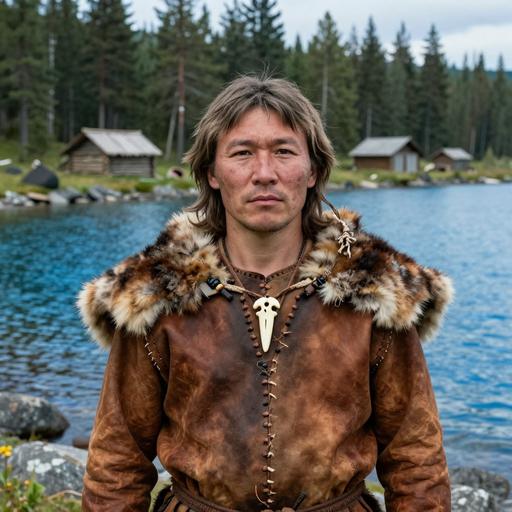
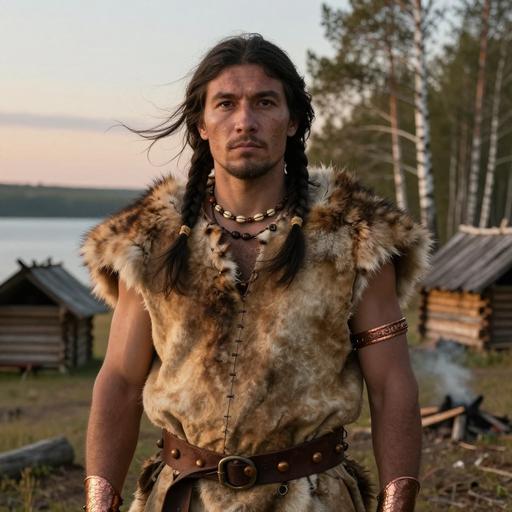
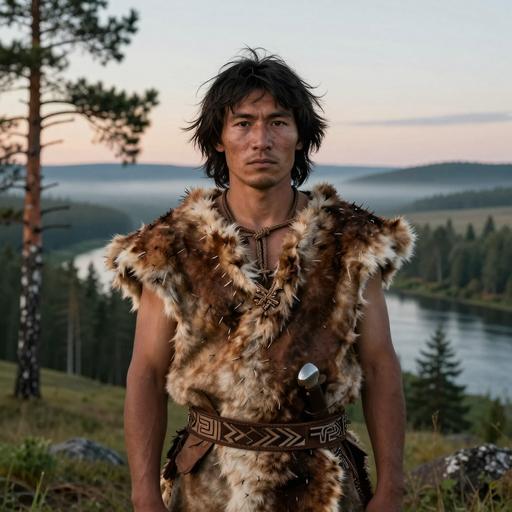
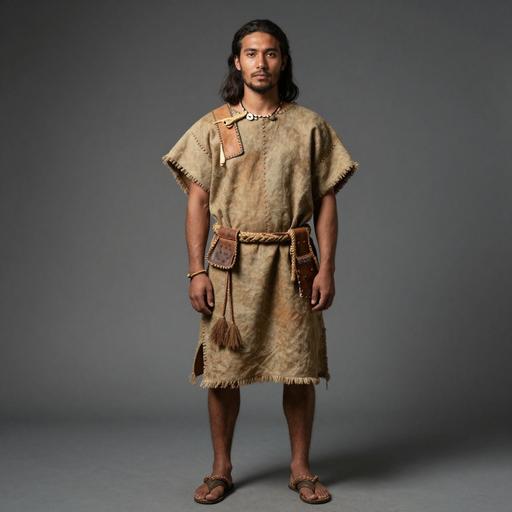
The Story
The journey of mtDNA haplogroup C4A2A
Origins and Evolution
mtDNA haplogroup C4A2A is a downstream branch of C4A2, itself a subclade of the broader C4 lineage, a maternal lineage that has deep roots in northern Asia. Based on the position of C4A2A within the phylogenetic tree and the coalescence of surrounding C4A lineages, C4A2A most likely originated in northeastern Asia or Siberia during the early to mid-Holocene (several thousand years after the initial diversification of C4). Its emergence reflects localized population history in high-latitude Asia where climatic changes and post-glacial expansions shaped maternal lineages.
Ancient DNA surveys of Holocene Siberia have documented continuity of C4-derived lineages in northern populations, supporting the idea that branches like C4A2A represent long-term regional maternal continuity rather than very recent introductions. However, precise age estimates and branching order continue to be refined as more full mitochondrial genomes are sampled from modern and ancient individuals.
Subclades (if applicable)
C4A2A can include further, more finely resolved sub-branches identified in some high-resolution mtDNA studies. Sampling remains uneven across Siberia and adjacent regions, so additional subclades may be recognized as more complete mitogenomes are published. At present, C4A2A is best treated as an intermediate clade connecting C4A2 (parent) to locally diversified lineages observed in northern Asian populations.
Geographical Distribution
Primary concentrations of C4A2A occur in northeastern Siberia and adjacent zones. Documented modern occurrences include:
- Sakha (Yakut) and other groups of the Sakha Republic
- Tungusic-speaking peoples such as Evenk and Even
- North Siberian indigenous groups (Nenets, Nganasan)
- Far East Siberian groups like Chukchi and Koryak
- Mongolic-speaking groups including Buryats and some Mongolian populations
- Central Asian groups with Siberian ancestry (e.g., Tuvans, Altaians)
Lower-frequency occurrences are reported in northern East Asian populations (northern Han Chinese, some Koreans) and occasional detections in northern/eastern Europe, typically explained by recent historical admixture or movement of Siberian-derived peoples.
C4A2A's distribution is patchy and often concentrated where founder effects and local demographic histories (bottlenecks, expansions) have shaped haplogroup frequencies — for example, the Yakut population shows elevated frequencies of several C-lineage haplogroups following a history of founder events and rapid expansion.
Historical and Cultural Significance
C4A2A is principally informative for reconstructing maternal ancestry and population movements across northern Eurasia. Its presence in Tungusic, Mongolic and several Siberian indigenous groups points to long-standing maternal continuity in high-latitude Asia and to interactions among hunter-gatherer, pastoralist and later mobile groups.
- In a broad sense, C4A2A contributes to the genetic signature associated with post-glacial recolonization and mid-Holocene population structuring in Siberia.
- Where observed at higher local frequency, it can reflect founder effects (for example in islanded or recently expanded communities) or the legacy of small, relatively isolated maternal gene pools.
- Occasional detection outside Siberia documents the routes by which Siberian maternal ancestry entered Central Asia, parts of East Asia, and — via historic migrations and admixture — parts of northern and eastern Europe.
Archaeologically, lineages like C4A2A are most plausibly linked to local Holocene forager and later mixed forager-pastoralist communities in northern Eurasia rather than to the better-known Neolithic farming expansions originating in the Near East.
Conclusion
mtDNA C4A2A is a regional northern Asian maternal lineage that helps trace Holocene population history in Siberia and adjacent regions. Its status as a subclade of C4A2 situates it within a broader northern Asian mtDNA landscape characterized by continuity through the Holocene, occasional localized expansions, and sporadic long-distance dispersals that mirror patterns of mobility and admixture across Eurasia. Continued mitogenome sequencing of both modern and ancient remains will refine the substructure, age estimates, and finer geographic patterns of C4A2A.
Key Points
- Origins and Evolution
- Subclades (if applicable)
- Geographical Distribution
- Historical and Cultural Significance
- Conclusion