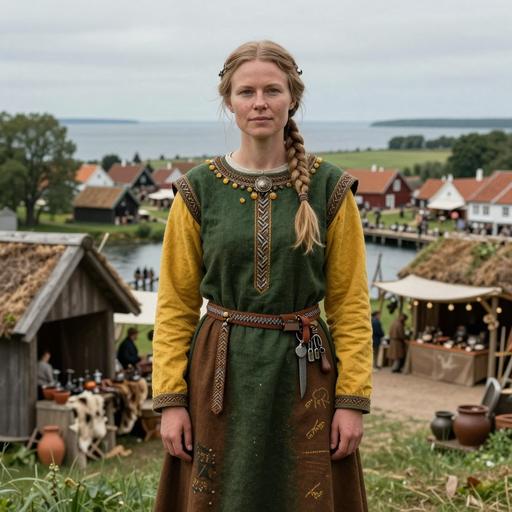
The Story
The journey of mtDNA haplogroup K1A4A1C
Origins and Evolution
mtDNA haplogroup K1A4A1C is a downstream subclade of K1A4A1 within haplogroup K, a maternal lineage strongly associated with early farmers in Anatolia and the Near East. Based on its phylogenetic position under K1A4A1 and the temporal estimate for the parent clade, K1A4A1C most plausibly arose in the late Neolithic to Chalcolithic timeframe (roughly ~4–5 kya). Its emergence likely reflects the diversification of farmer-associated maternal lineages in Anatolia/the Levant followed by limited dispersals into adjacent regions of southeastern and southern Europe.
Population-genetic patterns for close K subclades show frequent low-frequency persistence in Europe and the Near East rather than broad high-frequency sweeps; K1A4A1C conforms to that pattern, appearing sporadically in both ancient and modern samples and often as isolated occurrences consistent with drift, low-level migration, or small founder effects.
Subclades (if applicable)
At present K1A4A1C is defined as a terminal or very downstream branch beneath K1A4A1 with few documented downstream sub-branches in public databases. Because it is rare and only a small number of complete mitogenomes have been reported, further sequencing of full mitochondrial genomes from Southern Europe and Anatolia could reveal additional internal structure. Its immediate parent, K1A4A1, serves as the main reference for broader phylogeographic inference; K1A4A1C likely represents a localized diversification after the parent lineage had already spread from an Anatolian/Near Eastern source.
Geographical Distribution
K1A4A1C is recorded at low frequencies across a cluster of adjacent regions rather than being concentrated in a single high-frequency homeland. Observed and inferred distributions include:
- Southern Europe (Italy, Greece, the Balkans, Iberia) — where Anatolian-derived farmer lineages are well-documented and maritime/coastal contacts could have carried rare maternal lineages westward.
- Near East / Anatolia — where the parent clade most likely diversified and where limited survival of derived lineages is expected.
- Western Europe (France, Britain) — occasional low-frequency occurrences consistent with later gene flow and historical mobility.
- Jewish communities — rare occurrences reported among some historic Jewish maternal lineages (including a small number of Ashkenazi and other Jewish community samples), suggesting either Near Eastern origin and continuity or later assimilation/founder events.
- Caucasus and Anatolian fringe populations — sporadic low-frequency presence consistent with a Near Eastern origin and regional retention.
The haplogroup has been documented in a small number of ancient DNA samples (three in the database referenced), which supports continuity of this rare maternal branch across millennia rather than a purely modern introduction.
Historical and Cultural Significance
Because K1A4A1C is rare, its cultural associations are primarily inferred from the behavior of related K clades and the archaeological contexts in which they appear. Key inferences:
- Association with farmer expansions: Haplogroup K and many K1 sublineages are tightly associated with Neolithic and post-Neolithic farmers originating in Anatolia and the Near East. K1A4A1C's phylogenetic placement suggests it diversified among farmer-descended communities during the late Neolithic–Chalcolithic and was carried into Europe with subsequent relocations and local continuity.
- Localized continuity and drift: The persistence of this lineage at low frequency indicates limited but stable maternal-line continuity in some regional populations, possibly maintained by small-community demographic processes (drift, founder effects, endogamy in certain groups).
- Presence in historical communities: Rare appearance in Jewish maternal lineages points to either retention of an ancestral Near Eastern lineage in diasporic communities or occasional gene flow between local non-Jewish and Jewish maternal pools during historical times.
K1A4A1C does not appear to mark any large-scale demographic turnover on its own, but as a genetic tracer it helps document fine-scale migration routes and regional continuity between Anatolia/the Levant and southern Europe.
Conclusion
K1A4A1C is a low-frequency, geographically scattered mtDNA subclade that likely arose in the Near East/Anatolia during the late Neolithic–Chalcolithic period and persisted in southern European and Near Eastern populations into the present. Its rarity makes it most useful for targeted phylogeographic and ancient-DNA studies that aim to reconstruct micro-histories of maternal lineages associated with farmer-derived populations and later local demographic processes. Additional complete mitogenome sampling in Anatolia, the Aegean and southern Europe would improve resolution of its internal structure and refine age and dispersal estimates.
Key Points
- Origins and Evolution
- Subclades (if applicable)
- Geographical Distribution
- Historical and Cultural Significance
- Conclusion