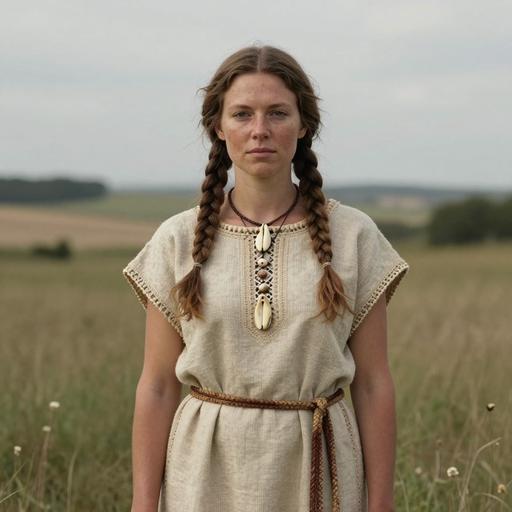
mtDNA · Maternal lineage

K1A4A1I

mtDNA Haplogroup K1A4A1I

A reference profile for one lineage branch. Shared haplogroups do not establish a family relationship or cultural identity.

Reference profile

Branch background

Historical context for mtDNA lineage branch K1A4A1I

Origins and Evolution

mtDNA haplogroup K1A4A1I sits as a downstream subclade of K1A4A1, itself part of the broader haplogroup K lineage that is derived from the U8b'K branch. The parent clade K1A4A1 has been dated to the late Neolithic–Chalcolithic period in Anatolia / the Near East (roughly ~5.5 kya in the provided parent context). Given that pattern and the scarcity of K1A4A1I in modern and ancient samples, it is most parsimonious to place the origin of K1A4A1I later than the parent—likely in the late Chalcolithic to Bronze Age (approximately 3–4.5 kya). This timing is consistent with a derivation within farmer-derived communities in Anatolia, the Aegean, or nearby Levantine populations followed by limited dispersal into surrounding regions.

Subclades (if applicable)

K1A4A1I is itself a fine-scale terminal subclade within the K1A4A1 branch. At present it is rare enough that few (or no) reliably defined downstream sub-branches have been widely reported in public mtDNA phylogenies or population surveys. Where additional mutations are observed on full mitogenomes from modern or ancient individuals, they are treated as private or emergent lineages until replicated in multiple samples. Continued high-resolution sequencing of modern and ancient mitogenomes from Anatolia, the Aegean and southern Europe could identify further substructure beneath K1A4A1I.

Geographical Distribution

Empirical detection of K1A4A1I is sparse. The clade is best characterized by a low-frequency, patchy distribution consistent with a founder event in the Near East or Anatolia and subsequent spread with small-scale movements or gene flow into adjacent regions. Reported and plausible occurrences include:

  • Southern Europe (Italy, Greece, Balkans, Iberia): low-to-moderate representation through Holocene farmer-descended populations and later continuity in some Mediterranean maternal pools.
  • Western Europe (France, Britain): sporadic, generally low frequency likely reflecting later migration and gene flow rather than primary expansion.
  • Levant and Anatolia: the likely area of origin and persistence at low frequency in modern Near Eastern populations.
  • Caucasus and Anatolian fringe: occasional detections reflecting geographic proximity and gene flow.
  • Diasporas (Americas and other regions): low-frequency modern occurrences tied to historic migration.

Only a very small number of ancient DNA hits (one documented ancient sample in the referenced database) have been attributed to the broader K1A4A1 lineage or its derivatives, consistent with a scenario of low effective maternal population size for this subclade through the Holocene.

Historical and Cultural Significance

Because K1A4A1I is rare, it does not mark large demographic turnovers. Instead, it is best interpreted as a marker of localized maternal ancestry that probably spread with small farmer-derived communities and later persisted in pockets across the Mediterranean and Near East. The broader K haplogroup is strongly associated with Early European Farmers (EEF) and Anatolian farmer migrations into Europe during the Neolithic; K1A4A1 and its subclades show a pattern consistent with Near Eastern farmer origins and limited westward diffusion during the Chalcolithic and Bronze Age.

K1A4A1I has also been observed, at very low frequency, in some Jewish maternal lineages and modern Mediterranean populations; these occurrences likely reflect complex historical mobility in the eastern Mediterranean (trade, population movements, and later diasporas) rather than a single large-scale migration event.

Conclusion

K1A4A1I represents a narrowly distributed, late-forming subclade of K1A4A1 that likely originated in an Anatolian / Near Eastern farming context in the late Chalcolithic–Bronze Age and survives today at low frequencies across southern Europe, parts of the Near East and in diasporas. Its rarity limits its use as a broad demographic marker, but it is informative for fine-scale maternal ancestry reconstructions and for tracing localized founder events and continuity in the eastern Mediterranean and adjoining regions. Future full mitogenome sequencing in under-sampled ancient and modern populations may clarify its internal structure and precise phylogeographic history.

Key Points

  • Origins and Evolution
  • Subclades (if applicable)
  • Geographical Distribution
  • Historical and Cultural Significance
  • Conclusion
Reference profile

Tree & Relationships

Phylogenetic context and subclades

Evolution Path

Follow the recorded parent branches toward K1A4A1I. Dates are estimates and can change as reference data is revised.

Steps Haplogroup Age Estimate Archaeology Era Time Passed Immediate Descendants Tested Modern Descendants Ancient Connections
1 K1A4A1I Current ~4,000 years ago Bronze Age 3,500 years 0 0 1
2 K1A4A1 ~6,000 years ago Chalcolithic 5,500 years 8 159 0
3 K1A4A ~6,000 years ago Chalcolithic 5,500 years 1 181 76
4 K1a4 ~7,000 years ago Neolithic 7,000 years 10 300 0
5 K1A ~12,000 years ago Neolithic 12,000 years 20 770 358
6 K1 ~13,000 years ago Mesolithic 13,000 years 8 1,405 116
7 K ~16,000 years ago Mesolithic 16,000 years 4 1,769 55
8 U8B ~30,000 years ago Paleolithic 30,000 years 2 1,805 1
9 U8B'C - - - 2 1,834 0
10 U8 ~45,000 years ago Paleolithic 45,000 years 2 1,873 5
11 U2'3'4'7'8'9 - - - 5 3,500 0
12 U ~46,000 years ago Paleolithic 46,000 years 5 5,557 110
13 R ~55,000 years ago Paleolithic 55,000 years 17 22,830 57
14 NA - - - 1 22,830 0
15 N ~60,000 years ago Paleolithic 60,000 years 16 26,150 13
16 L3 ~70,000 years ago Paleolithic 70,000 years 7 30,162 6
17 L3'4 - - - 2 30,212 0
18 L3'4'6 - - - 2 30,216 0
19 L2'3'4'6 - - - 2 31,333 0
20 L2'3'4'5'6'7 - - - 2 31,349 0
21 L1'2'3'4'5'6'7 - - - 2 31,852 0
22 L ~160,000 years ago Paleolithic 160,000 years 2 32,236 5

Subclades (0)

Terminal branch - no recorded subclades

Siblings (7)

Other branches from the same parent haplogroup

Reference profile

Where in the World

Geographic distribution and modern presence

Recorded origin

Near East / Anatolia

Modern Distribution

The populations where mtDNA haplogroup K1A4A1I is found include:

  1. Southern European populations (Italy, Greece, Iberia, Balkans)
  2. Western European populations (France, Britain, low-to-moderate occurrences)
  3. Near Eastern populations (Anatolia, Levant)
  4. Jewish communities (including some Ashkenazi and other Jewish maternal lineages, rare)
  5. Caucasus and Anatolian fringe populations (low frequency)
  6. Modern diasporas (Americas) at low frequency due to recent migration
Historical context

A branch through time

Estimated formation in a broad historical timeline. Period markers provide context and do not imply a connection with particular cultures.

  1. ~10k years ago

    Neolithic Revolution

    Agriculture begins, settled communities form

  2. ~5k years ago

    Bronze Age

    Metalworking, writing, and early civilizations

  3. ~3.5k years ago

    Haplogroup K1A4A1I

    Estimated formation of this mtDNA branch; dates and locations are reference estimates.

    This branch
  4. ~3k years ago

    Iron Age

    Iron tools, expanded trade networks

  5. ~2.5k years ago

    Classical Antiquity

    Greek and Roman civilizations flourish

  6. Present

    Present Day

    Modern era

Reference profile

Archaeological context

Recorded archaeological associations for mtDNA branch K1A4A1I

Recorded associations

These labels describe archaeological contexts recorded for reference samples linked to K1A4A1I. An association does not establish that all carriers belonged to a culture or followed a particular migration route.

Baalberge Culture Cardial Culture Czech Chalcolithic Iberian Neolithic Irish Megalithic Irish Middle Neolithic Italian Neolithic Lasinja Culture Linear Pottery Culture Moroccan Late Neolithic Starčevo Culture
Culture assignments are based on archaeological context of ancient DNA samples and may represent regional associations during specific time periods.
Reference profile

Sample Catalog

1 direct carrier of haplogroup K1A4A1I

1 shown · 1 matching samples

Portraits are AI-generated illustrations. Sample labels and accession IDs identify the reference records.

Portrait Sample Country Era Date Culture mtDNA Match
AI-generated illustrative portrait of Herxheim N LBK individual, Rhineland-Palatinate. Herxheim, Germany (5,216-5,045 BCE)
Sample ID: Herx
Germany Early Neolithic Linear Pottery Culture, Herxheim, Germany 5216-5045 calBCE (6189±25 BP, MAMS-46041) Linear Pottery Culture K1a4a1i Direct
MATERNAL LINEAGE · ANCIENT DNA

Ancient lineage evidence map

Follow parent clades toward this branch and explore where ancient carriers were found.

Loading ancient observations…

Markers are archaeological find locations. A dashed connector is an uncertain, proposed geographic transition between consecutive branches supported by multiple dated observations; it is not an exact travel route, birthplace or proof of direct descent. Parent-clade samples may belong to other descendant branches. Gaps remain where evidence is insufficient. Sample dates differ from haplogroup formation dates.

Reference profile

Carrier Distribution Map

Geographic distribution of 1 ancient DNA sample (direct and subclade carriers of K1A4A1I)

Direct carrier
Time Period Filter
All Time Periods
Showing all samples
Reference profile

Temporal Distribution

Distribution of carriers across archaeological periods

Reference profile

Geographic Distribution

Counts by recorded sample country. These reflect the available reference selection, not population frequencies.

Reference profile

Country × Era Distribution

Compare recorded sample counts across countries and archaeological periods. Select a populated cell to inspect a sample.

Data

Data & Provenance

Source information and data quality

Last Updated 2026-02-16
Confidence Score 50/100
Coverage Low

Data Source

Classification, estimated dates and geographic context reflect the recorded reference data and may change as evidence is revised. Sample coverage is uneven; recorded locations and archaeological associations do not establish personal origin or cultural identity.