The Story
The journey of mtDNA haplogroup K1A4A1E
Origins and Evolution
K1A4A1E is a terminal/low-diversity subclade of mtDNA haplogroup K1A4A1, itself a branch of haplogroup K1A4 within macro-haplogroup K. Given the phylogenetic position beneath K1A4A1 and the estimated age of that parent clade in the late Neolithic–Chalcolithic (around ~5.5 kya), K1A4A1E most plausibly originated in the Near East/Anatolia region roughly 4 thousand years ago (4.0 kya), arising in populations carrying Anatolian farmer-derived maternal lineages. The lineage shows limited diversity and few confirmed downstream branches, consistent with a relatively recent origin and/or small effective maternal population size.
Subclades
As documented so far, K1A4A1E is a terminal or narrowly branched clade with minimal internal subdivision in current public mtDNA trees and published datasets. There are only a handful of identified samples (including four reported ancient DNA occurrences in the user's dataset), so any downstream variation is currently sparse and may be revealed with denser full mitogenome sampling. Because it is nested below K1A4A1, its defining mutations are incremental on that parent backbone and it should be treated as a low-frequency, lineage-specific marker useful for fine-scale maternal ancestry when present.
Geographical Distribution
The observed distribution of K1A4A1E mirrors the broader, low-frequency footprint of K1A4A1: it appears sporadically across Southern Europe (Italy, Greece, the Balkans, Iberia), Western Europe (France, Britain at low levels), the Near East/Anatolia and the Levant, with occasional occurrences in the Caucasus and in modern diasporas (North America) attributable to recent migration. The presence of a few ancient DNA hits in archaeological contexts supports continuity from at least the late Neolithic–Chalcolithic in some regions, rather than being exclusively a modern arrival.
Historical and Cultural Significance
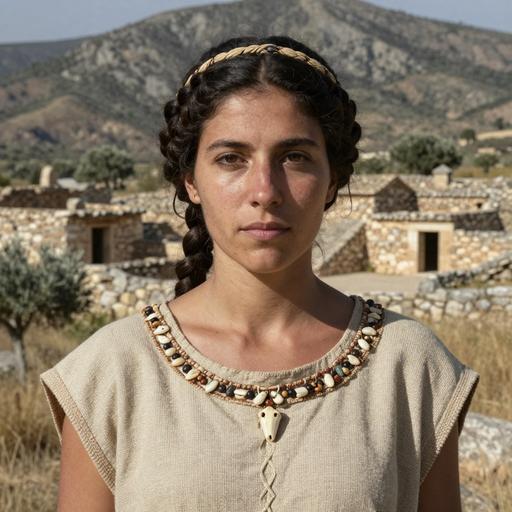
Because it descends from a clade associated with Anatolian and Near Eastern farmers, K1A4A1E is most plausibly linked to farmer-associated demographic processes: localized expansions during the late Neolithic and Chalcolithic, subsequent movement into neighboring parts of Europe, and persistence as a low-frequency maternal lineage in coastal and southern European populations. It is not known as a major founder lineage for any large modern population or for the well-characterized Ashkenazi founder set; where it occurs in Jewish communities it appears to be rare and likely reflects regional admixture or small-scale founder events rather than a dominant matrilineal founder effect.
Archaeologically, the clade is best contextualized with Anatolian/Levantine farmer communities and the post-Neolithic cultural transformations that spread farmer ancestry across the Mediterranean and into parts of Western Europe. Associations with Bronze Age migrations are possible in individual cases (through later mobility), but the primary signal remains tied to Near Eastern farmer dispersal.
Conclusion
K1A4A1E is a rare, regionally focused maternal lineage that provides a fine-scale marker of Near Eastern/Anatolian farmer-derived ancestry in southern European and Levantine maternal gene pools. Its rarity and limited diversity mean it is most informative in combination with other genomic and archaeological data; additional whole-mitogenome sequencing and broader ancient DNA sampling are likely to clarify its micro-geographic history and any hidden substructure.
Key Points
- Origins and Evolution
- Subclades
- Geographical Distribution
- Historical and Cultural Significance
- Conclusion